• HOME
  • NEWS
  • EXPLORE
    • CAREER
      • Companies
      • Jobs
    • EVENTS
    • iGEM
      • News
      • Team
    • PHOTOS
    • VIDEO
    • WIKI
  • BLOG
  • COMMUNITY
    • FACEBOOK
    • INSTAGRAM
    • TWITTER
Wednesday, June 24, 2026
BIOENGINEER.ORG
No Result
View All Result
  • Login
  • HOME
  • NEWS
  • EXPLORE
    • CAREER
      • Companies
      • Jobs
        • Lecturer
        • PhD Studentship
        • Postdoc
        • Research Assistant
    • EVENTS
    • iGEM
      • News
      • Team
    • PHOTOS
    • VIDEO
    • WIKI
  • BLOG
  • COMMUNITY
    • FACEBOOK
    • INSTAGRAM
    • TWITTER
  • HOME
  • NEWS
  • EXPLORE
    • CAREER
      • Companies
      • Jobs
        • Lecturer
        • PhD Studentship
        • Postdoc
        • Research Assistant
    • EVENTS
    • iGEM
      • News
      • Team
    • PHOTOS
    • VIDEO
    • WIKI
  • BLOG
  • COMMUNITY
    • FACEBOOK
    • INSTAGRAM
    • TWITTER
No Result
View All Result
Bioengineer.org
No Result
View All Result
Home NEWS Science News Health

Which students are at most risk of mental health problems during COVID-19 lockdowns?

Bioengineer by Bioengineer
July 21, 2021
in Health
Reading Time: 1 min read
0
IMAGE
Share on FacebookShare on TwitterShare on LinkedinShare on RedditShare on Telegram

IMAGE

Credit: JCPP Advances

A new study published in JCPP Advances has compared the wellbeing of UK students who remained at home for schooling during the first lockdown period of the COVID-19 pandemic with those who accessed school in person.

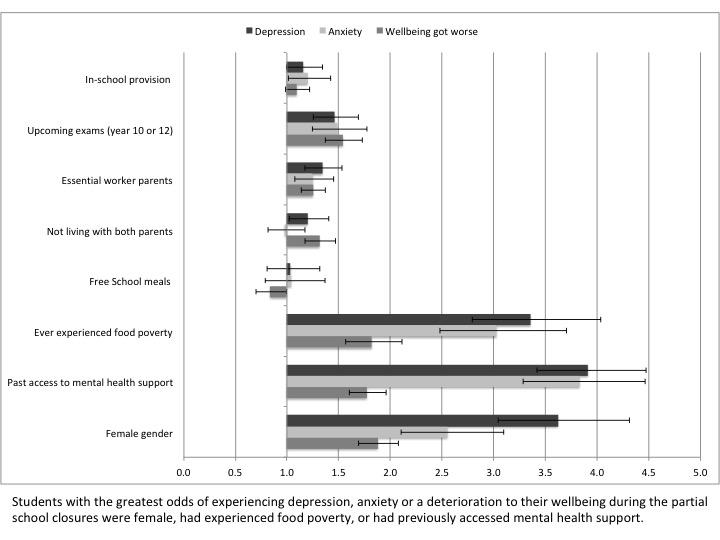
In the study, which included 11,765 students in grades 8-13 (aged 12-21 years), females, students who had experienced food poverty, and those who had previously accessed mental health support were at greatest risk of depression, anxiety, and a deterioration in wellbeing. Students who accessed in-person schooling had poorer mental health, but this was accounted for by their different characteristics and background circumstances.

“Identifying circumstances that could make some school pupils especially vulnerable during lockdowns is important, both for allocating limited in-school places and for effectively supporting their education and wellbeing,” said lead author Karen L. Mansfield, PhD, of the University of Oxford, in the UK. “We managed to capture responses from a diverse group of pupils during the first UK partial school closure period, and our results highlighted established risk factors as well as other circumstances of heightened relevance during lockdown that were related to pupils’ mental health and wellbeing.”

###

Media Contact
Wiley Newsroom
[email protected]

Related Journal Article

http://dx.doi.org/10.1002/jcv2.12021

Tags: BehaviorCoping/PhobiasEducationInfectious/Emerging DiseasesMental HealthNormalcyPerception/AwarenessPublic HealthSocial/Behavioral ScienceStress/Anxiety
Share13Tweet8Share2ShareShareShare2

Related Posts

Unfinished Care, Burnout, and Managerial Support in Nursing Homes

June 24, 2026

Yeast Enables Precise Megabase Human DNA Transfer

June 24, 2026

Antler Stem Cells Relieve Cerebral Ischemic Injury

June 24, 2026

Increase in Adolescent Suicidality Following State-Level Total Abortion Bans

June 24, 2026
Please login to join discussion

POPULAR NEWS

  • Saying Goodbye to PGY-6: Pediatric Fellowship Realities

    103 shares
    Share 41 Tweet 26
  • Multi-Hospital Study Reveals Long Covid Burden Is Twice as High as Current Estimates

    92 shares
    Share 36 Tweet 23
  • Detection of EDCs in Breast Milk and Infant Urine Up to Six Months Highlights Early Exposure Risks

    77 shares
    Share 31 Tweet 19
  • New Drug Candidate Developed at McMaster Shows Potential for Treating Brain Cancer

    58 shares
    Share 23 Tweet 15

About

We bring you the latest biotechnology news from best research centers and universities around the world. Check our website.

Follow us

Recent News

Robotic Hand That “Feels” Motion: International Study Uncovers How the Brain Detects Movement

Unveiling the Impact of TP53 Mutations in Oral Cancer: Molecular Insights and Prognostic Significance

Electric Field and Oxygen Spillover Collaborate to Control Electrode Migration in SOECs

Subscribe to Blog via Email

Enter your email address to subscribe to this blog and receive notifications of new posts by email.

Join 82 other subscribers
  • Contact Us

Bioengineer.org © Copyright 2023 All Rights Reserved.

Welcome Back!

Login to your account below

Forgotten Password?

Retrieve your password

Please enter your username or email address to reset your password.

Log In
No Result
View All Result
  • Homepages
    • Home Page 1
    • Home Page 2
  • News
  • National
  • Business
  • Health
  • Lifestyle
  • Science

Bioengineer.org © Copyright 2023 All Rights Reserved.