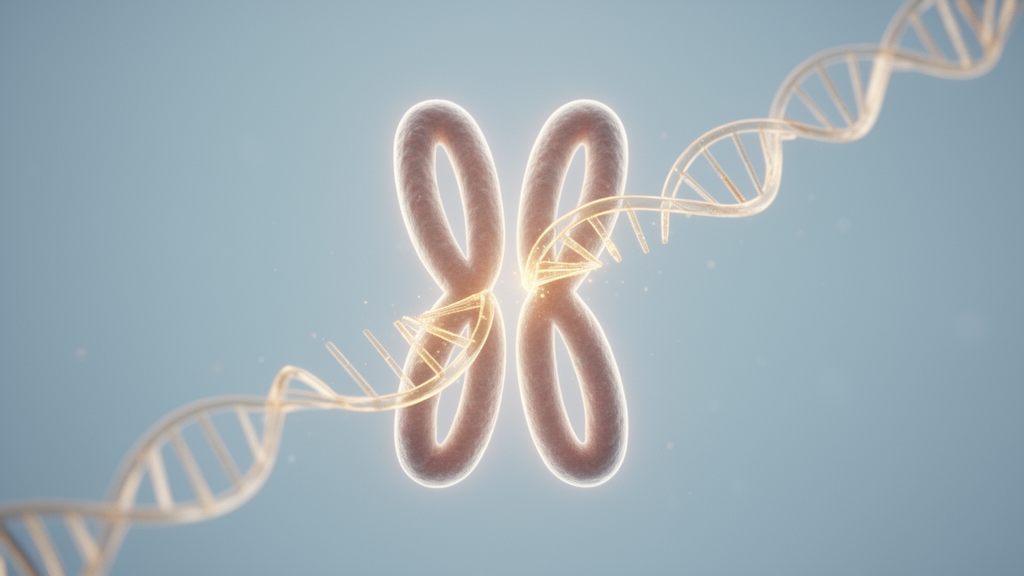
In a finding that reads like a genetic detective story, researchers in Hangzhou, China have documented something almost never seen before: three infant boys who each carry two entirely separate rare genetic conditions at once. The children have Prader-Willi syndrome, a well-known imprinting disorder, alongside an inherited deficiency of the enzyme glucose-6-phosphate dehydrogenase, or G6PD. The report, published in Frontiers in Pediatrics by a team at the Children’s Hospital of Zhejiang University School of Medicine, is being described as the first case series in the world to link these two specific diagnoses, and it carries a message that reaches far beyond these three families.
Prader-Willi syndrome arises when imprinted genes on the paternal copy of chromosome 15, in a region called 15q11.2-q13, fail to function properly. Genomic imprinting means that for this stretch of DNA, only the father’s copy is supposed to be active; when it is missing or silenced, the result is a multisystem disorder affecting roughly 1 in 10,000 to 1 in 30,000 births. The clinical course unfolds in stages: newborns are floppy and struggle to feed, often needing tube feeding, while later in childhood the syndrome pivots to relentless overeating and progressive obesity, along with developmental delay, hormonal problems such as undescended testes and short stature, and distinctive facial features. There are four recognized molecular routes to the syndrome, with paternal deletion of the critical region accounting for 65 to 75 percent of cases and maternal uniparental disomy, in which a child inherits two maternal copies of chromosome 15 and no paternal copy, explaining another 20 to 30 percent.
G6PD deficiency is a different beast altogether. It is an X-linked condition caused by pathogenic variants in the G6PD gene, which encodes an enzyme that protects red blood cells from oxidative damage. More than 400 million people worldwide carry disease-associated variants, making it one of the most common enzymatic defects in humans, yet most carriers never experience a spontaneous hemolytic crisis. Trouble typically strikes only after exposure to triggers such as fava beans or certain oxidant medications, which can cause red blood cells to rupture. Because the gene sits on the X chromosome, hemizygous males, who possess only one X chromosome, are predominantly affected.
The three boys in the new report, all of Han Chinese descent and conceived without consanguinity, were diagnosed between August 2022 and December 2024. Each presented with the textbook hallmarks of Prader-Willi syndrome: severe neonatal hypotonia, feeding difficulties requiring hospitalization, cryptorchidism, slow weight gain, and growth retardation. Patient 1, diagnosed at two months of age, was born at full term by cesarean delivery weighing 2.45 kilograms; his mother had gestational diabetes and reported reduced fetal movement. Patient 2, diagnosed at one month, showed the classic PWS facial appearance, generalized hypopigmentation, and sticky saliva, and needed nasogastric feeding. Patient 3, born preterm at 37 weeks and weighing 2.2 kilograms, required prolonged tube feeding. Strikingly, none of the three showed any sign of G6PD-related illness: no jaundice, no anemia, no dark urine, and no hemolytic episodes across more than a year of follow-up.
The molecular workup tells the story of how both diagnoses were pinned down. Methylation-specific multiplex ligation-dependent probe amplification, or MS-MLPA, revealed abnormal methylation patterns at 15q11.2-q13 without any copy number change, pointing away from a deletion and toward uniparental disomy. Short tandem repeat analysis combined with trio whole-exome sequencing, in which the child and both parents are sequenced, confirmed that all three boys carried maternal uniparental disomy of chromosome 15. Patient 2 harbored a mixture of uniparental isodisomy, where two identical maternal copies are present, and heterodisomy, where two distinct maternal copies persist, while the other two carried simpler forms of maternal UPD. On the X chromosome, genetic testing uncovered maternally inherited hemizygous G6PD variants: one boy carried c.152C>T (p.Thr51Ile), classified as likely pathogenic under American College of Medical Genetics and Genomics criteria, and the other two carried c.1388G>A (p.Arg463His), a recognized mutation hotspot classified as pathogenic.
To place these cases in context, the team systematically searched five databases for literature published between 1956 and 2025, sifting through an initial pool of 4,908 citations to identify 28 well-documented patients with Prader-Willi syndrome plus an independent genetic disorder. These fell into two broad groups. Fourteen patients had sex chromosome abnormalities, including Klinefelter syndrome, trisomy X, 47,XYY syndrome, and mosaic Turner syndrome, with paternal deletion and maternal UPD subtypes represented roughly equally. Fifteen patients had autosomal conditions, which the authors subdivided by mechanism: chromosomal or genomic disorders such as Down syndrome, DiGeorge syndrome, and Sotos syndrome; autosomal recessive disorders unmasked by maternal UPD of chromosome 15; and monogenic disorders unrelated to chromosome 15, such as Pitt-Hopkins syndrome and ATP8A2-related cerebellar ataxia.
That mechanistic subdivision is where the biology gets genuinely interesting. When maternal uniparental disomy hands a child two identical copies of chromosome 15, any recessive pathogenic variant that the mother carries on that chromosome can suddenly be expressed in homozygous form. This so-called unmasking effect explains why nearly all reported autosomal recessive comorbidities, including Tay-Sachs disease, Bloom syndrome, congenital ichthyosis caused by CERS3 variants, hereditary spastic paraplegia type 11, isovaleric acidemia, and calpainopathy, arose in maternal UPD patients. The new G6PD cases extend this logic to the X chromosome: because the boys inherited their single mutant X from their mothers, the variant is hemizygous rather than homozygous, but the diagnostic principle is the same. A second, hidden pathogenic variant can ride along undetected unless clinicians actively look for it.
Why did the G6PD deficiency remain completely silent in these children? The authors propose that the developmental disruption caused by losing paternal imprinted gene expression on chromosome 15 is so profound that it dominates the clinical picture, overshadowing the milder biochemical consequences of X-linked hemizygous variants. Across the literature, the same pattern holds: in dual-diagnosis patients, the Prader-Willi phenotype tends to predominate, whether the second condition involves sex chromosome aneuploidy or autosomal variants. Notably, prior reports suggest that female maternal UPD patients can develop symptomatic X-linked disorders through skewed X-chromosome inactivation, adding another layer of complexity for future cases.
The clinical takeaway is arguably the most consequential part of the paper. Standard karyotyping and methylation testing cannot detect single-gene variants hiding elsewhere in the genome, and several previously reported children with maternal UPD-related recessive conditions showed no atypical features at initial diagnosis, with the second disease emerging only as they grew older. The authors argue that for any patient confirmed to have maternal uniparental disomy, trio whole-exome sequencing or even trio whole-genome sequencing deserves serious consideration, even when the phenotype looks entirely typical. Such expanded screening could catch maternally transmitted pathogenic variants on chromosome 15 and beyond, preventing missed dual diagnoses and allowing families to receive anticipatory guidance, such as the strict avoidance of fava beans and oxidant drugs that the parents of these three boys were counseled on.
Caveats remain. With only three patients, the series cannot establish whether the co-occurrence of maternal UPD Prader-Willi syndrome and G6PD deficiency reflects random chance, shared maternal geography or ancestry, or some deeper genetic predisposition, and the authors acknowledge the absence of quantitative G6PD enzyme activity testing in their cohort. Age-dependent features such as hyperphagia and scoliosis were not yet evaluable in children aged two to two and a half years, so longitudinal follow-up will be essential. Still, by expanding the recognized spectrum of Prader-Willi comorbidities and demonstrating that an X-linked condition can slip silently alongside an imprinting disorder, the study makes a compelling case that the era of multi-gene screening for imprinting disorders has arrived, and that the genome may hold more than one diagnosis for patients who appear to have just one.
Subject of Research: Co-occurrence of maternal uniparental disomy-type Prader-Willi syndrome and X-linked G6PD deficiency in three male infants
Article Title: Case Report: Concurrent maternal uniparental disomy-type Prader-Willi syndrome and X-linked G6PD deficiency—an area of focus on multi-gene screening for imprinting disorders
Article References: Case Report: Concurrent maternal uniparental disomy-type Prader-Willi syndrome and X-linked G6PD deficiency—an area of focus on multi-gene screening for imprinting disorders. (n.d.). https://doi.org/10.3389/fped.2026.1924208
Image Credits: AI Generated
DOI: 10.3389/fped.2026.1924208
Keywords: Prader-Willi syndrome, G6PD deficiency, uniparental disomy, genomic imprinting, X-linked inheritance, trio whole-exome sequencing, MS-MLPA, genetic diagnosis, pediatric genetics, comorbid genetic disorders, ACMG variant classification, chromosome 15
News Source: Juliet Wilcox. (October 16, 2026). When Two Rare Diagnoses Collide: Hidden Genes Unmasked in Prader-Willi Syndrome. Scienmag.