• HOME
  • NEWS
  • EXPLORE
    • CAREER
      • Companies
      • Jobs
    • EVENTS
    • iGEM
      • News
      • Team
    • PHOTOS
    • VIDEO
    • WIKI
  • BLOG
  • COMMUNITY
    • FACEBOOK
    • INSTAGRAM
    • TWITTER
Saturday, June 27, 2026
BIOENGINEER.ORG
No Result
View All Result
  • Login
  • HOME
  • NEWS
  • EXPLORE
    • CAREER
      • Companies
      • Jobs
        • Lecturer
        • PhD Studentship
        • Postdoc
        • Research Assistant
    • EVENTS
    • iGEM
      • News
      • Team
    • PHOTOS
    • VIDEO
    • WIKI
  • BLOG
  • COMMUNITY
    • FACEBOOK
    • INSTAGRAM
    • TWITTER
  • HOME
  • NEWS
  • EXPLORE
    • CAREER
      • Companies
      • Jobs
        • Lecturer
        • PhD Studentship
        • Postdoc
        • Research Assistant
    • EVENTS
    • iGEM
      • News
      • Team
    • PHOTOS
    • VIDEO
    • WIKI
  • BLOG
  • COMMUNITY
    • FACEBOOK
    • INSTAGRAM
    • TWITTER
No Result
View All Result
Bioengineer.org
No Result
View All Result
Home NEWS Science News Biology

When reefs die, parrotfish thrive

Bioengineer by Bioengineer
December 2, 2019
in Biology
Reading Time: 2 mins read
0
IMAGE
Share on FacebookShare on TwitterShare on LinkedinShare on RedditShare on Telegram

Researchers find familiar species pave the way for coral regrowth
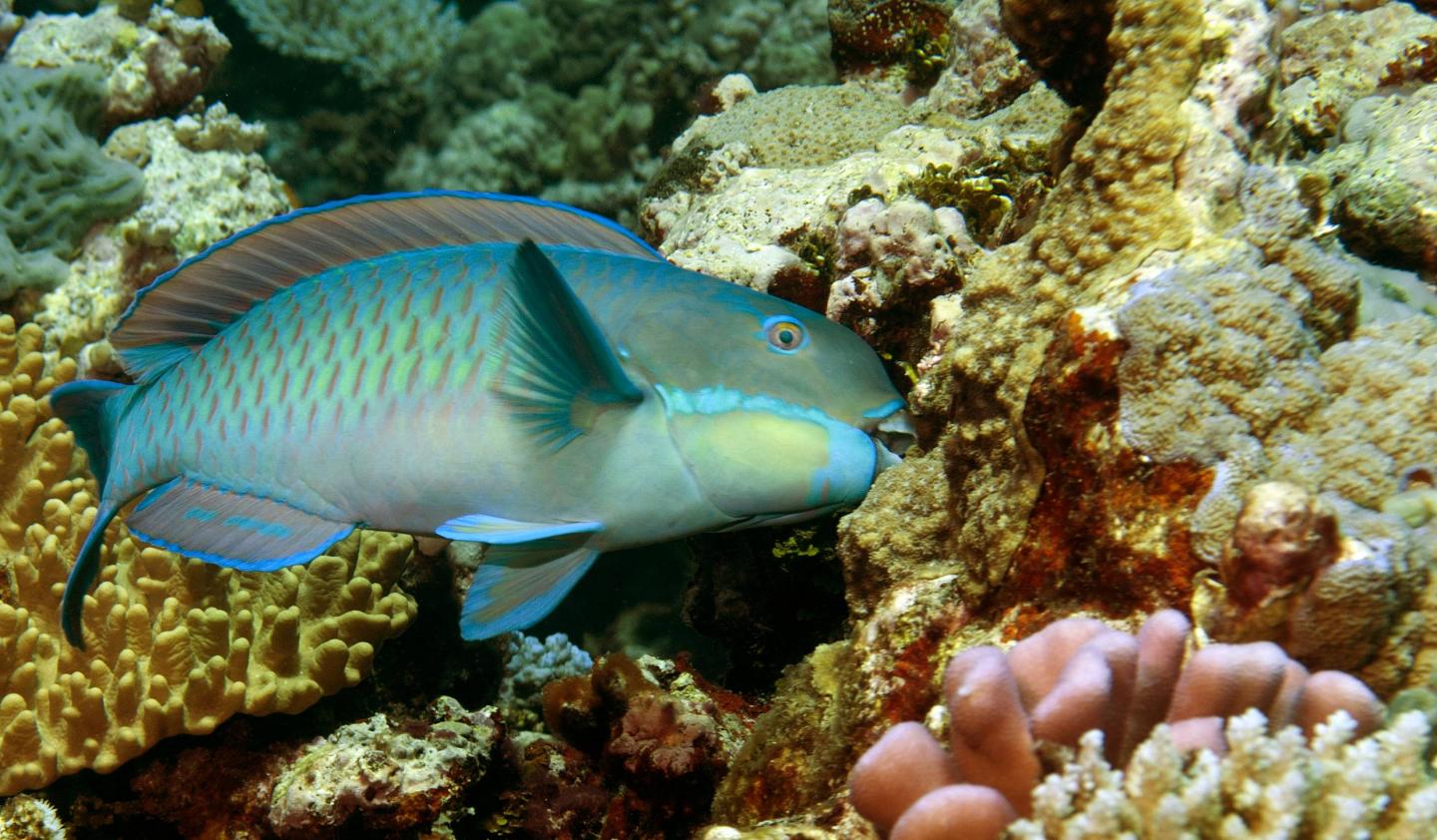
IMAGE

Credit: Kendall Clements

In contrast to most other species, reef-dwelling parrotfish populations boom in the wake of severe coral bleaching.

The surprise finding came when researchers led by Perth-based Dr Brett Taylor of the Australian Institute of Marine Science (AIMS) looked at fish populations in severely bleached areas of two reefs – the Great Barrier Reef in the western Pacific and the Chagos Archipelago in the Indian Ocean.

The sites are 8000 kilometres apart.

Bleaching is coral’s stress reaction to prolonged exposure to higher sea surface temperatures.

“Warming oceans place enormous pressure on reefs and if the temperatures remain high for too long the coral will die. The more frequently this occurs there is less time for coral reefs to recover,” Dr Taylor said.

In the damaged areas of the reefs, the study found that parrotfish populations increased in number by between two and eight times, and individual fish were about 20% larger than those in unbleached sections.

Almost every other species of fish was in sharp decline in the bleached areas.

Parrotfish, named because of their tightly packed teeth in a beak formation, use their teeth to scrape microorganisms off coral – and their presence in large numbers on damaged reefs very likely helps the process of repair, Taylor and his colleagues suggest.

“When bleaching reduces coral cover on the reefs, it creates large areas of newly barren surfaces,” Taylor said.

“This immediately gets colonised by the microalgae and cyanobacteria, basically an internal and external layer of ‘scunge’, which provides nutritious, abundant food for parrotfish.”

The researchers concluded that the coral and the parrotfish constitute a feedback loop, slowly bringing each other into balance. When reefs are damaged, parrotfish numbers swell. This results in low levels of scunge, giving the coral the best chance to recover. As the reef then returns to health, parrotfish numbers decline again.

“We found reef ecosystems in two different oceans had the same response to global heat events which is indicative of the current magnitude of climate change effects,” he said.

The fact that plump parrotfish were found in large numbers on both reefs indicates the feedback loop is an inherent part of reef ecology and not caused by local factors.

“Parrotfish are a vital link in the reef ecosystem,” says AIMS co-author Dr Mark Meekan.

“As herbivores, their grazing shapes the structure of reefs through effects on coral growth and suppression of algae that would otherwise proliferate. Because of these important ecological roles, they have been described as ‘ecosystem engineers’ of reef systems.”

As well as AIMS, scientists working on the project came from James Cook University in Australia, the University of Auckland in New Zealand, and the University of Lancaster in the UK.

The research is published in the journal Global Change Biology.

###

Media Contact
Andrew Masterson
[email protected]
61-488-777-179

Related Journal Article

http://dx.doi.org/10.1111/gcb.14909

Tags: BiodiversityBiologyMarine/Freshwater BiologyZoology/Veterinary Science
Share12Tweet8Share2ShareShareShare2

Related Posts

Natural Hallucinogens: Evolution’s Ecological Tools, Not Mere Chemical Byproducts

June 25, 2026

This Famous Butterfly Revealed: Three Distinct Species Hidden in One

June 25, 2026

Scientists Attack Soybean Cyst Nematode by Starving Its Food Source

June 25, 2026

Decoding the Secret Code of a Crucial Immune Sensor

June 24, 2026
Please login to join discussion

POPULAR NEWS

  • Saying Goodbye to PGY-6: Pediatric Fellowship Realities

    103 shares
    Share 41 Tweet 26
  • Multi-Hospital Study Reveals Long Covid Burden Is Twice as High as Current Estimates

    92 shares
    Share 36 Tweet 23
  • Detection of EDCs in Breast Milk and Infant Urine Up to Six Months Highlights Early Exposure Risks

    77 shares
    Share 31 Tweet 19
  • New Drug Candidate Developed at McMaster Shows Potential for Treating Brain Cancer

    58 shares
    Share 23 Tweet 15

About

We bring you the latest biotechnology news from best research centers and universities around the world. Check our website.

Follow us

Recent News

Tracking Lanthanide-Labeled Microplastics in Plants

POSTECH Researchers Slash Cost of Reconstituted Cell-Free Systems by 95%

AI and Physics Collaborate to Design Advanced Hydrogen Storage Materials

Subscribe to Blog via Email

Success! An email was just sent to confirm your subscription. Please find the email now and click 'Confirm' to start subscribing.

Join 82 other subscribers
  • Contact Us

Bioengineer.org © Copyright 2023 All Rights Reserved.

Welcome Back!

Login to your account below

Forgotten Password?

Retrieve your password

Please enter your username or email address to reset your password.

Log In
No Result
View All Result
  • Homepages
    • Home Page 1
    • Home Page 2
  • News
  • National
  • Business
  • Health
  • Lifestyle
  • Science

Bioengineer.org © Copyright 2023 All Rights Reserved.