• HOME
  • NEWS
  • EXPLORE
    • CAREER
      • Companies
      • Jobs
    • EVENTS
    • iGEM
      • News
      • Team
    • PHOTOS
    • VIDEO
    • WIKI
  • BLOG
  • COMMUNITY
    • FACEBOOK
    • INSTAGRAM
    • TWITTER
Monday, May 18, 2026
BIOENGINEER.ORG
No Result
View All Result
  • Login
  • HOME
  • NEWS
  • EXPLORE
    • CAREER
      • Companies
      • Jobs
        • Lecturer
        • PhD Studentship
        • Postdoc
        • Research Assistant
    • EVENTS
    • iGEM
      • News
      • Team
    • PHOTOS
    • VIDEO
    • WIKI
  • BLOG
  • COMMUNITY
    • FACEBOOK
    • INSTAGRAM
    • TWITTER
  • HOME
  • NEWS
  • EXPLORE
    • CAREER
      • Companies
      • Jobs
        • Lecturer
        • PhD Studentship
        • Postdoc
        • Research Assistant
    • EVENTS
    • iGEM
      • News
      • Team
    • PHOTOS
    • VIDEO
    • WIKI
  • BLOG
  • COMMUNITY
    • FACEBOOK
    • INSTAGRAM
    • TWITTER
No Result
View All Result
Bioengineer.org
No Result
View All Result
Home NEWS Science News Biology

When push comes to shove: Airway cells propel liver cancer spread to lungs

Bioengineer by Bioengineer
June 1, 2018
in Biology
Reading Time: 2 mins read
0
Share on FacebookShare on TwitterShare on LinkedinShare on RedditShare on Telegram
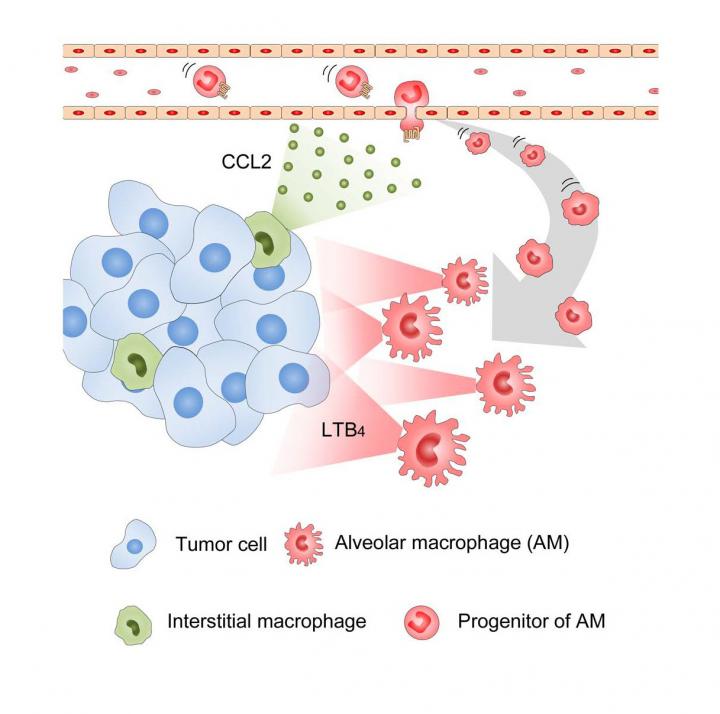
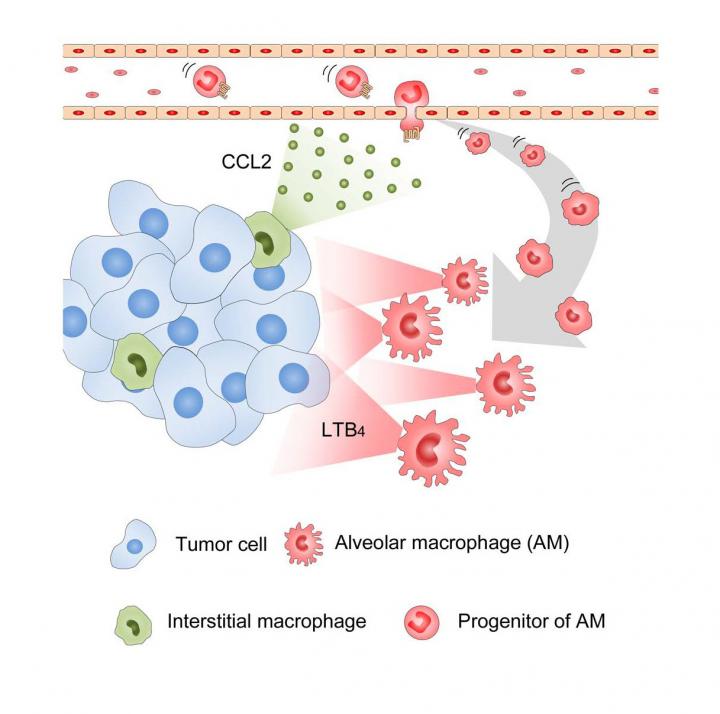
IMAGE

Credit: Kanazawa University

Kanazawa, Japan – Hepatocellular carcinoma (HCC) is the most common form of liver cancer, and the third biggest cause of death from cancer worldwide. Although HCC patients have benefited from recent improvements in diagnoses and various therapies, their average survival time is still only 16.2 months, falling to just under 6 months in those whose cancer has spread to their lungs.

Lung metastasis occurs when tumor cells from the liver enter the bloodstream. This process involves a range of tumor-host cell interactions, but the exact details have not been known. Now, a Japanese team of researchers led by Kanazawa University has undertaken a detailed investigation of the role of two different scavenger white blood cells (macrophages) of the lung, and a myriad of molecules associated with inflammation in a mouse model of metastasis. The study was reported in the Journal of Immunology.

The animal model was produced by injecting a mouse HCC cell line into the veins of mice, which resulted in the growth of small metastatic lung nodules that resembled HCC lung metastasis in humans. By monitoring the metastasis, the team detected an accumulation of two types of macrophages in the lungs: interstitial macrophages (IMs) and alveolar macrophages (AMs).

"IMs derive from the circulation, and were already known to aid the survival and growth of lung tumors," study first author Takuto Nosaka says. "Conversely, AMs come from tissue lining the inside of air sacs (alveoli) in the lungs, and were only recently shown to be involved in metastasis. Their function in lung metastasis was unclear, but their observed increase in this model is the first evidence that they must play an important role."

Indeed, AMs around the mouse lung nodules produced more of the inflammatory lipid leukotriene B4 (LTB4) than IMs. LTB4 activates immune cells, and directly boosts the proliferation and invasiveness of both human and mouse cancer cells, including HCC cells. AMs were also shown to directly promote tumor cell growth at metastatic lung nodules through LTB4 secretion.

"We next focused on AM recruitment from the bloodstream into the lungs, and showed that this was controlled by IMs which express the signaling molecule CCL2," corresponding author Naofumi Mukaida explains. "The CCL2 receptor, CCR2, is expressed by AMs, and binding of the two molecules controls AM accumulation."

This AM-IM interaction contributes to the progression of lung metastasis through the production of LTB4, suggesting the potential for developing a novel treatment approach that targets these molecules.

###

Media Contact

Tomoya Sato
[email protected]
81-762-645-076

http://www.kanazawa-u.ac.jp/e/index.html

Original Source

http://www.jimmunol.org/content/200/5/1839.long

Share12Tweet8Share2ShareShareShare2

Related Posts

Uncovering C. elegans Immunity via Genetic Screens — Biology

Uncovering C. elegans Immunity via Genetic Screens

May 16, 2026
Single mother must adapt swiftly — the survival of her colony depends on it — Biology

Single mother must adapt swiftly — the survival of her colony depends on it

May 15, 2026

Why Are Nearly Everyone Right-Handed? It Might Be Linked to How We Learned to Walk

May 15, 2026

Excessive Neuronal Activity Initiates Severe Autoimmune Brain Disorder

May 15, 2026
Please login to join discussion

POPULAR NEWS

  • Research Indicates Potential Connection Between Prenatal Medication Exposure and Elevated Autism Risk

    844 shares
    Share 338 Tweet 211
  • New Study Reveals Plants Can Detect the Sound of Rain

    731 shares
    Share 292 Tweet 182
  • Salmonella Haem Blocks Macrophages, Boosts Infection

    62 shares
    Share 25 Tweet 16
  • Breastmilk Balances E. coli and Beneficial Bacteria in Infant Gut Microbiomes

    58 shares
    Share 23 Tweet 15

About

We bring you the latest biotechnology news from best research centers and universities around the world. Check our website.

Follow us

Recent News

DKC1 Drives Colorectal Cancer via Sphingolipid Disruption

Health and Carbon Footprint of Barcelona’s Water Choices

Compression Spurs Tumor Spread via Malate-Microtubule Pathway

Subscribe to Blog via Email

Enter your email address to subscribe to this blog and receive notifications of new posts by email.

Join 82 other subscribers
  • Contact Us

Bioengineer.org © Copyright 2023 All Rights Reserved.

Welcome Back!

Login to your account below

Forgotten Password?

Retrieve your password

Please enter your username or email address to reset your password.

Log In
No Result
View All Result
  • Homepages
    • Home Page 1
    • Home Page 2
  • News
  • National
  • Business
  • Health
  • Lifestyle
  • Science

Bioengineer.org © Copyright 2023 All Rights Reserved.