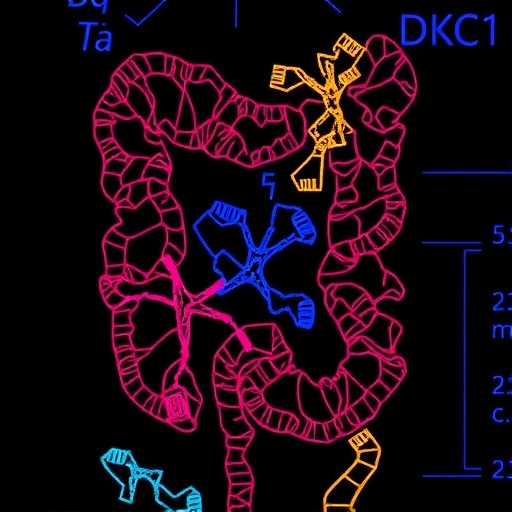
In a groundbreaking study published in Nature Communications, researchers have unveiled a compelling link between the dyskerin pseudouridine synthase 1 (DKC1) protein and the progression of colorectal cancer (CRC), revealing how this key factor disrupts sphingolipid biosynthesis to enhance tumor growth and resistance to treatment. This discovery not only deepens our understanding of colorectal cancer’s underlying molecular mechanisms but also opens promising avenues for therapeutic intervention in one of the most lethal and prevalent forms of cancer worldwide.
Colorectal cancer remains a significant global health challenge, with a substantial number of patients developing resistance to currently available chemotherapies and targeted therapies. Understanding the cellular pathways that underpin this resistance is crucial for devising more effective treatments. In this context, the study led by Khan et al. delves into the role of DKC1, a multifaceted protein known for its involvement in ribosomal RNA modification and telomere maintenance, connecting it now to a novel metabolic pathway disturbance that fosters cancer aggressiveness.
The team’s meticulous investigation highlights DKC1’s unexpected function in regulating sphingolipid metabolism, a critical class of bioactive lipids involved in cell membrane structure, signaling, and apoptosis. Sphingolipids have long been recognized for their dualistic roles in cancer, acting either as tumor suppressors or enhancers depending on their molecular context. This study reveals that aberrant DKC1 expression skews sphingolipid biosynthesis towards a profile that promotes colorectal cancer cell survival and proliferation, ultimately facilitating disease progression.
Central to these findings is the observation that elevated levels of DKC1 in colorectal cancer cells lead to the dysregulation of key enzymes involved in the sphingolipid pathway. This shift enhances the production of certain sphingolipid species that inhibit programmed cell death, thereby conferring resistance to apoptosis-inducing chemotherapeutic agents. The dysregulated enzymatic activities effectively alter the sphingolipid landscape, creating a microenvironment more conducive to tumor persistence and spread.
Comprehensive molecular analyses conducted by the research group demonstrate that RNA interference-mediated knockdown of DKC1 significantly impairs colorectal cancer cell growth in vitro. Moreover, these cells exhibited increased sensitivity to common chemotherapy drugs, suggesting that targeting DKC1 or its downstream sphingolipid metabolic effectors may sensitize tumors to existing treatments. These insights underscore DKC1’s potential as a druggable target for enhancing therapeutic efficacy.
The implications of manipulating sphingolipid metabolism in cancer are profound. While sphingolipids have been extensively studied, the exact mechanisms by which their dysregulation contributes to therapy resistance in colorectal cancer remained poorly understood until now. Khan and colleagues provide compelling evidence that DKC1 sits at the crux of this metabolic reprogramming, directly influencing the lipid composition critical for cancer cell fate decisions. This discovery propels the field forward by integrating lipid metabolism with cancer gene regulation pathways.
Further underscoring the urgency and clinical relevance of this work, the study illustrated that high DKC1 expression correlates with advanced tumor stage and poor patient prognosis based on analyses of clinical datasets. This correlation reinforces the utility of DKC1 not only as a biomarker of disease severity but also as an indicator of likely resistance to conventional therapies, thereby guiding personalized treatment strategies.
Beyond its oncological implications, the research opens new discussions about the broader biological functions of DKC1. Traditionally recognized for its canonical roles in ribosomal RNA pseudouridylation and telomerase RNA stabilization, DKC1’s newly identified capacity to modulate lipid metabolism suggests a multifaceted role in cellular homeostasis and disease. The intersection of protein function, lipid biosynthesis, and cancer biology represents an exciting frontier illuminated by this study.
The research team also explored potential therapeutic interventions targeting this newly elucidated pathway. Pharmacological inhibition of specific sphingolipid-synthesizing enzymes partially reversed the cancer-promoting effects conferred by DKC1 overexpression, providing proof-of-concept that metabolic targeting can disrupt this oncogenic circuitry. These interventions could complement existing chemotherapeutic regimens, especially in tumors characterized by high DKC1 expression.
This work exemplifies the power of combining multi-omics approaches with functional experiments to uncover hidden layers of cancer biology. By integrating transcriptomics, lipidomics, and proteomics data, the researchers mapped an intricate network depicting DKC1’s influence on sphingolipid biosynthesis and subsequent cancer cell behavior. This comprehensive view positions DKC1 at the intersection of genome regulation and cellular metabolism, a hallmark of cancer progression.
Moreover, the study sparks curiosity about the potential roles of DKC1 in other cancers and diseases marked by altered sphingolipid metabolism. Given the ubiquitous nature of sphingolipids in cellular membranes and signaling, aberrations in their regulation might similarly drive pathogenesis beyond colorectal cancer, prompting further investigative and translational efforts across oncology disciplines.
The collective insights arising from this research have vital implications for drug development pipelines. Targeting proteins like DKC1 that orchestrate metabolic reprogramming could revolutionize how oncologists approach chemoresistance, possibly leading to combination therapies that leverage metabolic vulnerability and genomic instability. This strategy aligns with the growing emphasis on precision medicine and cancer metabolism as critical therapeutic axes.
Importantly, these findings encourage a paradigm shift in colorectal cancer research, suggesting that future therapeutic endeavors must consider the complex interplay between gene regulation and lipid metabolic networks. Interrupting this crosstalk could thwart tumor cells’ ability to evade death and metastasize, ultimately improving patient outcomes in a notoriously difficult-to-treat disease.
As the scientific community digests these revelations, the translational journey ahead involves validating these mechanisms in clinical trials and developing selective DKC1 inhibitors or sphingolipid modulators that can be safely combined with current colorectal cancer therapies. Tailoring such interventions to patient-specific molecular profiles will be key to maximizing their efficacy and mitigating adverse effects.
In conclusion, this pioneering study authored by Khan, Goel, Nigam, et al. supplies compelling evidence that DKC1-driven disruptions in sphingolipid metabolism underpin colorectal cancer progression and therapeutic resistance. The elucidation of this metabolic vulnerability offers a promising target for innovative treatments, potentially transforming the clinical landscape for patients afflicted by this challenging malignancy. With continued exploration into the molecular intricacies of cancer metabolism, the promise of more durable and effective therapies draws ever closer.
Subject of Research: The study investigates the role of the DKC1 protein in colorectal cancer progression and its impact on sphingolipid biosynthesis related to therapy resistance.
Article Title: DKC1 promotes colorectal cancer progression and therapy resistance by dysregulating sphingolipid biosynthesis.
Article References:
Khan, U.K., Goel, A., Nigam, S. et al. DKC1 promotes colorectal cancer progression and therapy resistance by dysregulating sphingolipid biosynthesis. Nat Commun 17, 4406 (2026). https://doi.org/10.1038/s41467-026-72800-2
Image Credits: AI Generated
DOI: https://doi.org/10.1038/s41467-026-72800-2
Tags: apoptosis regulation by sphingolipidsbioactive lipids in cancer signalingDKC1 and colorectal cancer progressionmetabolic pathways in colorectal tumor resistancemolecular mechanisms of chemotherapy resistancenovel interventions for colorectal cancer therapyribosomal RNA modification and cancerrole of dyskerin pseudouridine synthase 1 in CRCsphingolipid biosynthesis disruption in cancersphingolipid metabolism in tumor growthtelomere maintenance and cancer aggressivenesstherapeutic targets in colorectal cancer