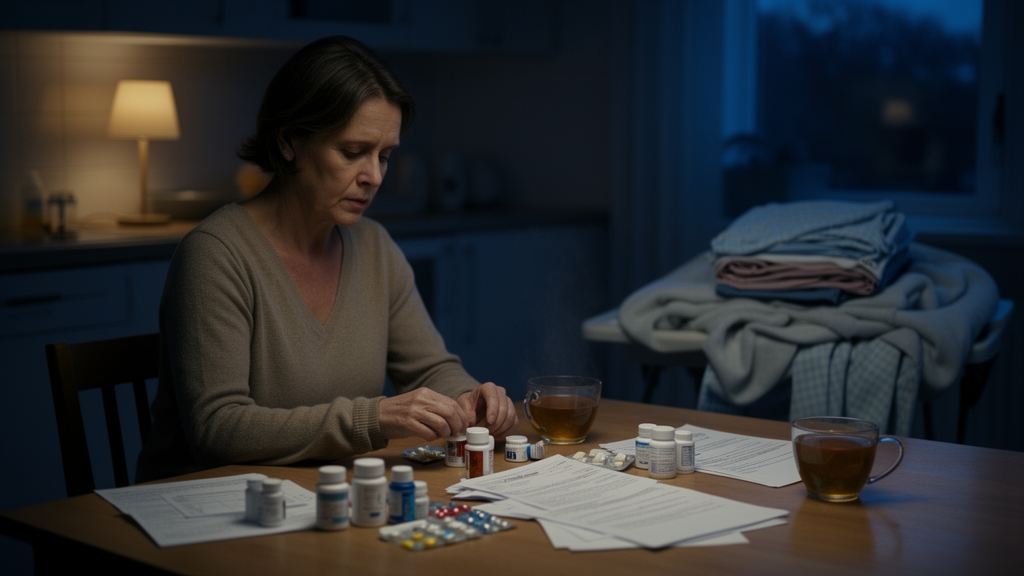
When a person with cancer deteriorates suddenly and is admitted to an intensive care unit, the entire machinery of modern medicine swings into action around the patient. Monitors, ventilators and specialist teams converge on the bedside, and understandably, the clinical spotlight stays fixed on survival. But a new systematic review from Flinders University argues that this narrow focus leaves another group in the shadows: the informal caregivers, the partners, family members and close friends who keep vigil through one of the most frightening chapters of a cancer journey. The research, published in the top-ranked journal Intensive & Critical Care Nursing, shows that these caregivers frequently experience anxiety, depression, exhaustion and a measurable decline in their own wellbeing, and that health services are rarely structured to notice or address their suffering.
The distinction between a cancer admission and a critical illness admission matters more than it might first appear. Oncology wards are, by design, environments where patients and families are surrounded by staff who understand the trajectory of the disease, the purpose of each treatment, and the rhythms of recovery. Intensive care units, by contrast, are built around physiological stabilization. Their priorities are airway, circulation, sedation and organ support, and their communication structures are organized around rapid clinical decision-making rather than the slower, more deliberate conversations that families coping with cancer often need. When a person with cancer crosses that threshold, their caregiver effectively crosses it too, moving from a world of scheduled treatments and familiar oncology teams into one of alarms, visiting restrictions and daily prognostic uncertainty. The Flinders University review suggests that this transition is precisely where caregivers become most vulnerable, and least visible.
The figures reported in the review are striking in their consistency. In one of the included studies, 71 per cent of caregivers experienced symptoms of anxiety and roughly half reported symptoms of depression, proportions that far exceed what is typically observed in the general population. Almost all participants reported difficulty caring for themselves, a finding that captures something subtle but important: caregivers in these situations frequently stop attending to their own basic needs, including nutrition, sleep, medical appointments and personal time, because the emotional gravity of the ICU pulls everything else into its orbit. Exhaustion, poor sleep and social isolation were common threads across the nine international studies, which together involved 924 participants. These are not trivial complaints. Sleep deprivation and chronic stress are known to impair immune function, cardiovascular health and cognitive performance, and prolonged caregiver strain is associated in broader research with elevated risks of depression, burnout and even increased mortality among caregivers themselves.
What makes the cancer context distinctive is the layering of two separate sources of uncertainty. Caregivers of any critically ill patient face the immediate question of whether their loved one will survive the current crisis. Caregivers of cancer patients carry an additional, longer shadow: the knowledge that even if this crisis resolves, the underlying disease and its treatment continue. The review’s senior author, Professor Catherine Paterson, points to this combination as the source of support needs that are not always recognised by health services. A caregiver may be simultaneously processing the mechanics of ventilator weaning, the implications of a recent scan, the logistics of childcare, and the fear that the cancer has progressed. Each of these demands a different kind of information, delivered by a different part of the health system, and the review found that the interfaces between intensive care and cancer services are often where communication breaks down.
The methodological character of the review deserves attention. As a mixed methods systematic review, it synthesised both quantitative measurements of psychological symptoms and qualitative accounts of lived experience, drawing on nine studies conducted across different countries and healthcare systems. This breadth matters because it suggests the findings are not an artefact of any single health system’s organisation. The pattern of caregiver distress appeared regardless of whether the underlying system was more or less resourced, more or less family-centred, or more or less integrated between critical care and oncology. At the same time, the review exposed a significant blind spot in the evidence base itself: only two of the included studies examined the perspectives of healthcare professionals and the role of the multidisciplinary team in supporting caregivers. This means the field knows a great deal about what caregivers feel and comparatively little about what clinicians observe, prioritise or believe they are able to offer, a gap that shapes what kinds of interventions can realistically be designed.
The practical consequences of unrecognised caregiver distress extend well beyond the caregiver. Informal caregivers are, in a very real sense, an extension of the care team. They notice subtle changes in a patient’s condition, advocate during handovers, interpret medical information for other family members, and provide continuity once the patient leaves hospital. A caregiver who is exhausted, anxious and under-informed is less able to perform these functions, and the quality of the patient’s recovery may suffer as a result. Conversely, there is growing recognition in the broader literature that supporting family members is not a peripheral kindness but a component of patient-centred care with measurable effects on outcomes, readmission rates and the sustainability of care at home after discharge.
The review also highlights the temporal dimension of caregiver suffering. Some participants continued to experience distress months after the critical illness had passed, a finding consistent with wider research on post-intensive care syndrome, which recognises that the psychological aftermath of a critical illness can persist long after discharge for both patients and families. For cancer caregivers, this persistence may be compounded by the ongoing treatment schedule, the possibility of recurrence, and the cumulative fatigue of a journey that began well before the ICU admission and continues long after it. Follow-up care that focuses solely on the patient therefore risks missing a household-level problem that has been quietly accumulating throughout.
Lead author Shalyn Rourke’s observation that caregivers are often putting their own wellbeing aside points toward one of the central practical challenges: caregivers themselves rarely present as patients. They do not have a bed, a chart or a named clinician responsible for their welfare. They are, in the language of health services, an invisible population embedded within someone else’s episode of care. Identifying distress in such a population requires deliberate screening, dedicated communication channels and staff who are trained and rostered to look beyond the bedside. Professor Paterson’s suggestion that nurses and the wider multidisciplinary team are well placed to detect signs of distress reflects this reality, since nurses typically have the most sustained contact with families during an ICU stay and are often the first to notice when a caregiver is struggling.
The researchers’ call for coordinated, family-centred care implies several concrete shifts. It suggests that information given to families should be consistent across the intensive care and oncology teams, so that caregivers are not left reconciling contradictory messages about prognosis or treatment intent. It suggests that caregivers should be included in follow-up after ICU discharge rather than simply fading from the system once the patient stabilises. And it suggests that health services should develop ways of identifying caregivers at particular risk, whether because of the severity of the patient’s illness, the caregiver’s own health status, or the practical burdens of juggling work, family and hospital visits simultaneously.
What the review ultimately reframes is the unit of care itself. A critical illness in a person with cancer is not an event that happens to one individual; it happens to a network of people whose wellbeing is interdependent. The 924 participants in these nine studies were, in most cases, the people holding households, finances and emotional life together while the patient fought for survival. If the goal of intensive care is to return patients to meaningful lives, and the goal of cancer care is to sustain patients through long and demanding treatment journeys, then the wellbeing of the people who make both possible cannot remain an afterthought. The evidence assembled by Rourke, Paterson and their colleagues makes the case that recognising caregiver distress is not an act of charity at the margins of medicine, but a structural requirement of care that genuinely serves the patient at its centre.
Subject of Research: Caregiver wellbeing and supportive care needs during critical illness in people with cancer
Article Title: When cancer turns critical, the patient isn't the only one suffering
Article References: When cancer turns critical, the patient isn't the only one suffering. Original publication (Bibliographic details unavailable.)
Image Credits: AI Generated
DOI: Not provided
Keywords: cancer, intensive care, caregivers, mental health, anxiety, depression, systematic review, nursing, Flinders University, supportive care, ICU, family caregivers
News Source: Nathaniel Bowman. (October 19, 2026). When Cancer Turns Critical, Family Caregivers Carry a Hidden Burden of Their Own. Scienmag.