• HOME
  • NEWS
  • EXPLORE
    • CAREER
      • Companies
      • Jobs
    • EVENTS
    • iGEM
      • News
      • Team
    • PHOTOS
    • VIDEO
    • WIKI
  • BLOG
  • COMMUNITY
    • FACEBOOK
    • INSTAGRAM
    • TWITTER
Wednesday, August 12, 2026
BIOENGINEER.ORG
No Result
View All Result
  • Login
  • HOME
  • NEWS
  • EXPLORE
    • CAREER
      • Companies
      • Jobs
        • Lecturer
        • PhD Studentship
        • Postdoc
        • Research Assistant
    • EVENTS
    • iGEM
      • News
      • Team
    • PHOTOS
    • VIDEO
    • WIKI
  • BLOG
  • COMMUNITY
    • FACEBOOK
    • INSTAGRAM
    • TWITTER
  • HOME
  • NEWS
  • EXPLORE
    • CAREER
      • Companies
      • Jobs
        • Lecturer
        • PhD Studentship
        • Postdoc
        • Research Assistant
    • EVENTS
    • iGEM
      • News
      • Team
    • PHOTOS
    • VIDEO
    • WIKI
  • BLOG
  • COMMUNITY
    • FACEBOOK
    • INSTAGRAM
    • TWITTER
No Result
View All Result
Bioengineer.org
No Result
View All Result
Home NEWS Science News Chemistry

What interventional radiologists need to know about frostbite and amputation

Bioengineer by Bioengineer
February 6, 2020
in Chemistry
Reading Time: 2 mins read
0
IMAGE
Share on FacebookShare on TwitterShare on LinkedinShare on RedditShare on Telegram

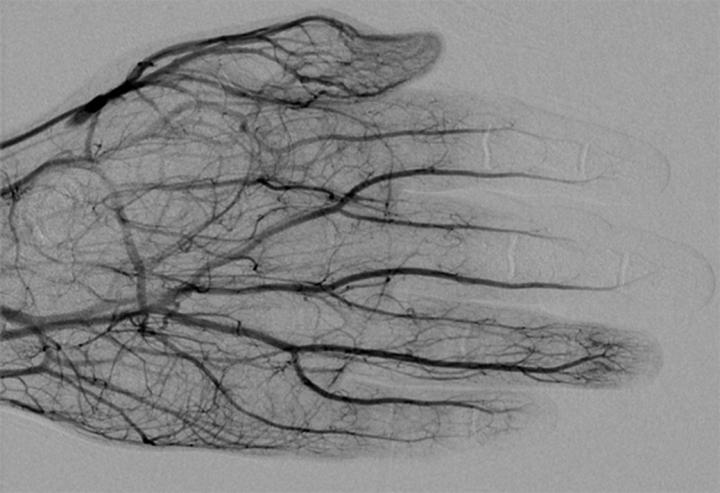
American Journal of Roentgenology meta-analysis of thrombolytic therapy for severe frostbite injuries finds promising results for both intraarterial and intravenous tissue plasminogen activator in amputation reduction
IMAGE

Credit: American Journal of Roentgenology (AJR)


Leesburg, VA, February 6, 2020–An ahead-of-print article in the April issue of the American Journal of Roentgenology (AJR) reviewing various techniques and clinical management paradigms to treat severe frostbite injuries–relevant for interventional radiologists, especially–showed promising results using both intraarterial (IA) and IV tPA (tissue plasminogen activator) to reduce amputation.

“Severe frostbite injuries can lead to devastating outcomes with loss of limbs and digits, yet clinical management continues to consist primarily of tissue rewarming, prolonged watchful waiting, and often delayed amputation,” wrote Boston Medical Center radiologists John Lee and Mikhail Higgins.

A search of the literature by Lee and Higgins yielded 157 citations. After manually screening for inclusion criteria of case reports, case series, cohort studies, and randomized prospective studies that reported the use of tPA to treat severe frostbite injuries, 16 qualified for review.

Lee and Higgins’ analyzed series included 209 patients with 1109 digits at risk of amputation treated with IA or IV tPA–116 and 77 patients, respectively. A total 926 at-risk digits were treated with IA tPA and resulted in amputation of 222 digits, for a salvage rate of 76%. Twenty-four of 63 patients underwent amputation after IV tPA, resulting in a 62% salvage rate.

Both digital subtraction angiography (DSA) and triple-phase bone scan were utilized for initial imaging evaluation of patients with severe frostbite injuries.

Additional concurrent treatment included therapeutic heparin at 500 U/h, warfarin with target international normalized ratio of 2:3, nonsteroidal anti-inflammatory drugs, pain management, and light dressings with topical antimicrobial agents.

“For many years,” Lee and Higgins concluded, “the axiom ‘frostbite in January, amputate in July’ was an accurate description of the common outcome in frostbite injuries. Through a meta-analysis of thrombolytic therapy in the management of severe frostbite, this article provides a useful guideline for interventional radiologists, including a suggested protocol, inclusion and exclusion criteria, and potential complications.”

###

Founded in 1900, the American Roentgen Ray Society (ARRS) is the first and oldest radiological society in North America, dedicated to the advancement of medicine through the profession of radiology and its allied sciences. An international forum for progress in medical imaging since the discovery of the x-ray, ARRS maintains its mission of improving health through a community committed to advancing knowledge and skills with an annual scientific meeting, monthly publication of the peer-reviewed American Journal of Roentgenology (AJR), quarterly issues of InPractice magazine, AJR Live Webinars and Podcasts, topical symposia, print and online educational materials, as well as awarding scholarships via The Roentgen FundĀ®.

Media Contact
Logan K. Young
[email protected]
703-858-4332

Original Source

https://arrs.org/ARRSLIVE/Pressroom/PressReleases/What_Interventional_Radiologists_Know_Frostbite_Amputation.aspx

Related Journal Article

http://dx.doi.org/10.2214/AJR.19.21592

Tags: BiologyCritical Care/Emergency MedicineDermatologyDiagnosticsMedicine/HealthPainPharmaceutical SciencesSurgeryTrauma/Injury
Share12Tweet8Share2ShareShareShare2

Related Posts

Cosmic breadcrumb trail uncovers hidden dark matter

Cosmic breadcrumb trail uncovers hidden dark matter

August 12, 2026
NMR Uncovers Hidden Electrolyte States, Pointing Toward Better Batteries

NMR Uncovers Hidden Electrolyte States, Pointing Toward Better Batteries

August 12, 2026

AI Forecasts the Ocean Amid the Climate Crisis

August 12, 2026

Dual-interface design enables high-performance ampere-hour aqueous zinc-iodine pouch cells

August 12, 2026
Please login to join discussion

POPULAR NEWS

  • Novel slotted circumferential groove with self-recirculation boosts transonic compressor rotor stability

    29 shares
    Share 12 Tweet 7
  • Mechanistic Simulation-Trained Neural Networks Improve Scientific Inference

    29 shares
    Share 12 Tweet 7
  • AlzheiNN: Convolutional Neural Network Model Classifies Alzheimer’s Disease

    29 shares
    Share 12 Tweet 7
  • How CEOs’ Multidisciplinary Backgrounds Shape Corporate Financing and Investment Maturity Mismatches

    29 shares
    Share 12 Tweet 7

About

We bring you the latest biotechnology news from best research centers and universities around the world. Check our website.

Follow us

Recent News

Novel slotted circumferential groove with self-recirculation boosts transonic compressor rotor stability

Mechanistic Simulation-Trained Neural Networks Improve Scientific Inference

AlzheiNN: Convolutional Neural Network Model Classifies Alzheimer’s Disease

Subscribe to Blog via Email

Enter your email address to subscribe to this blog and receive notifications of new posts by email.

Join 86 other subscribers
  • Contact Us

Bioengineer.org Ā© Copyright 2023 All Rights Reserved.

Welcome Back!

Login to your account below

Forgotten Password?

Retrieve your password

Please enter your username or email address to reset your password.

Log In
No Result
View All Result
  • Homepages
    • Home Page 1
    • Home Page 2
  • News
  • National
  • Business
  • Health
  • Lifestyle
  • Science

Bioengineer.org Ā© Copyright 2023 All Rights Reserved.