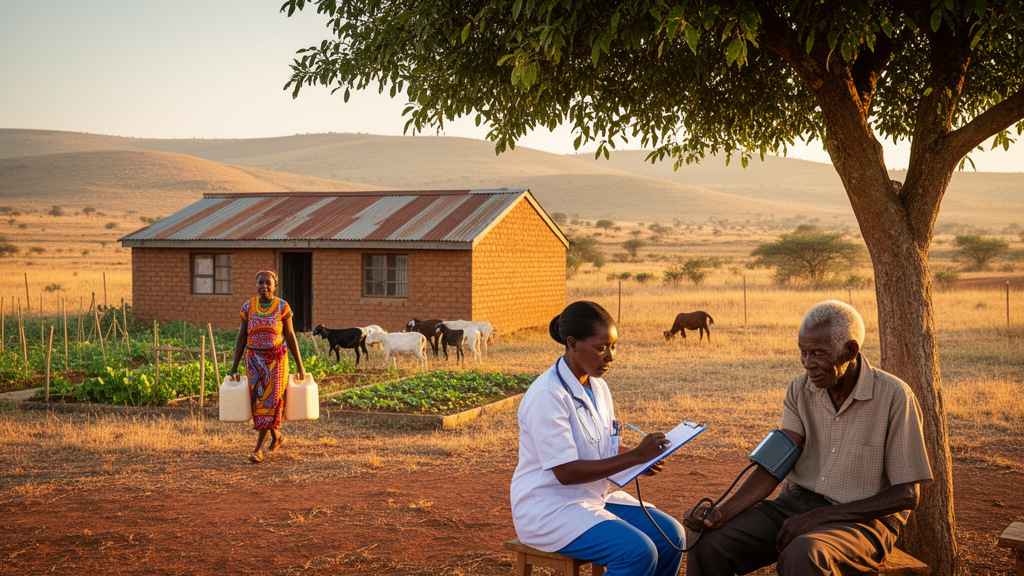
A cross-sectional survey of 398 adults aged 18 years and older attending primary healthcare facilities in the DIMAMO Health and Demographic Surveillance System catchment area of rural South Africa has uncovered a strikingly uneven pattern of chronic non-communicable disease risk factors across the socioeconomic spectrum. Rather than a simple gradient in which disadvantage uniformly drives poor health, the study found that higher socioeconomic status was linked to harmful alcohol use, while it appeared protective against physical inactivity, revealing a complex socioeconomic patterning of risk in this rural population.
The researchers measured socioeconomic status using an asset-based wealth index derived through principal component analysis and sorted participants into quintiles, from poorest to richest. Risk factors were assessed with questionnaires adapted from the World Health Organization’s STEPS and SAGE instruments, covering tobacco use, harmful alcohol use, physical inactivity, low fruit and vegetable intake, high salt intake, and self-reported hypertension and diabetes. Crude and adjusted prevalence ratios were estimated using modified Poisson regression with robust standard errors.
The most pronounced association emerged for harmful alcohol use. After adjustment, participants in the richer quintile had a prevalence 1.58 times that of the poorest quintile (95% CI: 1.03–2.41), and those in the richest quintile had a prevalence 1.78 times as high (95% CI: 1.11–2.85). Physical inactivity, by contrast, was less prevalent among participants in the middle, richer, and richest quintiles than among the poorest, suggesting that greater material resources in this setting coincide with more habitual physical activity.
Not every risk factor tracked wealth so clearly. Self-reported diabetes tended to be more prevalent in the richest quintile, but this association did not reach statistical significance, and socioeconomic status was not significantly associated with hypertension after adjustment. Tobacco use showed a different social pattern altogether: it was less prevalent among female participants and among those with secondary or tertiary education, indicating that sex and educational attainment, rather than household wealth alone, shape smoking behavior in this community.
Beyond the wealth index, age, sex, educational attainment, and employment status were each associated with several of the chronic risk factors measured. The authors note that these findings highlight the complex socioeconomic patterning of non-communicable disease risks and support the design of context-specific interventions, together with longitudinal research to clarify how these associations unfold over time in rural South African populations.
Subject of Research: Socioeconomic inequalities in chronic non-communicable disease risk factors among adults in the DIMAMO surveillance site, rural South Africa
Article Title: Factors associated with socioeconomic inequalities in the prevalence of chronic NCD risk factors in the DIMAMO surveillance site, South Africa
Article References: Ravhuhali, K. G., Ntimana, C. B., & Maimela, E. (2026). Factors associated with socioeconomic inequalities in the prevalence of chronic NCD risk factors in the DIMAMO surveillance site, South Africa. PLOS Global Public Health, 6(10), e0007483. https://doi.org/10.1371/journal.pgph.0007483
Image Credits: AI Generated
DOI: 10.1371/journal.pgph.0007483
Keywords: non-communicable diseases, socioeconomic inequality, DIMAMO HDSS, rural South Africa, harmful alcohol use, physical inactivity, tobacco use, hypertension, diabetes, wealth index, cross-sectional survey, WHO STEPS
News Source: Courtney Benton. (October 26, 2026). Wealth Shapes Chronic Disease Risks in Rural South Africa, Survey Finds. Scienmag.