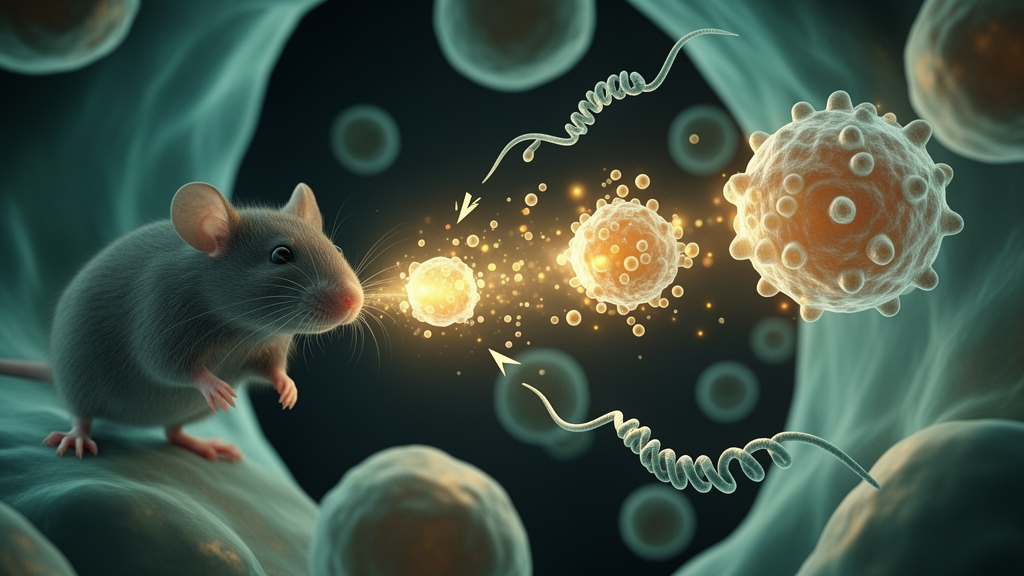
Borrelia burgdorferi, the bacterium that causes Lyme disease, triggers a strong type I interferon (IFN-I) response that has been linked to chronic inflammatory conditions such as Lyme arthritis. Yet the function of this signaling pathway during the earliest phase of infection has remained unresolved. A new mouse study now shows that IFN-I signaling plays a protective role at the start of infection, restricting the spirochete before it spreads widely through the body.
Five days after experimental challenge, mice lacking the type I interferon receptor IFNAR1 carried markedly elevated bacterial burdens at the site of inoculation, indicating that IFN-I signaling normally helps contain early bacterial expansion. By ten days post-challenge, the deficiency produced significantly increased bacterial loads in the skin and a trend toward higher loads in heart tissue, while bacterial levels in the joints were unaffected. This time- and tissue-dependent pattern suggests the pathway’s influence varies across infection stages and anatomical sites.
The researchers traced the protective effect to macrophages, immune cells that engulf and destroy pathogens. IFN-I signaling enhanced macrophage uptake of B. burgdorferi, improved phagosomal processing, and strengthened intracellular killing of the bacteria. The pathway also modulated inflammatory cytokine responses and promoted the recruitment of macrophages to the inoculation site, reinforcing local defenses during the critical early window.
Consistent with these mechanistic findings, pharmacological activation of IFN-I signaling boosted macrophage antimicrobial function and improved bacterial clearance in the experimental system. The authors conclude that IFN-I is a key component of early host defense against B. burgdorferi and describe a time-dependent role in Lyme disease pathogenesis: the same signaling pathway that protects against early infection contrasts with the pathogenic effects attributed to it at later inflammatory stages. Because the results come from a mouse model, translating them into human therapeutic strategies will require further investigation, but the study clarifies why IFN-I can appear both protective and harmful depending on when it acts during infection.
Subject of Research: The protective role of type I interferon signaling in early Borrelia burgdorferi infection control in mice
Article Title: Type I interferon signaling promotes early innate control of Borrelia burgdorferi infection
Article References: Priya, R., Raghunandanan, S., Mihaljica, D., Alakhras, N. S., Kaplan, M. H., & Yang, X. F. (2026). Type I interferon signaling promotes early innate control of Borrelia burgdorferi infection. PLOS Pathogens, 22(10), e1013996. https://doi.org/10.1371/journal.ppat.1013996
Image Credits: AI Generated
DOI: 10.1371/journal.ppat.1013996
Keywords: Lyme disease, Borrelia burgdorferi, type I interferon, IFNAR1, macrophages, innate immunity, phagocytosis, bacterial clearance, mouse model, Lyme arthritis, Type, interferon
News Source: Kristina Jarvis. (October 26, 2026). Type I Interferon Signaling Helps Clear Early Lyme Disease Infection in Mice. Scienmag.