• HOME
  • NEWS
  • EXPLORE
    • CAREER
      • Companies
      • Jobs
    • EVENTS
    • iGEM
      • News
      • Team
    • PHOTOS
    • VIDEO
    • WIKI
  • BLOG
  • COMMUNITY
    • FACEBOOK
    • INSTAGRAM
    • TWITTER
Thursday, March 26, 2026
BIOENGINEER.ORG
No Result
View All Result
  • Login
  • HOME
  • NEWS
  • EXPLORE
    • CAREER
      • Companies
      • Jobs
        • Lecturer
        • PhD Studentship
        • Postdoc
        • Research Assistant
    • EVENTS
    • iGEM
      • News
      • Team
    • PHOTOS
    • VIDEO
    • WIKI
  • BLOG
  • COMMUNITY
    • FACEBOOK
    • INSTAGRAM
    • TWITTER
  • HOME
  • NEWS
  • EXPLORE
    • CAREER
      • Companies
      • Jobs
        • Lecturer
        • PhD Studentship
        • Postdoc
        • Research Assistant
    • EVENTS
    • iGEM
      • News
      • Team
    • PHOTOS
    • VIDEO
    • WIKI
  • BLOG
  • COMMUNITY
    • FACEBOOK
    • INSTAGRAM
    • TWITTER
No Result
View All Result
Bioengineer.org
No Result
View All Result
Home NEWS Science News Chemistry

Ways to improve petroleum coke combustibility studied with presence of metal catalysts

Bioengineer by Bioengineer
September 21, 2020
in Chemistry
Reading Time: 2 mins read
0
IMAGE
Share on FacebookShare on TwitterShare on LinkedinShare on RedditShare on Telegram

The publication saw light in ACS Omega
IMAGE

Credit: Kazan Federal University

There was a time when mazut was the final stage of oil refining; however, with technology becoming more efficient, the main residue from refining is now petroleum coke. Scientists are looking for ways to use coke in the industry, and it’s no easy task. As of now, it is mostly being stored in landfills.

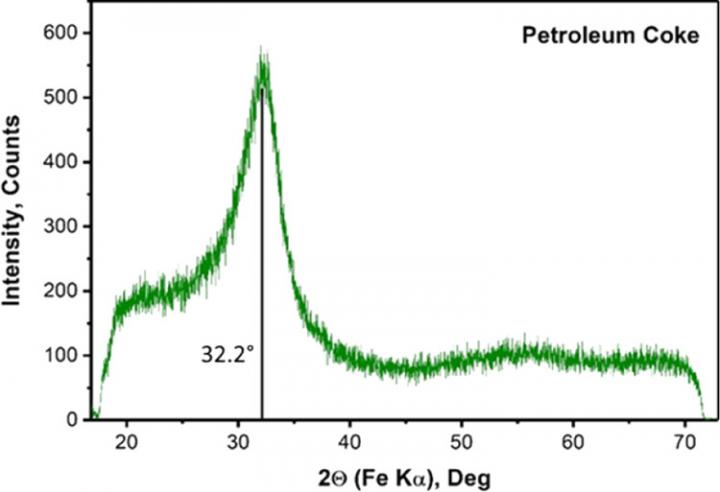
“Petroleum coke is not easily combustible because of its graphite-like structure,” says co-author Emil Sayfullin. “Graphite burns at 700 C, and petroleum coke, depending on its composition, starting from 450 C. It’s difficult and not financially viable to reach some temperatures, so we look for ways to decrease the combustion temperatures with catalysts.”

In this paper, the researchers used the so-called “fixed fluidized bed” to study catalyst activity.

Sayfullin explains, “The gist of the technology is to make every particle levitate in air. For instance, if we pour coal powder into a sieve and then blow air from below the sieve, the powder particles will levitate and disintegrate into myriads of smaller parts. The goal is to provide maximum air contact with the compound to enhance combustion.”

The second problem with coke is that it contains all the metals that are present in petroleum, which also can have unpredictable effects on burning.

The fixed fluidized bed technology is already widely used overseas, but is relatively new for the Russian oil industry. To improve it, the KFU scientists mixed coke particles with quartz sand. This created a sort of a “freeze” in the porous layer and simplified the study of the kinetics of petroleum coke combustion in the presence of catalysts.

###

Media Contact
Yury Nurmeev
[email protected]

Original Source

https://kpfu.ru/eng/news-eng/ways-to-improve-petroleum-coke-combustibility.html

Related Journal Article

http://dx.doi.org/10.1021/acsomega.0c02250

Tags: Chemistry/Physics/Materials SciencesEnergy SourcesIndustrial Engineering/Chemistry
Share12Tweet8Share2ShareShareShare2

Related Posts

Isolated H2-Reduced Clusters Boost CO2-to-Methanol Catalysis

Isolated H2-Reduced Clusters Boost CO2-to-Methanol Catalysis

March 25, 2026
blank

Physicists Identify Electronic Drivers Behind Flat Band Quantum Materials

March 21, 2026

Würzburg Chemistry Professor Claudia Höbartner Receives Prestigious Honor

March 20, 2026

Scientists Reveal How Magnets Control Metamaterial Behavior

March 20, 2026
Please login to join discussion

POPULAR NEWS

  • blank

    Revolutionary AI Model Enhances Precision in Detecting Food Contamination

    96 shares
    Share 38 Tweet 24
  • Imagine a Social Media Feed That Challenges Your Views Instead of Reinforcing Them

    1003 shares
    Share 397 Tweet 248
  • Uncovering Functions of Cavernous Malformation Proteins in Organoids

    54 shares
    Share 22 Tweet 14
  • Promising Outcomes from First Clinical Trials of Gene Regulation in Epilepsy

    51 shares
    Share 20 Tweet 13

About

We bring you the latest biotechnology news from best research centers and universities around the world. Check our website.

Follow us

Recent News

In-Sensor Cryptography Links Physical Process to Digital Identity

Can Psychosocial Factors Influence Cancer Risk?

Depression Factors in Elderly: Pre vs. Post-COVID Analysis

Subscribe to Blog via Email

Success! An email was just sent to confirm your subscription. Please find the email now and click 'Confirm' to start subscribing.

Join 78 other subscribers
  • Contact Us

Bioengineer.org © Copyright 2023 All Rights Reserved.

Welcome Back!

Login to your account below

Forgotten Password?

Retrieve your password

Please enter your username or email address to reset your password.

Log In
No Result
View All Result
  • Homepages
    • Home Page 1
    • Home Page 2
  • News
  • National
  • Business
  • Health
  • Lifestyle
  • Science

Bioengineer.org © Copyright 2023 All Rights Reserved.