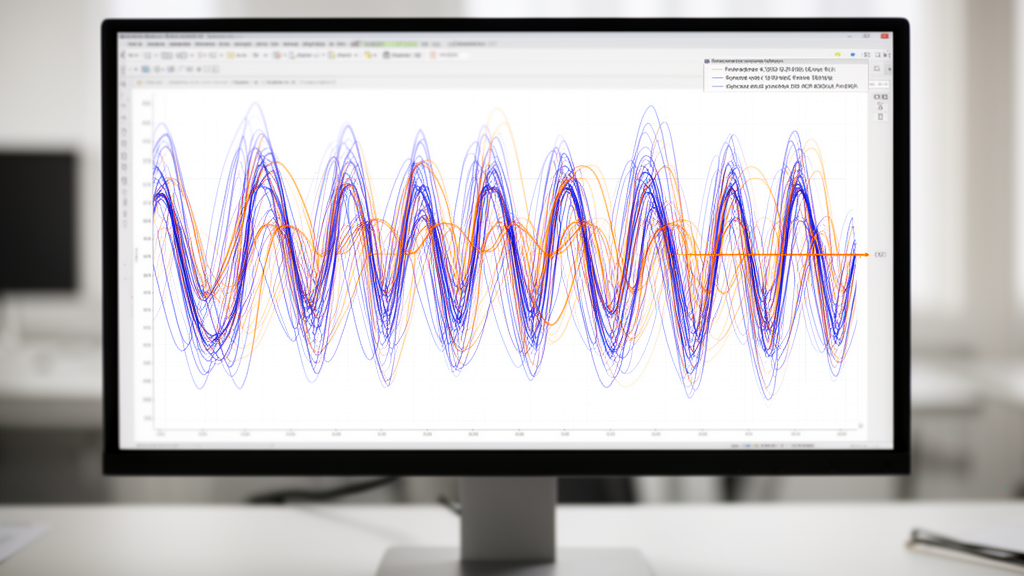
Time series forecasting remains a central challenge in data science, particularly in domains that demand accurate and adaptive predictive modeling. Within the soft computing paradigm, the discrete wavelet transform has emerged as a powerful tool for time-frequency decomposition, offering both strong predictive performance and interpretable structures. Although DWT-based forecasting algorithms have proliferated across diverse research communities, researchers have lacked a transparent and methodologically structured survey with a comparative analysis that clarifies the underlying mechanisms and practical effectiveness of these approaches.
A team led by Ruobin Gao, Yankun Yang, Denghui Qin, Yang Yu and Haoxin Yu, together with P. N. Suganthan, addresses this gap in a review published in Neural Computing and Applications. Their paper provides an updated survey of DWT-based soft computing approaches for forecasting. The authors summarize the core mechanisms through which DWT may affect forecasting accuracy, identify common limitations in existing frameworks, and propose a unified interpretation for error sources.
The survey is grounded in extensive empirical evaluations conducted on four benchmark groups of publicly available datasets covering multiple application domains. This experimental component distinguishes the work from a purely narrative review, because the reported results illustrate how implementation choices in DWT-based forecasting can substantially affect empirical performance.
Two implementation choices stand out in the findings. The first is the decomposition protocol, which governs how a time series is split into its wavelet components before a forecasting model is applied. The second is boundary handling, the treatment of the series edges during decomposition. According to the authors, choices related to decomposition protocol and boundary handling can substantially affect empirical performance, a result that provides a more cautious and practically oriented perspective on the design of wavelet-based forecasting methods.
The practical implication is that reported gains from hybrid wavelet-soft computing models may depend as much on these implementation details as on the forecasting architecture itself. By proposing a unified interpretation for error sources, the survey offers researchers a framework for diagnosing why a particular DWT-based pipeline performs well or poorly, rather than attributing all differences to the choice of predictor.
For practitioners, the message is one of caution. The authors argue that the field needs a more careful accounting of how decomposition and boundary decisions shape results, and their benchmark evaluations are intended to support that accounting. The survey thereby aims to guide both the interpretation of past results and the design of future wavelet-based forecasting frameworks.
The work consolidates a rapidly expanding literature in which DWT-based methods have been developed across multiple research communities. By structuring the survey around core mechanisms, common limitations and error sources, the authors provide a methodological map that clarifies what these hybrid soft computing approaches can and cannot deliver in predictive modeling tasks.
The review, published as article number 871 in Volume 38 of Neural Computing and Applications, reflects the journal’s focus on neural and soft computing methods applied to real-world problems. Its combination of a structured literature synthesis with benchmark experiments on publicly available data offers a reference point for researchers seeking to evaluate wavelet-based forecasting pipelines under transparent and comparable conditions.
Subject of Research: An updated survey and experimental evaluation of hybrid wavelet-based soft computing methods for time series forecasting.
Article Title: Hybrid wavelet-based soft computing methods for time series forecasting: an updated survey and experimental insights
Article References: Gao, R., Yang, Y., Qin, D., Yu, Y., Yu, H., & Suganthan, P. N. (2026). Hybrid wavelet-based soft computing methods for time series forecasting: an updated survey and experimental insights. Neural Computing and Applications, 38(21), Article 871. https://doi.org/10.1007/s00521-026-12562-6
Image Credits: AI Generated
DOI: 10.1007/s00521-026-12562-6
Keywords: time series forecasting, discrete wavelet transform, soft computing, hybrid models, decomposition protocol, boundary handling, benchmark datasets, predictive modeling, survey, error sources, Hybrid, wavelet-based
News Source: Denise Maddox. (November 7, 2026). Wavelet-based forecasting survey finds design choices drive accuracy. Scienmag.