
VidSeqOpt Cuts Video Processing Time by at Least 23.7 Percent
Researchers introduced VidSeqOpt, an adaptive dimensionality reduction method for temporal video data that reduces per-frame processing time by at least ...
Researchers introduced VidSeqOpt, an adaptive dimensionality reduction method for temporal video data that reduces per-frame processing time by at least ...

A comprehensive scientometric study of 2,110 Scopus-indexed publications reveals that global deepfake scholarship expanded exponentially through 2024, led by dense ...

A distributed latent encoding framework reduces retrieval latency and memory overhead across six benchmark datasets, offering an efficient cloud retrieval ...

Researchers have developed a dynamic graph anomaly detection architecture combining temporal-structural attention with variational autoencoders, achieving improved detection accuracy across ...

A new federated recommendation framework called GP-FedRS optimizes trainable server prototypes to enhance ranking quality and overcome representation shift under ...

A PRISMA-guided systematic review of 81 deep-learning studies details how text-and-image multimodal fake news detection has transitioned toward transformer encoders ...

Researchers have developed a dual centroid intuitionistic fuzzy twin kernel ridge regression classifier that solves linear equations to attain 93.92 ...

Researchers developed HGSL-SPSE, a heterogeneous graph structure learning model that outperformed eight mainstream baselines across node classification and clustering benchmarks.

A systematic survey evaluates modern deep learning architectures and benchmark datasets for traffic volume prediction across recent transport studies.
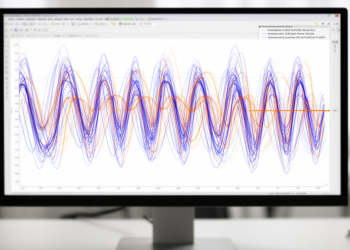
An updated survey of wavelet-based soft computing forecasting methods shows that decomposition protocol and boundary handling choices can substantially affect ...

A PRISMA-based systematic review of 142 primary studies categorises AI deepfake generation and detection methods and identifies dataset bias, poor ...

A unified taxonomy of long-term forecasting models shows that channel-independent designs excel on simple benchmarks while channel-dependent designs gain an ...

A new hierarchical feature attention network reconstructs high-resolution images from low-resolution inputs while keeping the model below one million parameters.

A systematic review finds deep learning exceeds 97 percent accuracy on remote sensing benchmarks but struggles with generalization, spectral exploitation ...

A new review in Discover Artificial Intelligence finds that bias detection and fairness auditing techniques for large language models remain ...

A new mini-review maps what happens when multimodal sensing, federated privacy and continual adaptation must work simultaneously in human activity ...

A narrative review finds that airway AI must preserve branching anatomy, generalize across institutions and demonstrate clinical utility rather than ...

A sine-guided Transformer–CNN network significantly outperformed 21 comparison methods on three benchmark datasets for salient-object detection in optical remote-sensing imagery.

A benchmark study found that concurrency-aware AI achieved up to 98.9% intrusion-detection accuracy, 2.1-times throughput and 57.5% lower average latency ...

A weighted training method that distinguishes likely shortcut examples improved AI robustness across four image and language benchmarks without adding ...