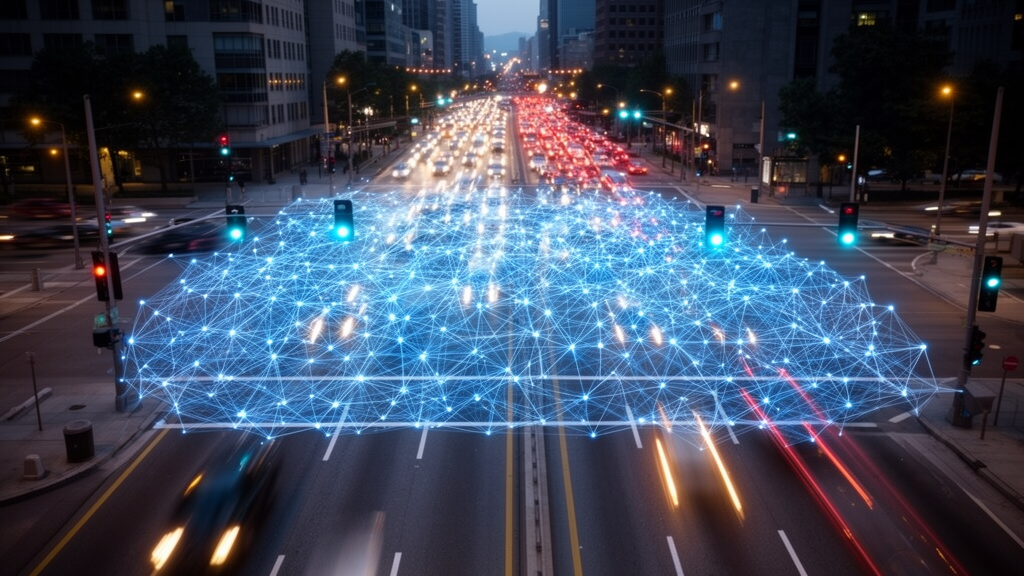
A comprehensive systematic survey published in Data Science and Engineering examines how modern deep learning technologies have reshaped traffic volume prediction across recent transportation research. Analyzing forty-two studies published between 2020 and September 2024, the investigation outlines how advanced neural architectures have established substantial performance advantages over traditional statistical formulations and early machine learning frameworks. Traffic volume prediction focuses specifically on estimating the exact number of motorized vehicles traversing a designated spatial area during specified future time intervals. Accurately projecting these vehicle volumes provides foundational intelligence for metropolitan transportation management, facilitating dynamic traffic signal coordination, proactive congestion regulation, urban infrastructural development, and navigation rerouting to alleviate travel delays and tailpipe emissions. While earlier surveys examined broader transportation metrics such as vehicle velocity, the authors emphasize that traffic volume represents a distinct, demand-driven phenomenon that exhibits sharp non-linear fluctuations, requiring specialized modeling architectures capable of automatically learning intricate spatial and temporal representations directly from data.
The mathematical formulation of traffic volume forecasting operates primarily on spatio-temporal data structures consisting of three interrelated components: time series observations, spatial network descriptions, and supplementary environmental factors. Time series sequences capture historical counts collected across equally spaced observation intervals, while spatial configurations describe topological relationships among sensors or segments through graph networks or discrete rectangular grids. Supplementary inputs incorporate external contextual factors, including datetime stamps, ambient weather metrics, and regional points of interest. Within technical literature, counting methodologies generally bifurcate into stationary point detections recorded by fixed road sensors across all motorized traffic, and moving trajectory logs gathered from global positioning systems deployed across commercial fleets such as ride-hailing vehicles. Furthermore, the survey clarifies the conceptual distinction between traffic volume and the broader textbook definition of traffic flow: while transportation engineering treats traffic flow as an integrated system encompassing density, speed, and volume, contemporary deep learning research frequently uses the term traffic flow in a narrower sense that functions as an operational synonym for vehicle volume prediction.
The methodological trajectory of traffic volume forecasting traces back to the late 1970s, initiating with classical statistical approaches such as the autoregressive integrated moving average model proposed in 1979, alongside subsequent seasonal, vector, and exponential smoothing derivatives. By the turn of the twenty-first century, traditional machine learning models gained traction, including support vector regression, k-nearest neighbors, vector autoregression, and shallow multilayer perceptrons. In parallel, probabilistic graphical systems such as Bayesian networks demonstrated capability in modeling post-incident anomalies. Nevertheless, these conventional techniques encountered persistent bottlenecks: statistical models depended heavily on manual parameter tuning and struggled with non-linear correlations, while shallow networks lacked inductive biases for complex road topologies. Modern deep learning addresses these historical constraints through automated parameter optimization, multi-scale feature representation learning, flexible component modularity, and demonstrably higher predictive accuracy across complex urban networks.
To model temporal dependencies within traffic volume sequences, researchers deploy recurrent neural networks, temporal convolutional networks, and attention mechanisms. Early recurrent approaches relied heavily on long short-term memory networks to mitigate vanishing and exploding gradient problems across extended historical horizons. However, the survey observes a marked architectural migration: ten of the sixteen surveyed recurrent models adopted gated recurrent units rather than long short-term memory networks. Because gated recurrent units utilize a streamlined two-gate structure comprising reset and update gates, they lower computational complexity and reduce overfitting risks while efficiently extracting short-term dynamics. To capture extended time dependencies, modern frameworks increasingly pair gated recurrent units with complementary mechanisms such as dilated convolutions or attention blocks. Additionally, several contemporary works integrate ordinary differential equations into recurrent architectures, modeling traffic hidden states as continuous-time dynamic systems that maintain physical interpretability while operating with significantly reduced parameter overhead.
Convolutional architectures offer another powerful temporal modeling paradigm, utilizing sliding kernels that leverage translational invariance and local connectivity to achieve parallelized computation and stable gradient propagation. Beyond standard one-dimensional convolutions that capture localized temporal patterns such as hourly closeness and daily periodicity, temporal convolutional networks employ dilated causal convolutions to expand receptive fields exponentially without discarding temporal ordering. Benchmark frameworks such as Graph WaveNet demonstrated how stacked dilated causal convolution layers effectively capture multi-scale temporal dependencies, inspiring subsequent architectures like STEP and STD-MAE. Furthermore, researchers frequently enhance temporal convolutional networks by incorporating gated linear units and residual connections, as exemplified by the standard baseline STGCN. These gated convolutions adaptively regulate information throughput, allowing models to separate volatile short-term fluctuations from macro-level periodic trends while filtering out observational noise across consecutive time intervals.
Attention mechanisms have emerged as an exceptionally flexible paradigm for temporal feature learning, dynamically calculating relevance scores across historical observation steps through learnable query, key, and value transformations. Multi-head self-attention mechanisms project inputs across parallel subspaces, enabling networks to capture diverse periodic cycles across hourly, daily, and weekly intervals simultaneously. Several surveyed works introduce structural optimizations to overcome quadratic computational overhead: windowed attention designs, as implemented in ST-WA, substitute global self-attention with learnable proxy vectors to achieve linear computational complexity, while bottleneck attentive blocks in SSTBAN achieve linear scaling across both time steps and spatial nodes. Transformer encoder-decoder architectures, incorporating sinusoidal or learnable positional encodings, comprehensively model global spatio-temporal dependencies. Advanced frameworks harness masked pretraining strategies to reconstruct masked inputs across spatial and temporal dimensions, while recent implementations explore fine-tuning and prompting pre-trained large language models to enhance long-range forecasting capabilities.
In the spatial domain, graph neural networks have overwhelmingly replaced legacy two-dimensional grid convolutions, with thirty-nine of the forty-two surveyed studies utilizing graph structures to preserve real-world transportation topology. Because static predefined graphs derived from physical road distances often fail to capture dynamic interactions, modern research constructs supplemental graphs using data-driven or learning-based strategies. Data-driven structural methods exploit graph theory algorithms, such as Laplacian matrix decompositions and Dijkstra shortest-path calculations, to inject topological priors. Time-series data-driven techniques utilize dynamic time warping to uncover non-local similarities among geographically separated segments exhibiting similar traffic trends. Learning-based approaches dominate modern spatial modeling, using learnable node embedding matrices to generate dynamic adjacency matrices through continuous backpropagation. By projecting spatial nodes into parameterized embedding spaces, models uncover latent road interactions without relying exclusively on fixed geographic proximity, thereby capturing dynamic bottlenecks and congestion migrations.
Graph neural network architectures for spatial feature learning primarily branch into graph convolutional networks and graph attention networks. Graph convolutional networks encompass spatial formulations, which aggregate neighboring features through spatial transformations such as diffusion convolutions based on random walks, and spectral formulations, which utilize Chebyshev polynomial approximations to perform convolutions within the graph Laplacian spectral domain. Diffusion convolution frameworks, pioneered by models like DCRNN and extended in Graph WaveNet, decouple intrinsic node signals from directional network diffusion. Graph attention networks extend spatial convolutions by computing dynamic, anisotropic attention weights across neighboring nodes, allowing models to quantify the time-varying influence of adjacent roadways. Optimized variants address scalability constraints by downsampling neighbor evaluations, selecting a logarithmic fraction of critical nodes for convolution, or incorporating meta-learning mechanisms to dynamically generate node-specific and edge-specific aggregation parameters.
To synthesize temporal and spatial representations into coherent forecasting pipelines, modern models implement three primary hybrid design patterns: sequential, parallel, and fusion architectures. Sequential hybrids establish multi-stage pipelines that process dimensions in a defined order; temporal-first pipelines prioritize volatile dynamic trends before aggregating spatial topology, whereas spatial-first pipelines extract structural network features prior to temporal propagation. Parallel hybrids assign dedicated submodules to extract spatial and temporal features concurrently, synthesizing representations through concatenation, additive summation, or adaptive attention and gating mechanisms. Fusion hybrids conceptualize space and time as inherently indivisible spatiotemporal atoms, processing multi-dimensional inputs synchronously within unified computational units. Structural fusion models integrate convolutional operations directly into recurrent or differential equation cells, data fusion models construct localized spatiotemporal graphs linking adjacent time steps, and parameter-level fusion models employ dynamic windowed encodings and meta-learning modules to unify spatiotemporal dynamics.
Efficiency analyses reveal that while most deep learning models execute inference within seconds to minutes, multi-stage pretraining frameworks demand substantial GPU memory and computational overhead. Sensitivity evaluations across prediction horizons of three, six, and twelve intervals demonstrate that while forecasting errors inevitably rise over longer horizons, attention-enhanced and masked pretraining architectures exhibit superior resilience compared to older baseline convolutions. Looking forward, the survey outlines essential research directions, emphasizing the critical need for standardized, multi-year datasets such as LargeST to counteract data-shifting issues, the systematic incorporation of supplementary climate and incident data, the development of visual and theoretical frameworks to improve model interpretability, and the thoughtful adaptation of foundation language models for intelligent transportation systems.
Subject of Research: Deep learning architectures and benchmark datasets for urban traffic volume prediction
Article Title: A Survey on Modern Deep Learning Techniques for Traffic Volume Prediction
Article References: Qin, Z., Wang, M., Zhu, H., Lee, W.-C., Cui, N., Yu, J., Tian, Z., Hong, Y., & Yin, J. (2026). A Survey on Modern Deep Learning Techniques for Traffic Volume Prediction. Data Science and Engineering, 11(3), 473-512. https://doi.org/10.1007/s41019-025-00340-8
Image Credits: AI Generated
DOI: 10.1007/s41019-025-00340-8
Keywords: traffic volume prediction, deep learning, graph neural networks, temporal convolutional networks, attention mechanisms, spatiotemporal modeling, intelligent transportation systems, benchmark datasets, Survey, Modern, Deep, Learning
News Source: Blake Davidson. (November 8, 2026). Deep Learning Models Transform Urban Traffic Volume Forecasting Across Global Road Networks. Scienmag.