• HOME
  • NEWS
  • EXPLORE
    • CAREER
      • Companies
      • Jobs
    • EVENTS
    • iGEM
      • News
      • Team
    • PHOTOS
    • VIDEO
    • WIKI
  • BLOG
  • COMMUNITY
    • FACEBOOK
    • INSTAGRAM
    • TWITTER
Sunday, February 8, 2026
BIOENGINEER.ORG
No Result
View All Result
  • Login
  • HOME
  • NEWS
  • EXPLORE
    • CAREER
      • Companies
      • Jobs
        • Lecturer
        • PhD Studentship
        • Postdoc
        • Research Assistant
    • EVENTS
    • iGEM
      • News
      • Team
    • PHOTOS
    • VIDEO
    • WIKI
  • BLOG
  • COMMUNITY
    • FACEBOOK
    • INSTAGRAM
    • TWITTER
  • HOME
  • NEWS
  • EXPLORE
    • CAREER
      • Companies
      • Jobs
        • Lecturer
        • PhD Studentship
        • Postdoc
        • Research Assistant
    • EVENTS
    • iGEM
      • News
      • Team
    • PHOTOS
    • VIDEO
    • WIKI
  • BLOG
  • COMMUNITY
    • FACEBOOK
    • INSTAGRAM
    • TWITTER
No Result
View All Result
Bioengineer.org
No Result
View All Result
Home NEWS Science News Health

Wavelength-encoded laser particles for massively multiplexed cell tagging

Bioengineer by Bioengineer
July 23, 2019
in Health
Reading Time: 2 mins read
0
Share on FacebookShare on TwitterShare on LinkedinShare on RedditShare on Telegram

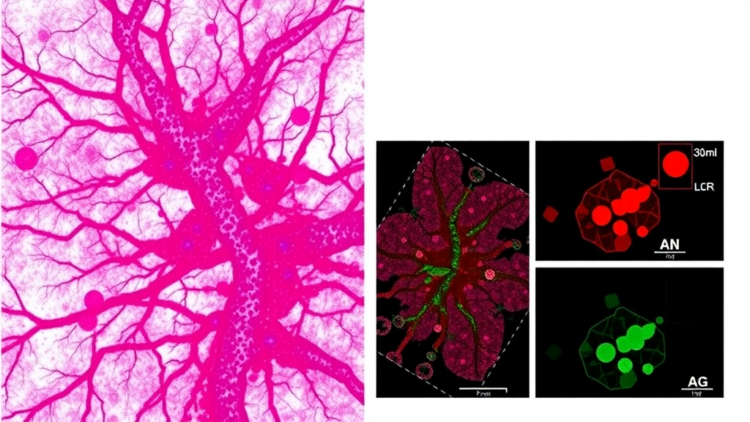
A new study, “Wavelength-encoded laser particles for massively multiplexed cell tagging,” by scientists in the Wellman Center for Photomedicine has been published in Nature Photonics.

According to the study’s researchers, “We have developed a new class of probes, laser particles, which are tiny lasers that can be inserted inside living cells. These laser particles are biocompatible, occupy only 0.1% of the volume of a typical cell and don’t interfere with its normal behavior. We use the light emitted by these probes to tag and track cells as they move throughout complex biological samples. They can be thought as barcodes that can be used to distinguish cells from one another.

Conventional probes used to tag cells are based on fluorescence emission; scientists use different fluorescent molecules with different colors to distinguish different cells. Due to intrinsic limitations, however, fluorescence can only provide a handful of distinguishable colors, usually up to 4-5. Our new probes emit laser light, which can produce many more distinguishable colors, around 400 in this work.

We have used these laser particles to tag tumor cells and track their individual movement for days in a tumor spheroid (a system which mimics the growth of a tumor). In the future, we will be able to use this information to understand how tumors grow and identify specific cells with a higher potential of forming metastasis. It will be possible to single out these cells and perform further studies on them, like sequencing of their genetic profile. This will allow us to target specific genes with more intentionality, improving the options with which we can treat tumors in order to stop their spreading and formation of metastases.”

###

About the Massachusetts General Hospital

Massachusetts General Hospital, founded in 1811, is the original and largest teaching hospital of Harvard Medical School. The MGH Research Institute conducts the largest hospital-based research program in the nation, with an annual research budget of more than $925 million and comprises more than 8,500 researchers working across more than 30 institutes, centers and departments. In August 2018 the MGH was once again named to the Honor Roll in the U.S. News & World Report list of “America’s Best Hospitals.”

Media Contact
Colleen Delaney
[email protected]

Related Journal Article

https://www.massgeneral.org/about/pressrelease.aspx?id=2425
http://dx.doi.org/10.1038/s41566-019-0489-0

Tags: DiagnosticsMedicine/Health
Share12Tweet8Share2ShareShareShare2

Related Posts

Attitudes Toward Aging Impact Early Nursing Home Quality

February 8, 2026

Transforming Healthcare: Just Culture and Restorative Practices

February 8, 2026

Guiding Patients Through Obesity Diagnosis: A Primer

February 8, 2026

Evaluating a Self-Care App for Chest Trauma Patients

February 8, 2026
Please login to join discussion

POPULAR NEWS

  • Robotic Ureteral Reconstruction: A Novel Approach

    Robotic Ureteral Reconstruction: A Novel Approach

    82 shares
    Share 33 Tweet 21
  • Digital Privacy: Health Data Control in Incarceration

    63 shares
    Share 25 Tweet 16
  • Breakthrough in RNA Research Accelerates Medical Innovations Timeline

    53 shares
    Share 21 Tweet 13
  • Mapping Tertiary Lymphoid Structures for Kidney Cancer Biomarkers

    50 shares
    Share 20 Tweet 13

About

We bring you the latest biotechnology news from best research centers and universities around the world. Check our website.

Follow us

Recent News

Attitudes Toward Aging Impact Early Nursing Home Quality

Transforming Healthcare: Just Culture and Restorative Practices

Guiding Patients Through Obesity Diagnosis: A Primer

Subscribe to Blog via Email

Enter your email address to subscribe to this blog and receive notifications of new posts by email.

Join 73 other subscribers
  • Contact Us

Bioengineer.org © Copyright 2023 All Rights Reserved.

Welcome Back!

Login to your account below

Forgotten Password?

Retrieve your password

Please enter your username or email address to reset your password.

Log In
No Result
View All Result
  • Homepages
    • Home Page 1
    • Home Page 2
  • News
  • National
  • Business
  • Health
  • Lifestyle
  • Science

Bioengineer.org © Copyright 2023 All Rights Reserved.