• HOME
  • NEWS
  • EXPLORE
    • CAREER
      • Companies
      • Jobs
    • EVENTS
    • iGEM
      • News
      • Team
    • PHOTOS
    • VIDEO
    • WIKI
  • BLOG
  • COMMUNITY
    • FACEBOOK
    • INSTAGRAM
    • TWITTER
Sunday, May 10, 2026
BIOENGINEER.ORG
No Result
View All Result
  • Login
  • HOME
  • NEWS
  • EXPLORE
    • CAREER
      • Companies
      • Jobs
        • Lecturer
        • PhD Studentship
        • Postdoc
        • Research Assistant
    • EVENTS
    • iGEM
      • News
      • Team
    • PHOTOS
    • VIDEO
    • WIKI
  • BLOG
  • COMMUNITY
    • FACEBOOK
    • INSTAGRAM
    • TWITTER
  • HOME
  • NEWS
  • EXPLORE
    • CAREER
      • Companies
      • Jobs
        • Lecturer
        • PhD Studentship
        • Postdoc
        • Research Assistant
    • EVENTS
    • iGEM
      • News
      • Team
    • PHOTOS
    • VIDEO
    • WIKI
  • BLOG
  • COMMUNITY
    • FACEBOOK
    • INSTAGRAM
    • TWITTER
No Result
View All Result
Bioengineer.org
No Result
View All Result
Home NEWS Science News Biology

Waiter! This soup is not fly

Bioengineer by Bioengineer
October 29, 2020
in Biology
Reading Time: 2 mins read
0
IMAGE
Share on FacebookShare on TwitterShare on LinkedinShare on RedditShare on Telegram

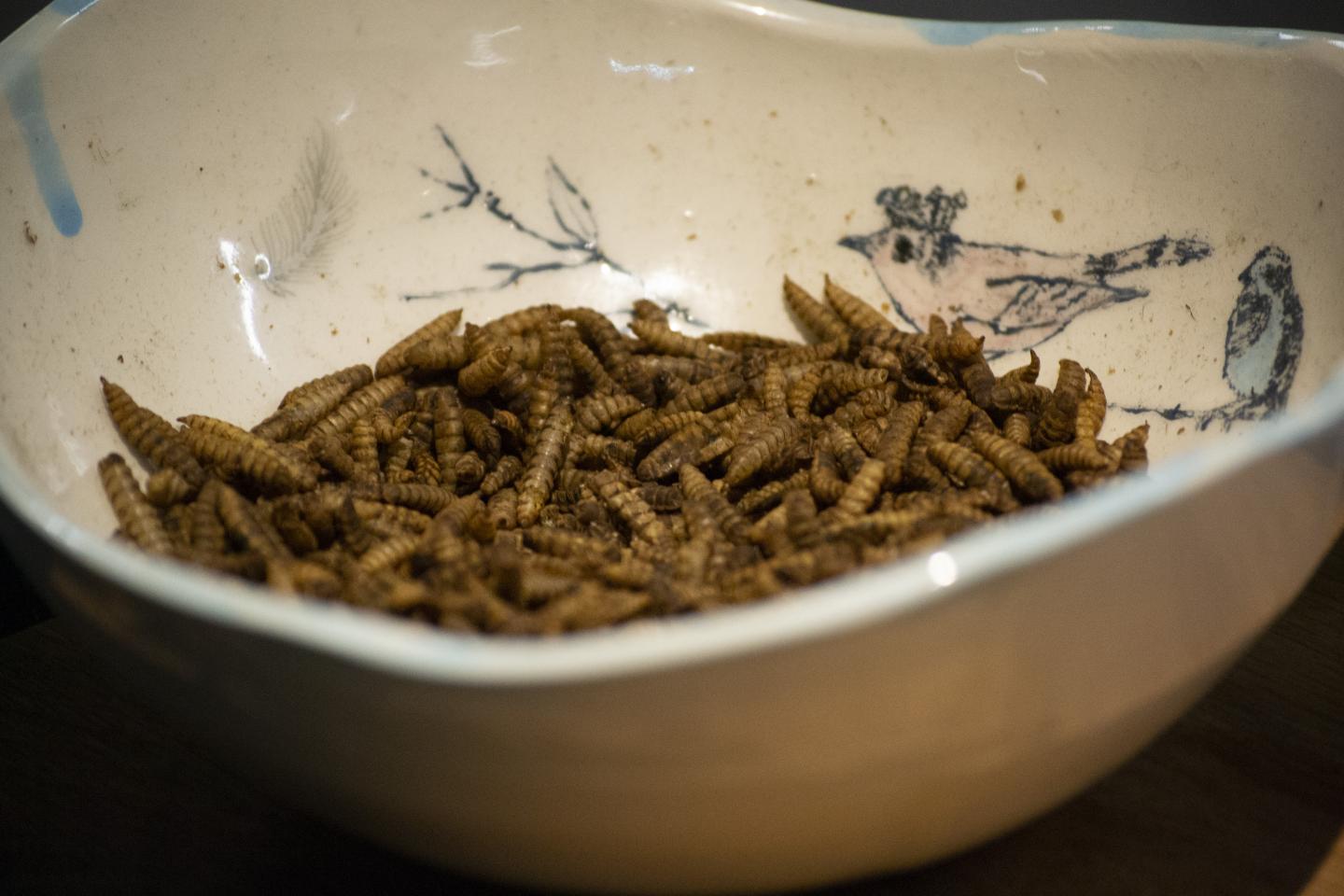
New research outlines barriers to eating climate-friendly Black Soldier Fly larvae as a protein alternative for humans
IMAGE

Credit: (c) Leah_Gourmet Grub

It may seem a little hard to swallow but the larvae of a waste-eating fly could become a new alternative protein source for humans, according to a University of Queensland scientist.

Professor Louw Hoffman said black soldier fly’s larvae, which was already utilised for animal feed, was a high quality protein.

“Just like meat, it contains all the nutrients humans need for health,” Professor Hoffman said.

“The larvae is richer in zinc and iron than lean meat, and its calcium content is as high as that of milk.”

“Their nutritional composition makes them an interesting contender as a meat alternative, and to date they have demonstrated their potential to partially replace meat in burger patties and Vienna sausages.”

Professor Hoffman said the United Nation’s Food and Agriculture Organization estimated that two billion people around the world already ate insects regularly as part of their diet.

“The biggest factor that prevents fly proteins being used in our food supply is Western consumer’s’ acceptance of insects as food,” he said.

“We will eat pea or oat milk, even lab-grown meats, but insects just aren’t on Western menus.”

Professor Hoffman has been studying the hurdles that need to be overcome before flies can directly enter the human food supply chain.

“There’s a lot of research that’s already been done on black soldier fly larvae as a feed for livestock, but we need to ensure we address safety issues before it can get legs as a human food,” he said.

“This includes understanding the different nutritional profiles of the fly at key stages of its growth, and the best ways to process the fly to preserve its nutritional value.

“While the fly can clean up toxic waste including heavy metals, it’s also recommended flies bred for human food be fed a clean source of organic waste.”

In addition to its nutrition profile, Professor Hoffman said there were strong environmental reasons for humans to eat fly larvae.

It’s estimated that less than half a hectare of black soldier fly larvae can produce more protein than cattle grazing on around 1200 hectares of cattle, or 52 hectares of soybeans.

“If you care about the environment, then you should consider and be willing to eat insect protein,” he said.

###

Media Contact
Margaret Puls
[email protected]

Related Journal Article

http://dx.doi.org/10.1111/1541-4337.12609

Tags: Agricultural Production/EconomicsAgricultureClimate ChangeEntomologyFood/Food ScienceNutrition/NutrientsPublic Health
Share12Tweet8Share2ShareShareShare2

Related Posts

Ancient Plant Populations Reveal Fresh Insights into Climate Resilience — Biology

Ancient Plant Populations Reveal Fresh Insights into Climate Resilience

May 8, 2026
Rare Brain Disorders in Children Linked to Mutations in Lesser-Known Protein Complex — Biology

Rare Brain Disorders in Children Linked to Mutations in Lesser-Known Protein Complex

May 8, 2026

From Odd Insect to Underwater Predator: The Remarkable Evolution of a Bloodthirsty Fruit Fly

May 8, 2026

SNU Professor Sangwoo Seo’s Team Develops Next-Generation CRISPR Biocontainment Technology to Control Microbial Survival Without DNA Cleavage

May 8, 2026
Please login to join discussion

POPULAR NEWS

  • Research Indicates Potential Connection Between Prenatal Medication Exposure and Elevated Autism Risk

    840 shares
    Share 336 Tweet 210
  • New Study Reveals Plants Can Detect the Sound of Rain

    727 shares
    Share 290 Tweet 181
  • Scientists Investigate Possible Connection Between COVID-19 and Increased Lung Cancer Risk

    68 shares
    Share 27 Tweet 17
  • Salmonella Haem Blocks Macrophages, Boosts Infection

    61 shares
    Share 24 Tweet 15

About

We bring you the latest biotechnology news from best research centers and universities around the world. Check our website.

Follow us

Recent News

Evaluating Digoxin Use in Patients with Symptomatic Rheumatic Heart Disease

Evaluating the Effectiveness and Safety of Digitalis Glycosides in Treating Heart Failure

Urdu Fall Risk Questionnaire Adapted for Elderly

Subscribe to Blog via Email

Success! An email was just sent to confirm your subscription. Please find the email now and click 'Confirm' to start subscribing.

Join 82 other subscribers
  • Contact Us

Bioengineer.org © Copyright 2023 All Rights Reserved.

Welcome Back!

Login to your account below

Forgotten Password?

Retrieve your password

Please enter your username or email address to reset your password.

Log In
No Result
View All Result
  • Homepages
    • Home Page 1
    • Home Page 2
  • News
  • National
  • Business
  • Health
  • Lifestyle
  • Science

Bioengineer.org © Copyright 2023 All Rights Reserved.