• HOME
  • NEWS
  • EXPLORE
    • CAREER
      • Companies
      • Jobs
    • EVENTS
    • iGEM
      • News
      • Team
    • PHOTOS
    • VIDEO
    • WIKI
  • BLOG
  • COMMUNITY
    • FACEBOOK
    • INSTAGRAM
    • TWITTER
Saturday, February 7, 2026
BIOENGINEER.ORG
No Result
View All Result
  • Login
  • HOME
  • NEWS
  • EXPLORE
    • CAREER
      • Companies
      • Jobs
        • Lecturer
        • PhD Studentship
        • Postdoc
        • Research Assistant
    • EVENTS
    • iGEM
      • News
      • Team
    • PHOTOS
    • VIDEO
    • WIKI
  • BLOG
  • COMMUNITY
    • FACEBOOK
    • INSTAGRAM
    • TWITTER
  • HOME
  • NEWS
  • EXPLORE
    • CAREER
      • Companies
      • Jobs
        • Lecturer
        • PhD Studentship
        • Postdoc
        • Research Assistant
    • EVENTS
    • iGEM
      • News
      • Team
    • PHOTOS
    • VIDEO
    • WIKI
  • BLOG
  • COMMUNITY
    • FACEBOOK
    • INSTAGRAM
    • TWITTER
No Result
View All Result
Bioengineer.org
No Result
View All Result
Home NEWS Science News Biology

Vitamin A for nerve cells

Bioengineer by Bioengineer
March 31, 2021
in Biology
Reading Time: 2 mins read
0
IMAGE
Share on FacebookShare on TwitterShare on LinkedinShare on RedditShare on Telegram

IMAGE

Credit: Source: Andreas Vlachos

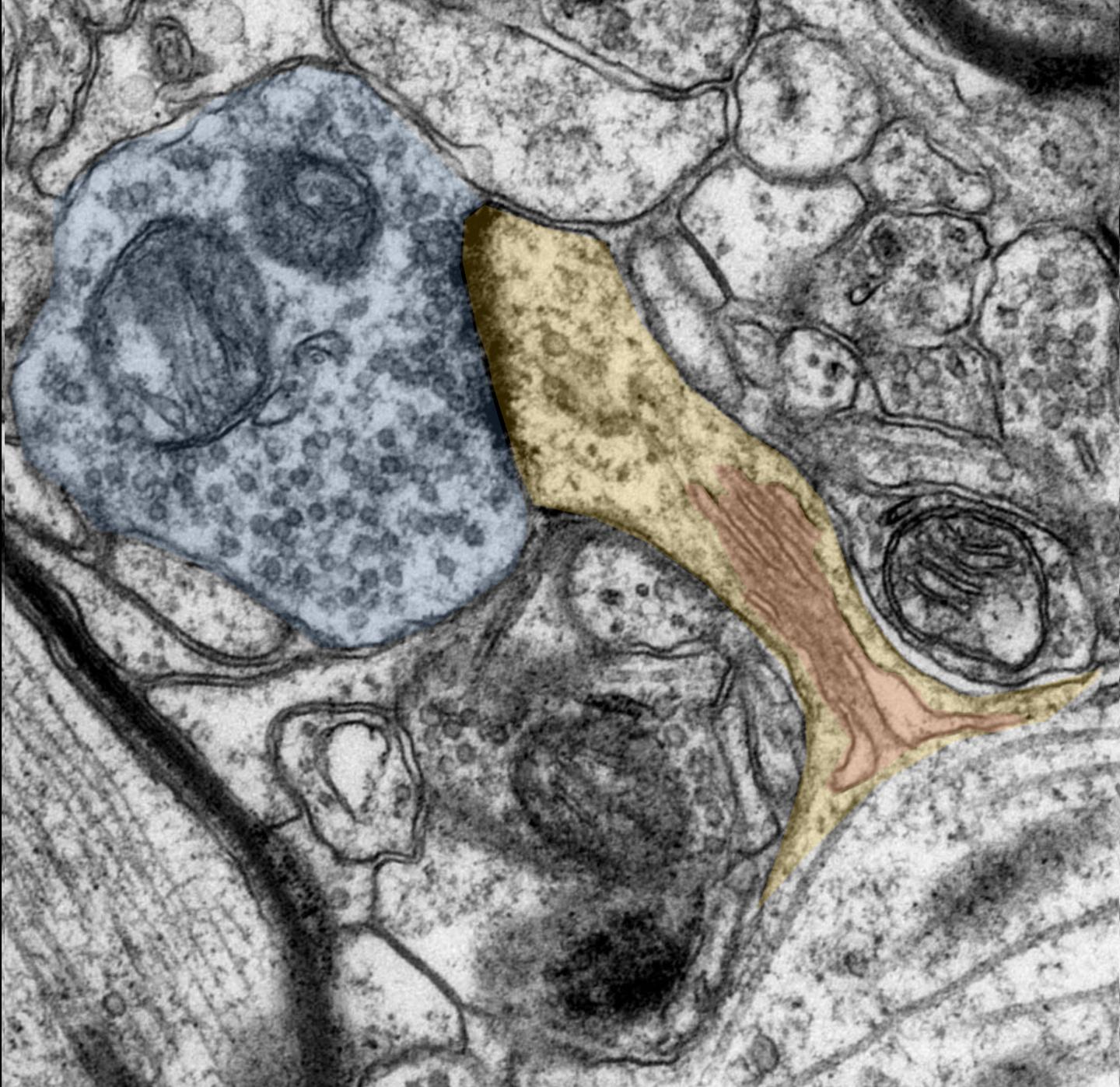
Neuroscientists agree that a person’s brain is constantly changing, rewiring itself and adapting to environmental stimuli. This is how humans learn new things and create memories. This adaptability and malleability is called plasticity. “Physicians have long suspected that remodeling processes also take place in humans at the contact points between nerve cells, i.e. directly at the synapses. Until now, however, such a coordinated adaptation of structure and function could only be demonstrated in animal experiments,” says Prof. Dr. Andreas Vlachos from the Institute of Anatomy and Cell Biology at the University of Freiburg. But now Vlachos, together with Prof. Dr. Jürgen Beck, head of the Department of Neurosurgery at the University Medical Center Freiburg, has provided experimental evidence for synaptic plasticity in humans. In addition to Vlachos and Beck, the research team consists of Dr. Maximilian Lenz, Pia Kruse and Amelie Eichler from the University of Freiburg, Dr. Jakob Strähle from the University Medical Center Freiburg and colleagues from Goethe University Frankfurt. The results were presented in the scientific journal eLife.

In the experiments, the team investigated whether so-called dendritic spines change when exposed to a vitamin A derivative called retionic acid. Dendritic spines are the parts of the synapse that receive, process and transmit signals during communication between neurons. As such, they play a crucial role in brain plasticity and are constantly adapting to everyday experience. For example, learning can change the number and shape of dendritic spines. However, a transformation in the number or shape of the spines is also found in diseases such as depression or dementia.

The research shows that retinoic acid not only increases the size of dendritic spines, but also strengthens their ability to transmit signals between neurons. “We have concluded from our results that retinoic acids are important messengers for synaptic plasticity in the human brain. Thus, this finding contributes to the identification of key mechanisms of synaptic plasticity in the human brain and could support the development of new therapeutic strategies for brain diseases, such as depression,” says Vlachos.

To experimentally demonstrate that synaptic plasticity also exists in humans, the researchers use tiny samples of human cerebral cortex, which must be compulsorily removed during neurosurgical procedures for therapeutic reasons. The removed brain tissue was then treated with retinoic acid before functional and structural properties of neurons were analyzed using electrophysiological and microscopic techniques.

###

A popular scientific summary of the results is also published on the eLife Journal website.

Popular scientific summary:
https://elifesciences.org/digests/63026/vitamins-for-your-neurons

Media Contact
Prof. Dr. Andreas Vlachos
[email protected]

Original Source

https://www.pr.uni-freiburg.de/pm-en/press-releases-2021/vitamin-a-for-nerve-cells

Related Journal Article

http://dx.doi.org/10.7554/eLife.63026

Tags: Cell BiologyMedicine/Healthneurobiology
Share12Tweet8Share2ShareShareShare2

Related Posts

Florida Cane Toad: Complex Spread and Selective Evolution

Florida Cane Toad: Complex Spread and Selective Evolution

February 7, 2026
New Study Uncovers Mechanism Behind Burn Pit Particulate Matter–Induced Lung Inflammation

New Study Uncovers Mechanism Behind Burn Pit Particulate Matter–Induced Lung Inflammation

February 6, 2026

DeepBlastoid: Advancing Automated and Efficient Evaluation of Human Blastoids with Deep Learning

February 6, 2026

Navigating the Gut: The Role of Formic Acid in the Microbiome

February 6, 2026
Please login to join discussion

POPULAR NEWS

  • Robotic Ureteral Reconstruction: A Novel Approach

    Robotic Ureteral Reconstruction: A Novel Approach

    82 shares
    Share 33 Tweet 21
  • Digital Privacy: Health Data Control in Incarceration

    63 shares
    Share 25 Tweet 16
  • Study Reveals Lipid Accumulation in ME/CFS Cells

    57 shares
    Share 23 Tweet 14
  • Breakthrough in RNA Research Accelerates Medical Innovations Timeline

    53 shares
    Share 21 Tweet 13

About

We bring you the latest biotechnology news from best research centers and universities around the world. Check our website.

Follow us

Recent News

TPMT Expression Predictions Linked to Azathioprine Side Effects

Improving Dementia Care with Enhanced Activity Kits

Decoding Prostate Cancer Origins via snFLARE-seq, mxFRIZNGRND

Subscribe to Blog via Email

Enter your email address to subscribe to this blog and receive notifications of new posts by email.

Join 73 other subscribers
  • Contact Us

Bioengineer.org © Copyright 2023 All Rights Reserved.

Welcome Back!

Login to your account below

Forgotten Password?

Retrieve your password

Please enter your username or email address to reset your password.

Log In
No Result
View All Result
  • Homepages
    • Home Page 1
    • Home Page 2
  • News
  • National
  • Business
  • Health
  • Lifestyle
  • Science

Bioengineer.org © Copyright 2023 All Rights Reserved.