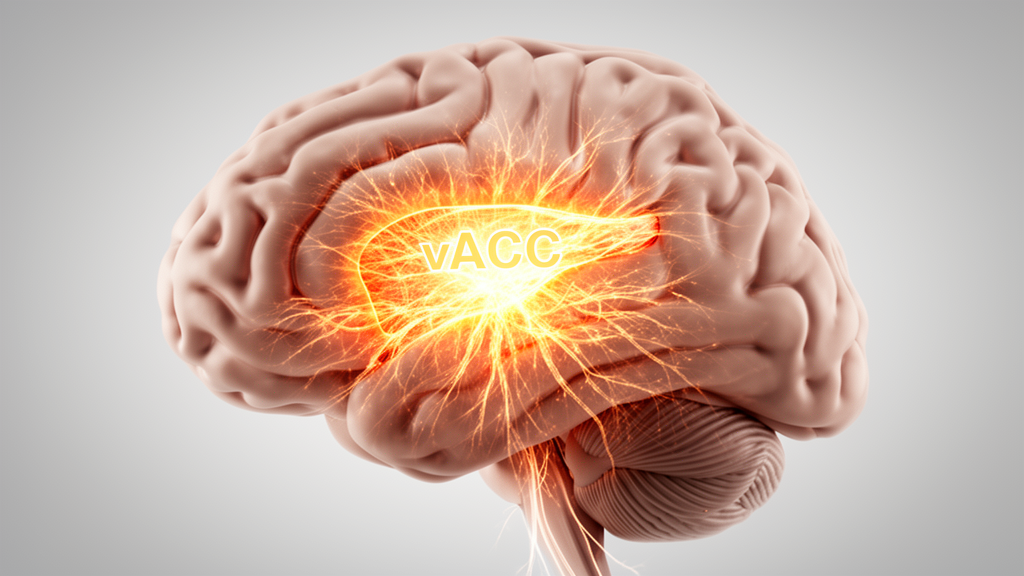
A new neuroimaging meta-analysis has identified the ventral anterior cingulate cortex (vACC) as the only significant brain region where neural activity reliably converges when comparing drug cue reactivity in individuals with substance use disorders (SUD) against non-affected control groups. This study, published in Translational Psychiatry, synthesized data from 23 eligible studies comprising 25 independent contrasts to clarify how brain networks respond to drug cues—a central paradigm in addiction research. By employing the activation likelihood estimation (ALE) algorithm, researchers sought to isolate substance-specific neural architecture, which is often difficult to distinguish in within-subject designs that may be confounded by general stimulus-driven processes or task-design variability.
The meta-analysis revealed that the vACC is a critical site where neural responses to drug cues differentiate individuals with SUD from healthy controls. Follow-up behavioural domain analysis associated this cluster with processes including reward gain, reasoning, social cognition, and explicit memory, suggesting the region’s involvement in integrating subjective value and self-referential processing. Meta-analytic connectivity modelling further demonstrated that the vACC cluster co-activates with structures implicated in the default mode network and reward circuitry. These findings confirm the importance of the vACC in the context of drug cue reactivity, even though reliable convergence in striatal regions, a common focus in incentive sensitisation models, was not observed in the case-control data.
A notable aspect of the study was the investigation of how study-level variables influence neural convergence. The researchers identified that the likelihood of observing vACC convergence was significantly higher in studies where drug and control cues were not matched for human features or tool-related content. This suggests that the vACC may be particularly sensitive to contextually rich or socially embedded stimuli, rather than just raw perceptual features of the cues. While this raises questions about whether the observed activity reflects stimulus-induced social cognition or genuine amplification of drug cue salience, the team noted that dedicated experimental comparisons are needed to isolate these potential drivers.
The study also highlighted significant differences in vACC activation likelihood depending on the substance of abuse. Illicit drug studies exhibited the highest contribution rates to the vACC cluster, nicotine studies were intermediate, and alcohol use disorder studies showed no significant contribution to this specific convergence. The authors posited that this might stem from greater heterogeneity in alcohol cue sets, which may not align with individual user preferences, thereby dampening the collective signal. In contrast, nicotine cues are often more generic and uniformly recognized, potentially enhancing the detectability of the vACC response across disparate study populations.
Crucially, the interaction between abstinence duration and control cue valence provided evidence that neural responses track current motivational states. When appetitive control cues were used, vACC-mediated responses to drug cues declined as abstinence periods lengthened, a pattern that was not observed when neutral control cues were employed. This finding suggests that natural rewards may temporarily lose their motivational relevance during withdrawal, and that vACC activity might reflect these shifts in motivational balance. The authors cautioned that because these neural patterns are potentially transient and tied to recent abstinence, they may not necessarily indicate permanent or “hijacked” pathological reward states in the way some theories suggest.
The researchers underscored that the methodology of using drug versus neutral cue contrasts—the most common approach in current literature—may be insufficient to establish that reward systems are inherently hyperreactive. By comparing SUD samples with never-using controls, the observed neural differences could reflect disparate experiential learning histories rather than purely pathological neurobiological alterations. The study advocates for a shift toward using motivationally salient comparators in future research, which could provide clearer insights into how individuals with SUD balance competing motivational contingencies.
Methodological rigour was a core focus of the analysis, which included sensitivity testing to ensure that data integrity issues in certain source studies did not bias the overall conclusions. The vACC cluster remained significant and robust even when studies with methodological caveats were excluded and when subjected to a Fail-Safe-N analysis that introduced hypothetical null results. The authors acknowledged limitations, such as the moderate number of available studies and the necessity of approximating clinical variables like abstinence duration, which often lacked precise reporting in the original literature.
Despite these constraints, the study provides a refined view of neural drug cue reactivity by moving beyond the aggregation of within-subject designs. It highlights that the vACC serves as a distinct, robust convergence hub in case-control contrasts, whereas other circuits often linked to addiction might be more task-sensitive or less consistently captured by standardized imaging protocols. The findings encourage the field to move toward longitudinal research designs that can disentangle state-related motivational biases—which may dominate during early abstinence—from enduring, trait-like vulnerabilities to relapse.
The team suggests that the clinical utility of DCR-derived biomarkers may be maximized by balancing stimulus personalization with design standardization. By tailoring drug cue sets to reflect individual preferences while controlling for complex stimulus features like human content, future research could generate more predictive insights into relapse risk. The work concludes that understanding DCR within a broader contextual framework of reinforcer pathology may be more productive than relying solely on simplistic models of reward hijacking.
Ultimately, this research serves as a foundation for hypothesis-driven investigation into whether DCR represents a persistent marker of SUD severity or a transient indicator of withdrawal. By clarifying the specific conditions under which vACC activity is reliably modulated, the findings provide a necessary nuance to the interpretation of neural data in addiction science. The meta-analysis emphasizes the importance of careful deliberation when linking brain imaging results to clinical outcomes, ensuring that future advancements in biomarker development remain anchored in well-supported evidence.
To assemble the dataset, the investigators searched PubMed and EBSCOhost databases, including PsycINFO, PsycARTICLES, Medline Complete, CINAHL Complete, and the Psychology and Behavioral Sciences Collection, following a pre-registered PROSPERO protocol. To meet activation likelihood estimation assumptions, eligibility required whole-brain fMRI coordinates, excluding region-of-interest studies. Experiments needed at least 10 participants with substance use disorders, sample mean ages of at least 14 years, standardized Talairach or Montreal Neurological Institute coordinates, and formal correction for multiple comparisons or explicit cluster-extent thresholds. Four foci with sign errors were corrected before analysis, and Talairach coordinates were converted using the Lancaster transform.
A sensitivity analysis omitting seven studies with methodological caveats evaluated whether contrast modeling or diagnostic issues biased the findings. In this refined sample of 16 studies, 18 contrasts, and 588 participants, vACC convergence remained significant, with roughly 44 percent of contrasts contributing. The likelihood of contributing to the vACC cluster did not differ between omitted and retained studies (p = 0.354). The sensitivity analysis also revealed a cluster spanning the right cerebellar declive and right fusiform gyrus, but the researchers set it aside from formal interpretation to avoid overemphasizing potential false positives. Additionally, Fail-Safe-N analysis showed the primary vACC finding retained significance after introducing seven hypothetical null experiments, representing 30 percent noise.
Quantitative profiling through the BrainMap database identified significant functional associations exceeding the corrected threshold of Z = 3.0. The vACC cluster exhibited strong alignment with reward and gain (Z = 6.9), reasoning (Z = 6.3), social cognition (Z = 4.3), fear (Z = 3.9), attention (Z = 3.6), and explicit memory (Z = 3.4). In task-based meta-analytic connectivity modeling, the cluster displayed significant co-activation across four main networks. Midline connectivity connected the vACC bilaterally to the anterior cingulate, medial frontal, and posterior cingulate gyri, alongside subcortical links to the caudate nuclei, parahippocampal gyri, and amygdalae. Unilateral co-activations emerged in the left middle temporal gyrus, right thalamus, and left inferior frontal gyrus.
To examine study-level moderators without overfitting, the authors applied Firth-corrected penalized logistic regression. Substance class predicted cluster contributions significantly (chi-square = 9.13, p = 0.010, Nagelkerke R-squared = 0.421). Pairwise tests revealed that studies examining other substances, such as heroin or methamphetamine, were significantly more likely to yield vACC convergence than alcohol studies (adjusted odds ratio = 31.66, 95 percent confidence interval 1.46 to 685.56, p = 0.003). Nicotine studies occupied an intermediate range, differing significantly from neither category. Stimulus matching for human content was also influential (chi-square = 7.21, p = 0.027): studies including human features in drug cues but omitting them from control cues had higher odds of contributing to the vACC cluster (adjusted odds ratio = 27.03, 95 percent confidence interval 1.27 to 588.24, p = 0.005). However, the general presence of human content without condition mismatch was not statistically significant (p = 0.112).
A notable statistical interaction linked log-transformed abstinence duration and control cue valence (chi-square = 11.74, p = 0.008, Nagelkerke R-squared = 0.507). When experiments employed appetitive control cues, vACC contribution likelihood decreased as abstinence lengthened (adjusted odds ratio = 0.32, p = 0.026). Back-transforming values showed that differential vACC activity ceased to be evident at approximately 2.5 log units, corresponding to roughly 12 days of abstinence. In contrast, neutral control cues demonstrated stable contribution likelihoods across abstinence durations. The authors noted that striatal convergence was absent across analyses, which may reflect physical signal constraints: striatal structures are small and sit adjacent to ventricles, yielding low signal-to-noise ratios in blood-oxygen-level-dependent imaging that hinder detection under whole-brain multiple-comparison corrections.
Subject of Research: Neuroimaging meta-analysis of neural drug cue reactivity in substance use disorders
Article Title: What can case-control comparisons of neural drug cue reactivity tell us about addiction? A neuroimaging meta-analysis
Article References: Fascher, M., Krasowski, K., & Muehlhan, M. (2026). What can case-control comparisons of neural drug cue reactivity tell us about addiction? A neuroimaging meta-analysis. Translational Psychiatry, 16(1), Article 501. https://doi.org/10.1038/s41398-026-04458-9
Image Credits: AI Generated
DOI: 10.1038/s41398-026-04458-9
Keywords: neuroimaging, meta-analysis, drug cue reactivity, substance use disorder, ventral anterior cingulate cortex, vACC, fMRI, reward processing, addiction neuroscience, abstinence duration, neural convergence, incentive sensitisation, default mode network, cue-by-group interaction, translational psychiatry
News Source: Glenn Wilkins. (November 16, 2026). Ventral Anterior Cingulate Cortex Identified as Hub for Drug Cue Reactivity. Scienmag.