• HOME
  • NEWS
  • EXPLORE
    • CAREER
      • Companies
      • Jobs
    • EVENTS
    • iGEM
      • News
      • Team
    • PHOTOS
    • VIDEO
    • WIKI
  • BLOG
  • COMMUNITY
    • FACEBOOK
    • INSTAGRAM
    • TWITTER
Monday, May 18, 2026
BIOENGINEER.ORG
No Result
View All Result
  • Login
  • HOME
  • NEWS
  • EXPLORE
    • CAREER
      • Companies
      • Jobs
        • Lecturer
        • PhD Studentship
        • Postdoc
        • Research Assistant
    • EVENTS
    • iGEM
      • News
      • Team
    • PHOTOS
    • VIDEO
    • WIKI
  • BLOG
  • COMMUNITY
    • FACEBOOK
    • INSTAGRAM
    • TWITTER
  • HOME
  • NEWS
  • EXPLORE
    • CAREER
      • Companies
      • Jobs
        • Lecturer
        • PhD Studentship
        • Postdoc
        • Research Assistant
    • EVENTS
    • iGEM
      • News
      • Team
    • PHOTOS
    • VIDEO
    • WIKI
  • BLOG
  • COMMUNITY
    • FACEBOOK
    • INSTAGRAM
    • TWITTER
No Result
View All Result
Bioengineer.org
No Result
View All Result
Home NEWS Science News Biology

Variable speed limits could reduce crashes, ease congestion in highway work zones

Bioengineer by Bioengineer
June 6, 2017
in Biology
Reading Time: 2 mins read
0
Share on FacebookShare on TwitterShare on LinkedinShare on RedditShare on Telegram
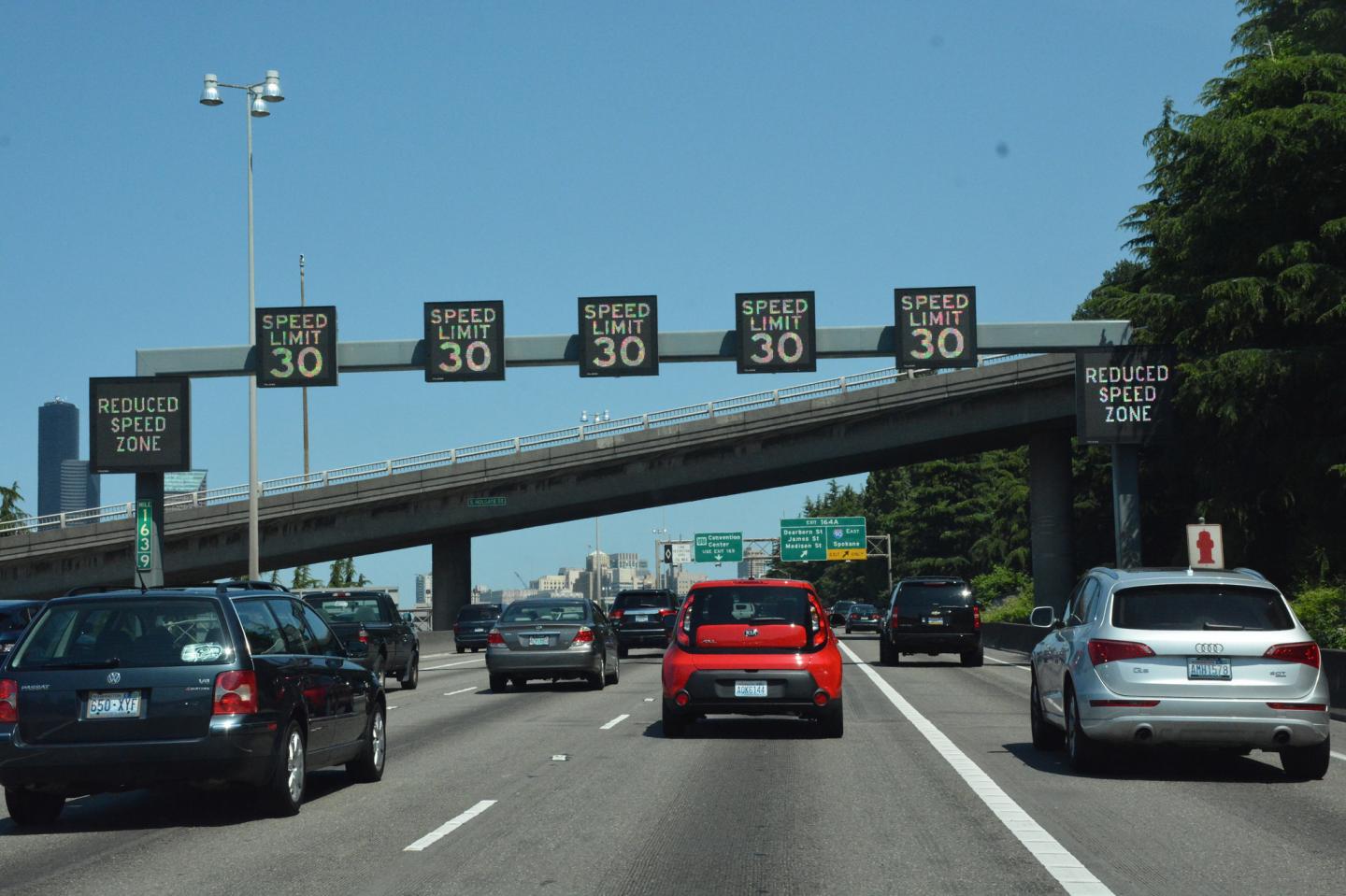
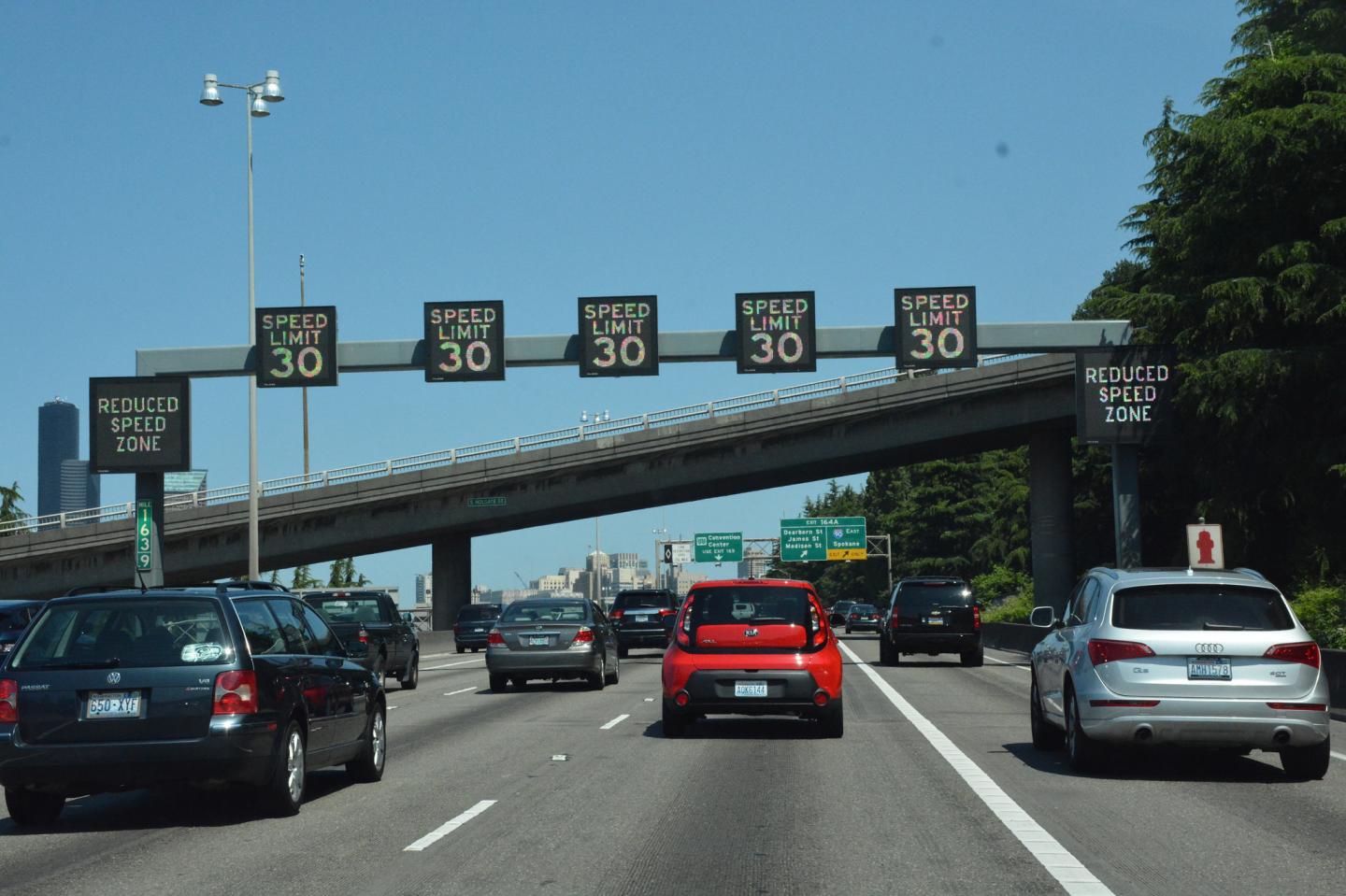
IMAGE

Credit: Steve Schar

COLUMBIA, Mo. – As the summer months approach, most people turn to thoughts of sunshine, outdoor barbecues and destination trips. Yet travelers often are greeted by detours, lane closures and delays for road repairs that generally are reserved for warmer weather. Researchers at the University of Missouri have studied systems to alleviate inevitable backups and delays. Researchers found that using variable speed limits in construction zones may ease congestion, reduce crashes and make work zones safer for both workers and travelers nationally.

With assistance from the Missouri Department of Transportation, Praveen Edara, associate professor of civil and environmental engineering in the MU College of Engineering, tested the use of variable advisory speed limit (VASL) systems and the effect they may have on lessening congestion and reducing rear-end and lane-changing accidents on a fairly dangerous stretch of I-270, a major four-lane highway in St. Louis.

"The idea was to see if warning drivers of slower speeds ahead helped reduce crashes," Edara said. "Where there is queueing, if drivers are not aware of the queue downstream, they don't have enough time to hit the brakes to slow down or stop, thus, increasing the likelihood of a crash. Instead of posting a message asking them to slow down, the VASL system posts an advisory speed limit based on the actual downstream traffic speed, so drivers would know that if they're driving 50 mph, they should slow to 30 mph downstream."

Edara's data collection and simulation analysis uncovered a few key pieces of data. First, the use of VASL systems is effective in gradually slowing drivers as they enter work zones. VASL use resulted in a 39 to 53 percent decrease in average queue length, and just a 4 to 8 percent increase in travel time.

Additionally, using VASL meant that maximum speed differences also decreased by as much as 10 mph, and the chance of rear-end collisions dropped by 30 percent. Researchers also noted a 20 percent decrease in lane changing conflicts. Essentially, travel time was slightly longer, but lines were shorter and collisions were less frequent.

"You can get both safety benefits and mobility benefits by deploying variable advisory speed limit systems in work zones," Edara said.

"Evaluation of variable advisory speed limits in congested work zones" recently was published in the Journal of Transportation Safety and Security. Carlos Sun, an MU professor of civil and environmental engineering, and Yi Hou a doctoral student at Mizzou, co-authored the study.

###

Media Contact

Jeff Sossamon
[email protected]
573-882-3346
@mizzounews

http://www.missouri.edu

Original Source

http://munews.missouri.edu/news-releases/2017/0606-variable-speed-limits-could-reduce-crashes-ease-congestion-in-highway-work-zones/

############

Story Source: Materials provided by Scienmag

Share12Tweet8Share2ShareShareShare2

Related Posts

Uncovering C. elegans Immunity via Genetic Screens — Biology

Uncovering C. elegans Immunity via Genetic Screens

May 16, 2026
Single mother must adapt swiftly — the survival of her colony depends on it — Biology

Single mother must adapt swiftly — the survival of her colony depends on it

May 15, 2026

Why Are Nearly Everyone Right-Handed? It Might Be Linked to How We Learned to Walk

May 15, 2026

Excessive Neuronal Activity Initiates Severe Autoimmune Brain Disorder

May 15, 2026
Please login to join discussion

POPULAR NEWS

  • Research Indicates Potential Connection Between Prenatal Medication Exposure and Elevated Autism Risk

    844 shares
    Share 338 Tweet 211
  • New Study Reveals Plants Can Detect the Sound of Rain

    731 shares
    Share 292 Tweet 182
  • Salmonella Haem Blocks Macrophages, Boosts Infection

    62 shares
    Share 25 Tweet 16
  • Breastmilk Balances E. coli and Beneficial Bacteria in Infant Gut Microbiomes

    58 shares
    Share 23 Tweet 15

About

We bring you the latest biotechnology news from best research centers and universities around the world. Check our website.

Follow us

Recent News

New Survey Finds Just One-Third of Teens Have Private Healthcare Consultations, According to Parents

Micronutrients Linked to Mood and Psychotic Disorders

AI Tool in Radiotherapy Advances Global Fight to Eradicate Cervical Cancer

Subscribe to Blog via Email

Enter your email address to subscribe to this blog and receive notifications of new posts by email.

Join 82 other subscribers
  • Contact Us

Bioengineer.org © Copyright 2023 All Rights Reserved.

Welcome Back!

Login to your account below

Forgotten Password?

Retrieve your password

Please enter your username or email address to reset your password.

Log In
No Result
View All Result
  • Homepages
    • Home Page 1
    • Home Page 2
  • News
  • National
  • Business
  • Health
  • Lifestyle
  • Science

Bioengineer.org © Copyright 2023 All Rights Reserved.