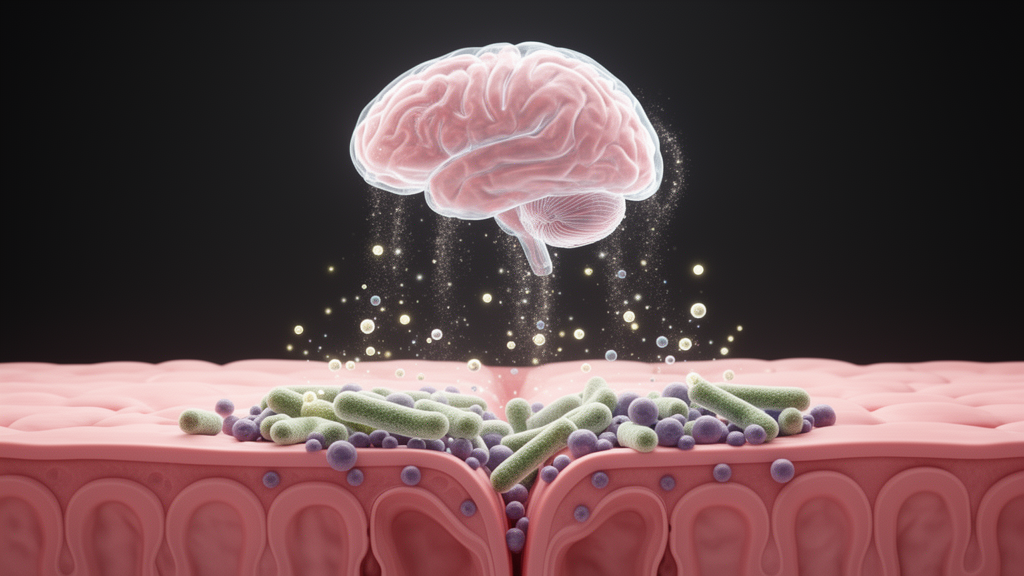
An integrated study of the vaginal microbiome, its metabolic profile, and psychological functioning suggests that the microbial communities living in the vagina may be connected to emotional traits through specific metabolites. The research, published in Scientific Reports, examined 105 reproductive-aged women and combined bacterial sequencing, metabolic profiling, and validated psychological questionnaires in a single analysis.
The researchers characterised each participant’s vaginal microbiota using 16S rRNA gene sequencing and sorted the communities into recognised community state types, or CSTs. Metabolomic profiling was carried out with nuclear magnetic resonance spectroscopy. Psychological dimensions were assessed with established questionnaires covering trait anxiety, emotion regulation, behavioural inhibition and activation, depressive symptoms, perceived stress, and somatisation.
The community state type emerged as a meaningful point of comparison. Women whose vaginal microbiota fell into CST IV, a polymicrobial profile marked by a mixture of bacterial species rather than dominance by Lactobacillus, scored significantly lower on the Behavioural Activation System subscales of Reward Responsiveness and Drive. In contrast, women whose microbiota was dominated by Lactobacillus iners, classified as CST III, showed lower scores on the Behavioural Inhibition System.
When the team looked directly at individual bacterial taxa, only limited correlations with psychological variables appeared. The stronger signal came from the metabolites. Psychological dimensions correlated strongly with specific vaginal metabolites, indicating that the chemical environment of the vagina tracks emotional and behavioural traits more closely than the identity of individual bacterial species does.
To probe whether metabolites might explain the link between microbial community structure and psychology, the researchers ran exploratory mediation analyses. These indicated that aminobutyrate and valine partially or fully mediated the associations between CST IV and the Behavioural Activation System dimensions. Phenylalanine partially mediated the relationship between CST IV and behavioural inhibition. In other words, the statistical association between a polymicrobial community and these psychological measures was reduced or accounted for once the metabolites were considered.
The authors interpret these results as evidence that the vaginal metabolome may function as an interface connecting microbial community composition with psychological functioning. The study design cannot establish causation or direction, and the mediation analyses were exploratory, so the findings describe statistical associations rather than demonstrated mechanisms.
The findings support a biopsychosocial perspective on vaginal health. Rather than treating the vaginal microbiota purely as a matter of infection risk or reproductive health, the study suggests that psychological dimensions and microbial ecology may be intertwined, and that metabolomic measurements could help reveal associations that sequencing bacteria alone does not detect.
The study’s scope and limitations are important to keep in mind. The sample comprised 105 reproductive-aged women, and the results describe associations rather than demonstrating that microbiota or metabolites influence psychological states. The authors argue that the findings support integrating microbiome, metabolomic, and psychological assessments in women’s health research, an approach they suggest could clarify how vaginal community states relate to mental functioning in future studies.
Subject of Research: Associations between vaginal microbiota composition, vaginal metabolites, and psychological profiles in reproductive-aged women
Article Title: Integrated microbiome and metabolomic analysis reveals associations between vaginal microbiota composition and psychological profiles
Article References: Castellano, P., Conti, S., Foschi, C., Djusse, M. E., Camboni, T., Ceccarani, C., Consolandi, C., Severgnini, M., Laghi, L., Prinelli, F., Marangoni, A., & Mazzetti, M. (2026). Integrated microbiome and metabolomic analysis reveals associations between vaginal microbiota composition and psychological profiles. Scientific Reports. https://doi.org/10.1038/s41598-026-76814-0
Image Credits: AI Generated
DOI: 10.1038/s41598-026-76814-0
Keywords: vaginal microbiota, metabolomics, community state types, psychological profiles, behavioural activation, behavioural inhibition, Lactobacillus iners, NMR spectroscopy, mediation analysis, women's health, biopsychosocial, Integrated
News Source: Morgan Morrow. (October 25, 2026). Vaginal Microbiome Linked to Mood Traits Through Metabolites. Scienmag.