• HOME
  • NEWS
  • EXPLORE
    • CAREER
      • Companies
      • Jobs
    • EVENTS
    • iGEM
      • News
      • Team
    • PHOTOS
    • VIDEO
    • WIKI
  • BLOG
  • COMMUNITY
    • FACEBOOK
    • INSTAGRAM
    • TWITTER
Thursday, December 25, 2025
BIOENGINEER.ORG
No Result
View All Result
  • Login
  • HOME
  • NEWS
  • EXPLORE
    • CAREER
      • Companies
      • Jobs
        • Lecturer
        • PhD Studentship
        • Postdoc
        • Research Assistant
    • EVENTS
    • iGEM
      • News
      • Team
    • PHOTOS
    • VIDEO
    • WIKI
  • BLOG
  • COMMUNITY
    • FACEBOOK
    • INSTAGRAM
    • TWITTER
  • HOME
  • NEWS
  • EXPLORE
    • CAREER
      • Companies
      • Jobs
        • Lecturer
        • PhD Studentship
        • Postdoc
        • Research Assistant
    • EVENTS
    • iGEM
      • News
      • Team
    • PHOTOS
    • VIDEO
    • WIKI
  • BLOG
  • COMMUNITY
    • FACEBOOK
    • INSTAGRAM
    • TWITTER
No Result
View All Result
Bioengineer.org
No Result
View All Result
Home NEWS Science News Science

VA researchers develop biomarkers, blood test that shows MS patients in relapse

Bioengineer by Bioengineer
May 8, 2019
in Science
Reading Time: 2 mins read
0
IMAGE
Share on FacebookShare on TwitterShare on LinkedinShare on RedditShare on Telegram

Patented technology is available to companies for development of new health care products or services
IMAGE

Credit: Tori Schultz/Air Force

Dr. Horea Rus is an expert in diagnosing and treating patients with multiple sclerosis, and his research laboratory at the University of Maryland is producing new tools for treating the disease that attacks the central nervous system.

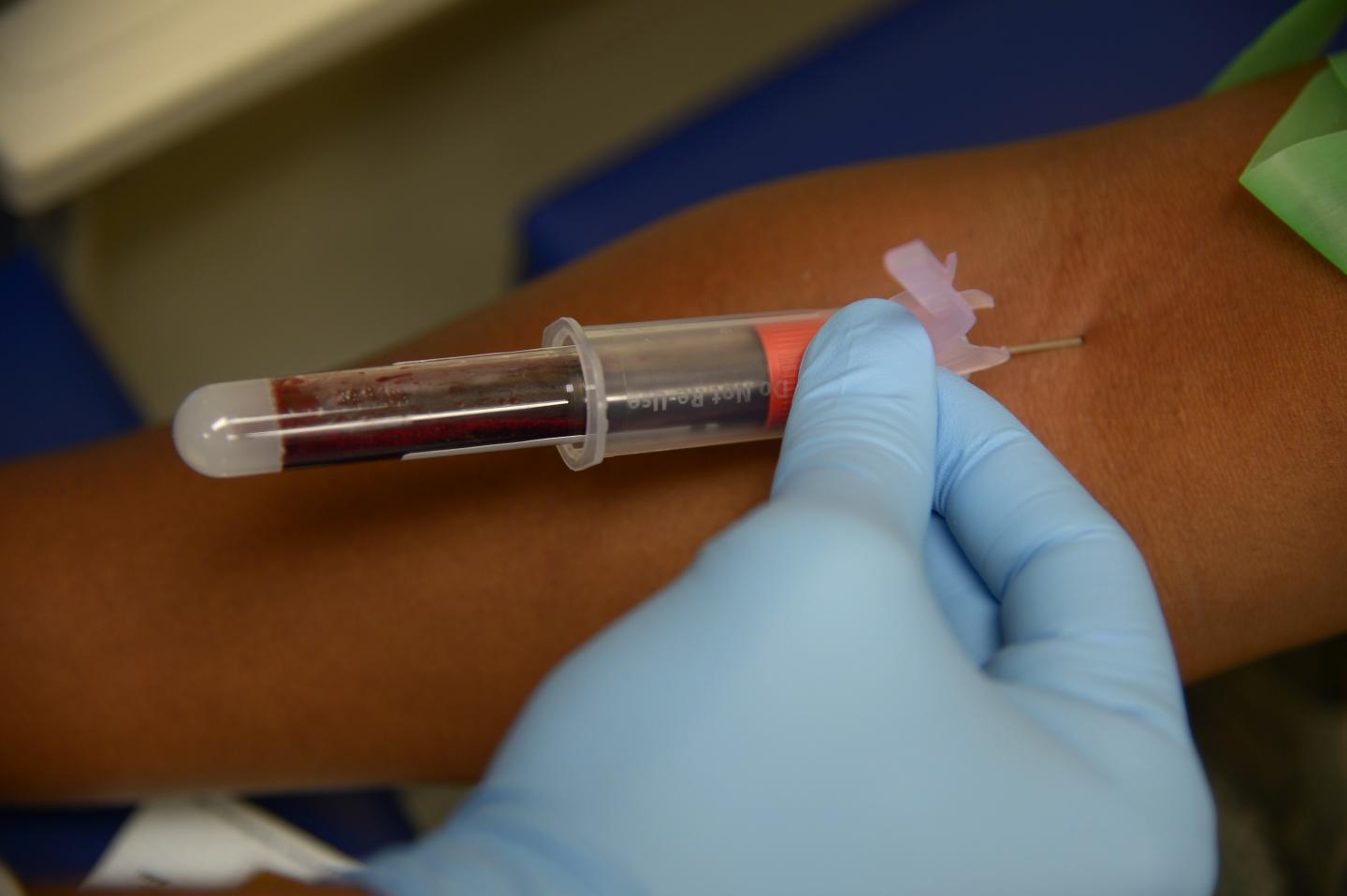
On Tuesday, Rus and former postdoc research fellow Cosmin Tegla were issued U.S. Patent 10,280,465 for developing a biomarker, using Sirtuin 1, RGC-32, FasL, and IL-21 proteins, that indicates if a patient with relapsing-remitting MS is in relapse.

The most common tests for determining if a patient has MS or is in relapse (magnetic resonance imaging, visual evoked potential testing, or analysis of the cerebrospinal fluid) are expensive, can be painful, and may induce negative side effects.

But an estimated 1 million people in the U.S. have MS, including 60,000 military veterans. That’s why the doctors, funded by the Department of Veterans Affairs, explored alternatives.

Their research developed the foundation for a fast and accurate diagnostic tool through analysis of the biomarker proteins in a patient’s blood.

“The data obtained from the method will indicate whether the subject is undergoing relapse. Based on this information, a physician can determine the best course of new or continuing treatment for the subject, according to the patent.

“Thus, when the method indicates that the subject is undergoing relapse, [a doctor can administer] a therapeutically effective amount of a treatment for relapsing-remitting multiple sclerosis to the subject. The treatment may be, for example, glatiramer acetate. Other suitable treatments for relapsing-remitting multiple sclerosis include, but are not limited to, beta-interferons, teriflunomide, fingolimod, dimethyl fumarate, and natalizumab.”

In coordination with the VA Technology Transfer Program, TechLink is helping innovative companies evaluate the technology for the development of new health care products and services.

TechLink is the VA’s national partnership intermediary for technology transfer, and for 20 years has been guiding businesses through federal patent licensing at no charge.

Gary Bloomer, a senior technology manager at TechLink, is managing the marketing, assisting in the evaluation, and facilitating licensing of the VA’s patent portfolio, which includes helping companies draft the necessary license application and commercialization plan.

“Through technology transfer, qualified businesses can benefit from the VA’s investment in research and expand patient care with new capabilities,” Bloomer said.

###

Licensing inquiries can be sent to Gary Bloomer at [email protected] or he can be reached by telephone at 406-994-7786.

Media Contact
Troy Carter
[email protected]

Original Source

https://techlinkcenter.org/va-researchers-develop-biomarkers-blood-test-that-shows-ms-patients-in-relapse/

Tags: Medicine/HealthneurobiologyResearch/DevelopmentTechnology Transfer
Share14Tweet7Share2ShareShareShare1

Related Posts

Five or more hours of smartphone usage per day may increase obesity

July 25, 2019
IMAGE

NASA’s terra satellite finds tropical storm 07W’s strength on the side

July 25, 2019

NASA finds one burst of energy in weakening Depression Dalila

July 25, 2019

Researcher’s innovative flood mapping helps water and emergency management officials

July 25, 2019
Please login to join discussion

POPULAR NEWS

  • Nurses’ Views on Online Learning: Effects on Performance

    Nurses’ Views on Online Learning: Effects on Performance

    70 shares
    Share 28 Tweet 18
  • NSF funds machine-learning research at UNO and UNL to study energy requirements of walking in older adults

    71 shares
    Share 28 Tweet 18
  • Unraveling Levofloxacin’s Impact on Brain Function

    54 shares
    Share 22 Tweet 14
  • Exploring Audiology Accessibility in Johannesburg, South Africa

    51 shares
    Share 20 Tweet 13
>

About

We bring you the latest biotechnology news from best research centers and universities around the world. Check our website.

Follow us

Recent News

Nanoplastics Trigger Unique Toxicity in Human Gut Cells

Transforming Art: Fusion GANs for Style Conversion

Navigating Dementia Care: Transitions in Home Management

Subscribe to Blog via Email

Enter your email address to subscribe to this blog and receive notifications of new posts by email.

Join 70 other subscribers
  • Contact Us

Bioengineer.org © Copyright 2023 All Rights Reserved.

Welcome Back!

Login to your account below

Forgotten Password?

Retrieve your password

Please enter your username or email address to reset your password.

Log In
No Result
View All Result
  • Homepages
    • Home Page 1
    • Home Page 2
  • News
  • National
  • Business
  • Health
  • Lifestyle
  • Science

Bioengineer.org © Copyright 2023 All Rights Reserved.