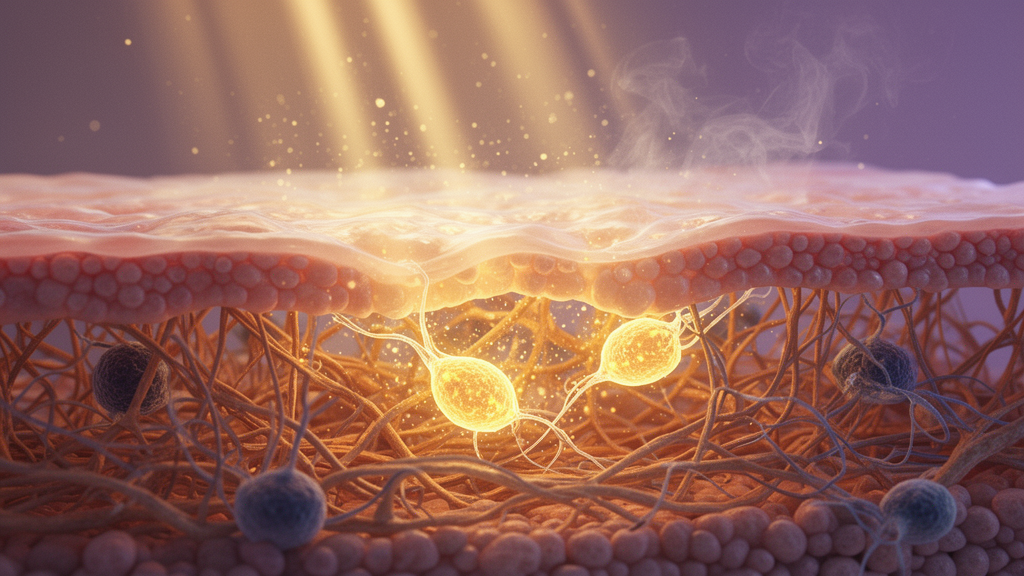
Published in the journal Genes and Environment, the study reveals that these two environmental stressors act additively to degrade collagen, a process that is particularly pronounced in senescent cells. The findings suggest that the combination of sun exposure and smoking may accelerate skin aging more rapidly than either factor alone, highlighting a specific molecular pathway involving histone acetylation.
The study utilized human dermal fibroblasts, specifically the ASF-4-1 cell line, which was established from the skin of a 36-year-old donor. This cell line has a finite lifespan, allowing the researchers to model cellular aging by comparing normal cells at a lower population doubling level with senescent cells at a higher level. The team exposed these cells to UVA radiation and cigarette sidestream smoke, a type of smoke generated by the natural combustion of cigarettes, to observe their combined effects on gene expression and protein levels.
Matrix metalloproteinase-1 is identified as the main protease that initiates the fragmentation of type I collagen fibers in human skin. Type I collagen is the major structural protein in the dermis, responsible for skin strength and resilience. When MMP-1 levels rise, it degrades this collagen, leading to the characteristic signs of photoaging, such as wrinkling and laxity. The researchers measured both the mRNA and protein levels of MMP-1 to assess the extent of this degradation potential in the treated cells.
Individual exposure to either UVA or cigarette sidestream smoke was sufficient to induce MMP-1 expression in a dose-dependent manner. However, when the cells were coexposed to both stressors, the induction of MMP-1 was enhanced. This additive effect was also observed in the suppression of COL1A1, the gene that encodes the major component of type I collagen, indicating a dual mechanism of collagen loss.
The impact of these environmental stressors was significantly amplified in senescent cells. The basal expression of MMP-1 in senescent cells was approximately 20 times higher than in normal cells. When these aged cells were exposed to the combination of UVA and cigarette sidestream smoke, the MMP-1 expression increased further. This suggests that aged skin is more susceptible to the damaging effects of environmental pollutants and UV radiation, potentially explaining why older individuals experience more rapid skin degradation upon exposure to these factors.
To investigate the underlying mechanism, the researchers examined the role of histone acetylation, an epigenetic modification that regulates gene transcription. UVA irradiation was found to promote global histone H3 acetylation in a dose-dependent manner. This acetylation is critical for the activation of the MMP-1 gene. The study hypothesized that UVA-induced histone acetylation creates a chromatin environment that facilitates the transcription of MMP-1, especially when combined with the chemical stressors found in cigarette smoke.
The team further tested this hypothesis by using histone deacetylase inhibitors, which prevent the removal of acetyl groups from histones, thereby increasing acetylation levels. They used short-chain fatty acids, including sodium acetate, sodium propionate, and sodium butyrate, as inhibitors. The degree of histone acetylation induced by these compounds correlated with the level of MMP-1 expression. Sodium butyrate, which induced the strongest acetylation, also resulted in the most pronounced induction of MMP-1 when combined with cigarette sidestream smoke.
These findings indicate that histone acetylation is a key mediator in the combined effect of UVA and cigarette smoke on MMP-1 expression. The researchers noted that cigarette sidestream smoke did not directly acetylate histones, likely because aldehydes in the smoke react with histone lysine residues, potentially blocking the acetylation reaction. However, the UVA-induced acetylation may promote the activity of the aryl hydrocarbon receptor pathway, which is required for cigarette smoke-induced MMP-1 induction. This interplay between UV radiation and chemical pollutants provides a new perspective on the molecular mechanisms of skin aging.
The study also highlighted the role of reactive oxygen species and the mitogen-activated protein kinase pathway in MMP-1 induction. Both UVA and cigarette smoke generate reactive oxygen species, which activate signaling pathways that lead to the transcription of MMP genes. The researchers found that inhibitors of these pathways could suppress MMP-1 expression, further supporting the link between oxidative stress and enzyme induction. This complex network of signaling pathways underscores the multifactorial nature of skin aging and the importance of addressing multiple environmental stressors simultaneously.
While the study provides valuable insights into the molecular mechanisms of skin aging, it has certain limitations. The experiments were conducted in vitro using a single cell line, which may not fully capture the complexity of human skin in vivo. Additionally, the study focused on replicative senescence, which may differ from chronological aging in humans.
The experimental design in this study specifically isolated cigarette sidestream smoke, or CSS, rather than the mainstream smoke typically inhaled by smokers. The researchers generated this smoke by naturally combusting five cigarettes and bubbling the resulting gas into 100 milliliters of Eagle’s minimal essential medium. This process created a concentrated extract referred to as CSS (100%), from which lower concentrations were diluted for the experiments. The concentration of CSS used in the experiments was carefully calibrated to avoid excessive cytotoxicity, as higher concentrations above 5% resulted in complete cell death within 24 hours. Consequently, the primary data were derived from exposures at or below 4% CSS, ensuring that the observed changes in gene expression were not merely artifacts of massive cell death.
Ultraviolet A radiation was delivered using a specific lamp with a wavelength characteristic that was filtered to remove shorter wavelengths. A glass plate was positioned above the cell culture dishes to block UVC and shorter UVB wavelengths, allowing primarily UVA to reach the cells. The irradiance was measured at 70 kilojoules per square meter per hour, and the cells were exposed to specific doses, such as 15 or 30 kilojoules per square meter, before being incubated with the cigarette smoke extract. The study also noted that while the glass filter was effective, a slight contribution from UVB could not be entirely ruled out, a limitation that the authors acknowledged in their discussion of potential confounding factors. The precise control of these physical and chemical parameters allowed the researchers to isolate the additive effects of the two stressors on the fibroblasts.
The molecular mechanisms underlying the observed effects extend beyond simple additive damage, involving complex signaling cascades that converge on the transcription of matrix metalloproteinase genes. The study identified the mitogen-activated protein kinase family, which includes extracellular signal-regulated kinase, c-Jun NH2-terminal kinase, and p38, as crucial mediators. Reactive oxygen species generated by both UVA and CSS activate these kinases, which in turn activate the transcription factor AP-1. AP-1 is essential for the transcription of MMPs, including MMP-1. Preliminary experiments using specific inhibitors for these kinases, such as U0126 for ERK and SP600125 for JNK, showed that blocking these pathways effectively suppressed MMP-1 expression after coexposure. This suggests that the oxidative stress induced by both environmental factors drives the enzymatic degradation of collagen through this shared signaling route. The interplay between these pathways and the epigenetic modifications provides a multi-layered explanation for the accelerated aging observed in the cells.
Another significant pathway implicated in the study is the aryl hydrocarbon receptor, or AhR, signaling. Cigarette smoke contains polycyclic aromatic hydrocarbons that trigger AhR signaling, which is required for CSS-induced MMP-1 induction. The study suggests that UVA-induced histone acetylation may promote this AhR pathway, thereby enhancing the effect of the cigarette smoke. This interaction highlights how one environmental stressor can sensitize cells to another by altering the chromatin landscape. The researchers also noted that short-chain fatty acids, which were used as histone deacetylase inhibitors, synergistically enhanced the expression of AhR-responsive genes. This finding reinforces the idea that the epigenetic state of the cell, specifically the level of histone acetylation, plays a pivotal role in determining the magnitude of the response to environmental chemicals. The convergence of oxidative stress, kinase signaling, and epigenetic regulation creates a robust framework for understanding how combined exposures lead to more severe skin aging than individual exposures.
The study’s reliance on the ASF-4-1 cell line provides a controlled model for investigating these mechanisms, but it also introduces specific constraints on the generalizability of the findings. This cell line was established from a 36-year-old donor and has a finite lifespan, which allows for the study of replicative senescence. While the researchers observed that senescent cells had significantly higher basal MMP-1 levels and were more responsive to the combined stressors, this model of aging is distinct from chronological aging in humans. Therefore, while the in vitro results provide strong mechanistic insights, they may not fully capture the complexity of skin aging in vivo. The authors emphasize the need for further investigation into whether the specific histone modifications observed in the cell line are representative of those found in aged human skin, particularly at the promoter regions of MMP genes.
Subject of Research: Molecular mechanisms of skin aging induced by UVA and cigarette smoke coexposure
Article Title: Increased matrix metalloproteinase-1 expression by coexposure to UVA and cigarette sidestream smoke and contribution of histone acetylation
Article References: Ito, R., Komaki, Y., & Ibuki, Y. (2025). Increased matrix metalloproteinase-1 expression by coexposure to UVA and cigarette sidestream smoke and contribution of histone acetylation. Genes and Environment, 47(1), Article 2. https://doi.org/10.1186/s41021-025-00325-z
Image Credits: AI Generated
DOI: 10.1186/s41021-025-00325-z
Keywords: skin aging, MMP-1, UVA radiation, cigarette smoke, histone acetylation, collagen degradation, dermal fibroblasts, epigenetics, photoaging, cell senescence, Increased, matrix
News Source: Beatrice Stafford. (November 10, 2026). UVA and Cigarette Smoke Jointly Boost Skin Aging Enzyme. Scienmag.