• HOME
  • NEWS
  • EXPLORE
    • CAREER
      • Companies
      • Jobs
    • EVENTS
    • iGEM
      • News
      • Team
    • PHOTOS
    • VIDEO
    • WIKI
  • BLOG
  • COMMUNITY
    • FACEBOOK
    • INSTAGRAM
    • TWITTER
Monday, April 20, 2026
BIOENGINEER.ORG
No Result
View All Result
  • Login
  • HOME
  • NEWS
  • EXPLORE
    • CAREER
      • Companies
      • Jobs
        • Lecturer
        • PhD Studentship
        • Postdoc
        • Research Assistant
    • EVENTS
    • iGEM
      • News
      • Team
    • PHOTOS
    • VIDEO
    • WIKI
  • BLOG
  • COMMUNITY
    • FACEBOOK
    • INSTAGRAM
    • TWITTER
  • HOME
  • NEWS
  • EXPLORE
    • CAREER
      • Companies
      • Jobs
        • Lecturer
        • PhD Studentship
        • Postdoc
        • Research Assistant
    • EVENTS
    • iGEM
      • News
      • Team
    • PHOTOS
    • VIDEO
    • WIKI
  • BLOG
  • COMMUNITY
    • FACEBOOK
    • INSTAGRAM
    • TWITTER
No Result
View All Result
Bioengineer.org
No Result
View All Result
Home NEWS Science News Health

UTHSC researchers awarded $1.7 million for opioid addiction studies

Bioengineer by Bioengineer
June 5, 2020
in Health
Reading Time: 2 mins read
0
IMAGE
Share on FacebookShare on TwitterShare on LinkedinShare on RedditShare on Telegram

IMAGE

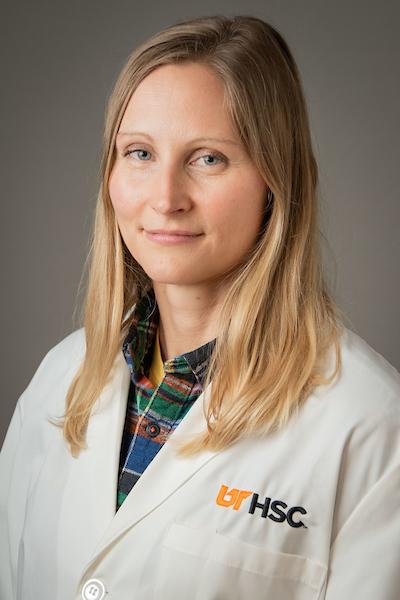
Credit: UTHSC

Memphis, Tenn. (June 5, 2020) – A team of University of Tennessee Health Science Center (UTHSC) researchers in the College of Medicine recently received a National Institutes of Health (NIH) award to study how genetic differences may explain why some people are more susceptible to opioid addiction than others.

Hao Chen, PhD, associate professor in the Department of Pharmacology, Addiction Science, and Toxicology, and Megan Mulligan, PhD, assistant professor in the Department of Genetics, Genomics, and Informatics, received $1.7 million for their project titled, “Reduced complexity mapping of oxycodone self-administration and stress responsiveness in rats.”

“Prescription opioid use and abuse results in millions of people addicted to opioids, and we know that genetic and environmental factors, such as stress, can interact to increase addiction vulnerability,” Dr. Mulligan explained. “Unfortunately, we do not have a strong or complete understanding of how genetic differences contribute to risk of opioid addiction or contribute to stress-induced vulnerability.”

To identify genetic differences in stress response, oxycodone consumption, and stress-induced drug seeking, the team will compare voluntary oxycodone intake between two strains of rats that differ in their vulnerability to stress.

“What makes this model unique is that the two strains demonstrate large differences in addiction-relevant behavior, and they are genetically similar,” Dr. Mulligan said. “This makes it easier to identify the gene variants that cause differences in stress response, opioid intake, and stress-induced opioid intake.”

“We can swap genetic material between the strains and study if this replacement causes changes in drug intake and seeking behavior. We can even do this in specific types of cells in a certain part of the brain,” said Dr. Chen. Dr. Mulligan added, “The findings from our study have great potential to translate to the human condition of opioid addiction.”

###

As Tennessee’s only public, statewide, academic health system, the mission of the University of Tennessee Health Science Center is to bring the benefits of the health sciences to the achievement and maintenance of human health through education, research, clinical care, and public service, with a focus on the citizens of Tennessee and the region. The main campus in Memphis includes six colleges: Dentistry, Graduate Health Sciences, Health Professions, Medicine, Nursing and Pharmacy. UTHSC also educates and trains medicine, pharmacy, and/or health professions students, as well as medical residents and fellows, at major sites in Knoxville, Chattanooga and Nashville. For more information, visit uthsc.edu. Find us on Facebook: facebook.com/uthsc, on Twitter: twitter.com/uthsc and on Instagram: instagram.com/uthsc.

Media Contact
[email protected]
[email protected]

Original Source

https://news.uthsc.edu/uthsc-team-awarded-1-7-million-for-opioid-addiction-research/

Tags: Medicine/Health
Share13Tweet8Share2ShareShareShare2

Related Posts

Can Exercise and Ibuprofen Reduce Cognitive Impairment in Cancer Patients?

April 20, 2026

Collagen Peptide Imaging and Antibody Therapy in Rheumatoid Arthritis

April 20, 2026

T-Cell Transition Linked to Female Cancer Lymphedema

April 20, 2026

Only One in Three Parents Believe Their Young Adult Children Get Sufficient Physical Activity

April 20, 2026
Please login to join discussion

POPULAR NEWS

  • Scientists Investigate Possible Connection Between COVID-19 and Increased Lung Cancer Risk

    62 shares
    Share 25 Tweet 16
  • NSF funds machine-learning research at UNO and UNL to study energy requirements of walking in older adults

    101 shares
    Share 40 Tweet 25
  • Boosting Breast Cancer Risk Prediction with Genetics

    47 shares
    Share 19 Tweet 12
  • Self-Oscillating Electroactive Nanocomposites Boost Heat Pumps

    42 shares
    Share 17 Tweet 11

About

We bring you the latest biotechnology news from best research centers and universities around the world. Check our website.

Follow us

Recent News

Can Exercise and Ibuprofen Reduce Cognitive Impairment in Cancer Patients?

European Immunization Week 2026: Three Countries Achieve 90% HPV Vaccination Goal, Highlighting Progress in Cancer Prevention Across Europe

Primary breast tumors contain cells with metastatic potential, new study reveals

Subscribe to Blog via Email

Enter your email address to subscribe to this blog and receive notifications of new posts by email.

Join 79 other subscribers
  • Contact Us

Bioengineer.org © Copyright 2023 All Rights Reserved.

Welcome Back!

Login to your account below

Forgotten Password?

Retrieve your password

Please enter your username or email address to reset your password.

Log In
No Result
View All Result
  • Homepages
    • Home Page 1
    • Home Page 2
  • News
  • National
  • Business
  • Health
  • Lifestyle
  • Science

Bioengineer.org © Copyright 2023 All Rights Reserved.