A four-year, $3.4 million grant to investigate molecular mechanisms and therapeutic treatments for acute respiratory distress syndrome (ARDS) has been awarded to UTHealth Houston researchers by the National Heart, Lung, and Blood Institute, part of the National Institutes of Health.
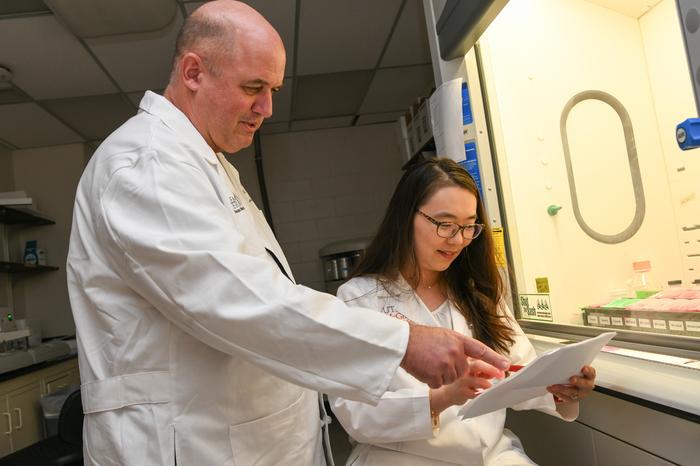
Credit: Dwight Andrews/UTHealth Houston
A four-year, $3.4 million grant to investigate molecular mechanisms and therapeutic treatments for acute respiratory distress syndrome (ARDS) has been awarded to UTHealth Houston researchers by the National Heart, Lung, and Blood Institute, part of the National Institutes of Health.
The study led by principal investigators Holger Eltzschig, MD, PhD, professor and chair of the Department of Anesthesiology, Critical Care and Pain Medicine at McGovern Medical School at UTHealth Houston, and Xiaoyi Yuan, PhD, assistant professor in the department, is built on many years of research in the endogenous protective pathways in ARDS.
“We are further understanding how the human body responds to different insults in the lung to identify molecular mechanisms that could be targeted pharmacologically,” Yuan said. “Our ultimate goal is to translate our research from bench to bedside to improve clinical outcomes of ARDS.”
ARDS is a severe lung condition that develops from direct insult in the lung, such as ventilation-induced lung injury or COVID-19 infection, and systemic inflammation, such as sepsis. Fluid builds up in tiny elastic air sacs called alveoli and during severe conditions, it deprives the lungs and major organs of oxygen. This causes the body to go into hypoxia, a life-threatening state of low oxygen. Currently, there are limited pharmacological strategies for ARDS.
Hypoxia-inducible factors (HIFs) are stabilized in alveoli cells to provide lung protection during ARDS. Prolyl hydroxylases (PHDs) are enzymes that control the protein levels of HIFs when oxygen is abundant. In a hypoxic state, less active PHDs allow HIFs to accumulate, promoting angiogenesis, alleviating inflammation, and supporting oxygen delivery to lung tissue.
“It is important to design preclinical studies to facilitate clinical translation,” Yuan said.
Many previous studies in murine models of ARDS employ therapeutic strategies before the onset of ARDS. Their conclusion is unfortunately rarely translated into the clinic. With concepts adopted from ongoing clinical studies, the investigators will use HIF-PHD inhibitor compounds and other therapeutic strategies to target molecular pathways after the onset of ARDS in preclinical murine models.
“Our model systems are highly translational and relevant to human ARDS caused by ventilator usage, sepsis, and SARS-CoV-2. We are very optimistic that using HIF-PHD inhibitor compounds will evolve as a new approach to either prevent or treat lung inflammation among a wide range of patients,” said Eltzschig, the John P. and Kathrine G. McGovern Distinguished University Chair and the director of the Center for Perioperative Medicine at the medical school.
COVID-19-associated cases of ARDS have become rare because the recent various strains of COVID-19 are not causing severe outcomes. The team’s next step is to conduct separate independent studies analyzing the use of pharmaceutical HIF-PHD inhibitors to treat ARDS that occur from infection caused by other viral and bacterial diseases.
UTHealth Houston co-investigators on the study are Marie-Françoise Doursout, PhD, professor in the Department of Anesthesiology, Critical Care and Pain Medicine; Charles Green, PhD, professor in the Department of Pediatrics; and Harry Karmouty-Quintana, PhD, associate professor in the Department of Biochemistry and Molecular Biology and Fellow of the William S. Kilroy Sr. Distinguished University Chair in Pulmonary Disease, with McGovern Medical School. This research is funded by NIH grant R01HL169519.
Media Inquiries: 713-500-3030