• HOME
  • NEWS
  • EXPLORE
    • CAREER
      • Companies
      • Jobs
    • EVENTS
    • iGEM
      • News
      • Team
    • PHOTOS
    • VIDEO
    • WIKI
  • BLOG
  • COMMUNITY
    • FACEBOOK
    • INSTAGRAM
    • TWITTER
Thursday, August 27, 2026
BIOENGINEER.ORG
No Result
View All Result
  • Login
  • HOME
  • NEWS
  • EXPLORE
    • CAREER
      • Companies
      • Jobs
        • Lecturer
        • PhD Studentship
        • Postdoc
        • Research Assistant
    • EVENTS
    • iGEM
      • News
      • Team
    • PHOTOS
    • VIDEO
    • WIKI
  • BLOG
  • COMMUNITY
    • FACEBOOK
    • INSTAGRAM
    • TWITTER
  • HOME
  • NEWS
  • EXPLORE
    • CAREER
      • Companies
      • Jobs
        • Lecturer
        • PhD Studentship
        • Postdoc
        • Research Assistant
    • EVENTS
    • iGEM
      • News
      • Team
    • PHOTOS
    • VIDEO
    • WIKI
  • BLOG
  • COMMUNITY
    • FACEBOOK
    • INSTAGRAM
    • TWITTER
No Result
View All Result
Bioengineer.org
No Result
View All Result
Home NEWS Science News Chemistry

UTA working with Navy on high-voltage insulators

Bioengineer by Bioengineer
August 18, 2020
in Chemistry
Reading Time: 2 mins read
0
IMAGE
Share on FacebookShare on TwitterShare on LinkedinShare on RedditShare on Telegram

UTA researcher working with Navy on high-voltage energy storage, pulsed power systems
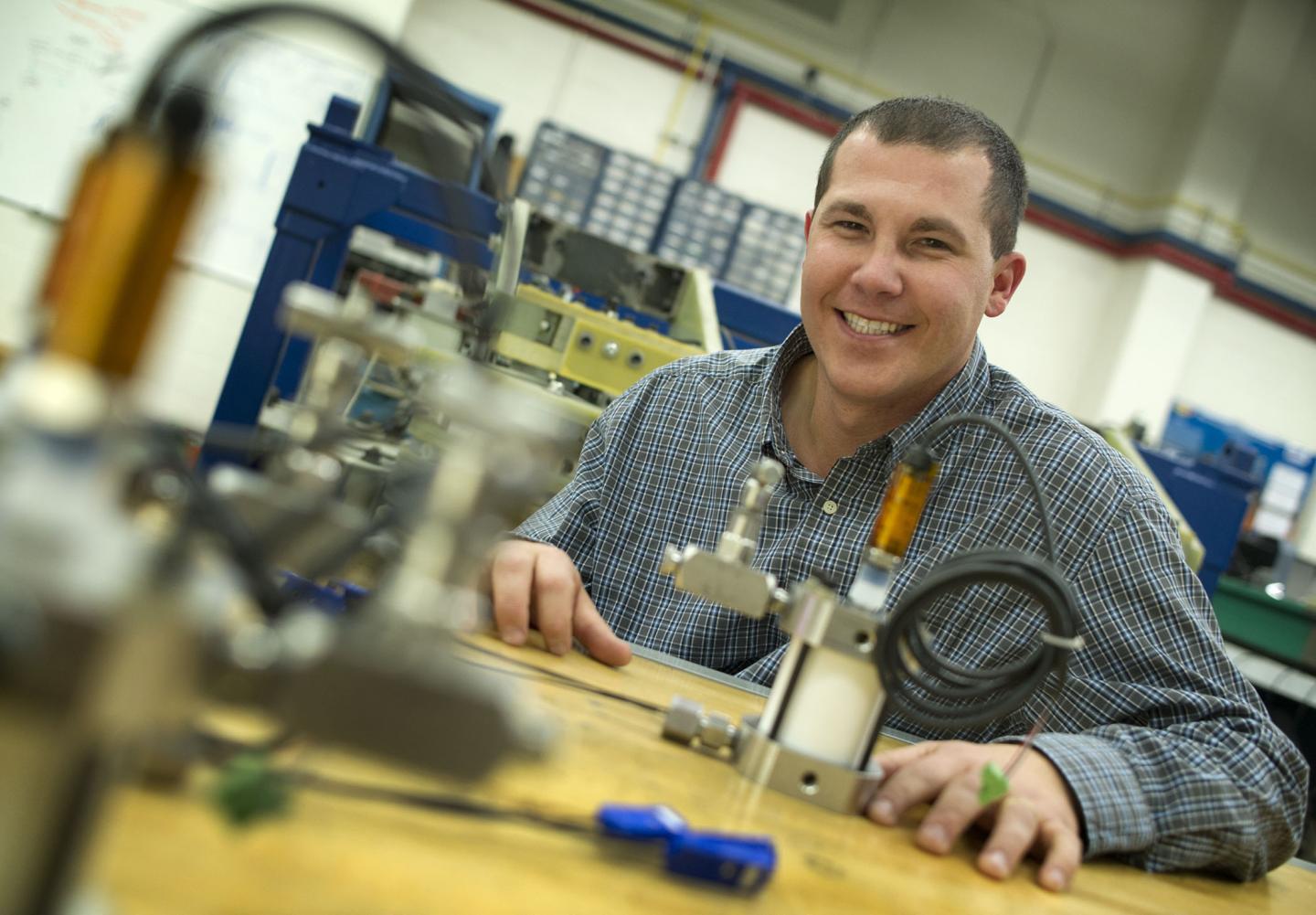
IMAGE

Credit: UT Arlington

David Wetz, a professor of electrical engineering at The University of Texas at Arlington, has received a three-year, $799,000 grant from the Naval Surface Warfare Center-Dahlgren Division (NSWC-DD) to study the high-voltage dielectric insulation properties of epoxy and additively manufactured materials.

Wetz is working with the Navy team to investigate how these solid materials can be dielectrically altered to improve their insulation properties in compact high-voltage systems. There is a desire to replace traditional oil dielectrics with solid materials that are easier to work with and that have potential for reducing overall system size and weight.

“There is a lack of knowledge as to how epoxy and additively manufactured materials can be dielectrically modified to better work as high-voltage insulators,” Wetz said. “If we can identify new ways improve their dielectric properties in a controlled manner, we may be able to reduce the size and weight of the high-voltage systems they are insulating, making them more easily installed on mobile platforms.”

Wetz will collaborate with a team of engineers at NSWC-DD to complete this research.
UTA has previously executed educational partnership agreements with NSWC-DD, signed in March 2019, as well as NSWC-Philadelphia (NSWC-PD), signed in September 2018. These agreements allow NSWC-DD and NSWC-PD to make their scientific, engineering, technology assets and subject matter experts available to University faculty to enhance both their research activities and the educational experience of UTA students. In turn, NSWC-DD and NSWC-PD, can involve UTA faculty and students in U.S. Navy research projects underway at the Philadelphia Division.

The grant is awarded through NAVSEA’s Naval Engineering Education Consortium program, which employs project-based research at colleges and universities that targets the Navy’s technology needs and cultivates a world-class naval engineering workforce via student participation.

“Dr. Wetz and the students working with him in the Pulsed Power and Energy Lab have established themselves as experts in the study of high-voltage energy storage and pulsed power systems,” said Jonathan Bredow, chair of the Electrical Engineering Department. “This contract will help him to continue his strong relationship with the Navy in this critical technology area.”

Wetz, who joined UTA in 2010, runs the UTA Pulsed Power and Energy Lab, which addresses issues concerning pulsed power systems as well as safety, thermal and lifetime challenges in batteries that are operated at higher-than-normal power rates to provide higher output, yet are in increasingly smaller packages. He has previously worked with NSWC-DD to study prime and intermediate energy storage devices used in compact high voltage power systems.

###

– Written by Jeremy Agor, College of Engineering

Media Contact
Herb Booth
[email protected]

Original Source

https://www.uta.edu/news/news-releases/2020/08/18/wetz-navy-grant

Tags: Electrical Engineering/ElectronicsEnergy SourcesTechnology/Engineering/Computer Science
Share12Tweet8Share2ShareShareShare2

Related Posts

Review examines how metal nanoparticles move through subsurface environments

Review examines how metal nanoparticles move through subsurface environments

August 26, 2026
Cu/Zn Ratio Tunes CuZnAl Catalysts for Selective 1,4-Butanediol Conversion to γ-Butyrolactone

Cu/Zn Ratio Tunes CuZnAl Catalysts for Selective 1,4-Butanediol Conversion to γ-Butyrolactone

August 26, 2026

Optimizing Ca2FeNbO6 Boosts Polarization and Energy Density in Ferroelectric Polymer Composites

August 26, 2026

Scripps Research’s Jeffery Kelly Elected to European Academy of Engineering

August 26, 2026
Please login to join discussion

POPULAR NEWS

  • New Method Uses Noisy Samples More Efficiently While Accounting for Uncertainty

    29 shares
    Share 12 Tweet 7
  • MSSARN: A Multi-Layer Spectral-Spatial Attention Residual Network for Hyperspectral Image Classification

    29 shares
    Share 12 Tweet 7
  • Isolated SACSIN HEPN Domain Exhibits RNA-Binding Activity

    29 shares
    Share 12 Tweet 7
  • TUDCA restores maturation of aged eggs in vitro by reducing ER stress

    29 shares
    Share 12 Tweet 7

About

We bring you the latest biotechnology news from best research centers and universities around the world. Check our website.

Follow us

Recent News

New Method Uses Noisy Samples More Efficiently While Accounting for Uncertainty

MSSARN: A Multi-Layer Spectral-Spatial Attention Residual Network for Hyperspectral Image Classification

Isolated SACSIN HEPN Domain Exhibits RNA-Binding Activity

Subscribe to Blog via Email

Enter your email address to subscribe to this blog and receive notifications of new posts by email.

Join 85 other subscribers
  • Contact Us

Bioengineer.org © Copyright 2023 All Rights Reserved.

Welcome Back!

Login to your account below

Forgotten Password?

Retrieve your password

Please enter your username or email address to reset your password.

Log In
No Result
View All Result
  • Homepages
    • Home Page 1
    • Home Page 2
  • News
  • National
  • Business
  • Health
  • Lifestyle
  • Science

Bioengineer.org © Copyright 2023 All Rights Reserved.