• HOME
  • NEWS
  • EXPLORE
    • CAREER
      • Companies
      • Jobs
    • EVENTS
    • iGEM
      • News
      • Team
    • PHOTOS
    • VIDEO
    • WIKI
  • BLOG
  • COMMUNITY
    • FACEBOOK
    • INSTAGRAM
    • TWITTER
Sunday, May 10, 2026
BIOENGINEER.ORG
No Result
View All Result
  • Login
  • HOME
  • NEWS
  • EXPLORE
    • CAREER
      • Companies
      • Jobs
        • Lecturer
        • PhD Studentship
        • Postdoc
        • Research Assistant
    • EVENTS
    • iGEM
      • News
      • Team
    • PHOTOS
    • VIDEO
    • WIKI
  • BLOG
  • COMMUNITY
    • FACEBOOK
    • INSTAGRAM
    • TWITTER
  • HOME
  • NEWS
  • EXPLORE
    • CAREER
      • Companies
      • Jobs
        • Lecturer
        • PhD Studentship
        • Postdoc
        • Research Assistant
    • EVENTS
    • iGEM
      • News
      • Team
    • PHOTOS
    • VIDEO
    • WIKI
  • BLOG
  • COMMUNITY
    • FACEBOOK
    • INSTAGRAM
    • TWITTER
No Result
View All Result
Bioengineer.org
No Result
View All Result
Home NEWS Science News

UTA researchers investigating ‘smart’ helmets that could detect brain injuries

Bioengineer by Bioengineer
March 10, 2021
in Science News
Reading Time: 2 mins read
0
IMAGE
Share on FacebookShare on TwitterShare on LinkedinShare on RedditShare on Telegram

Protective gear for the battlefield and beyond
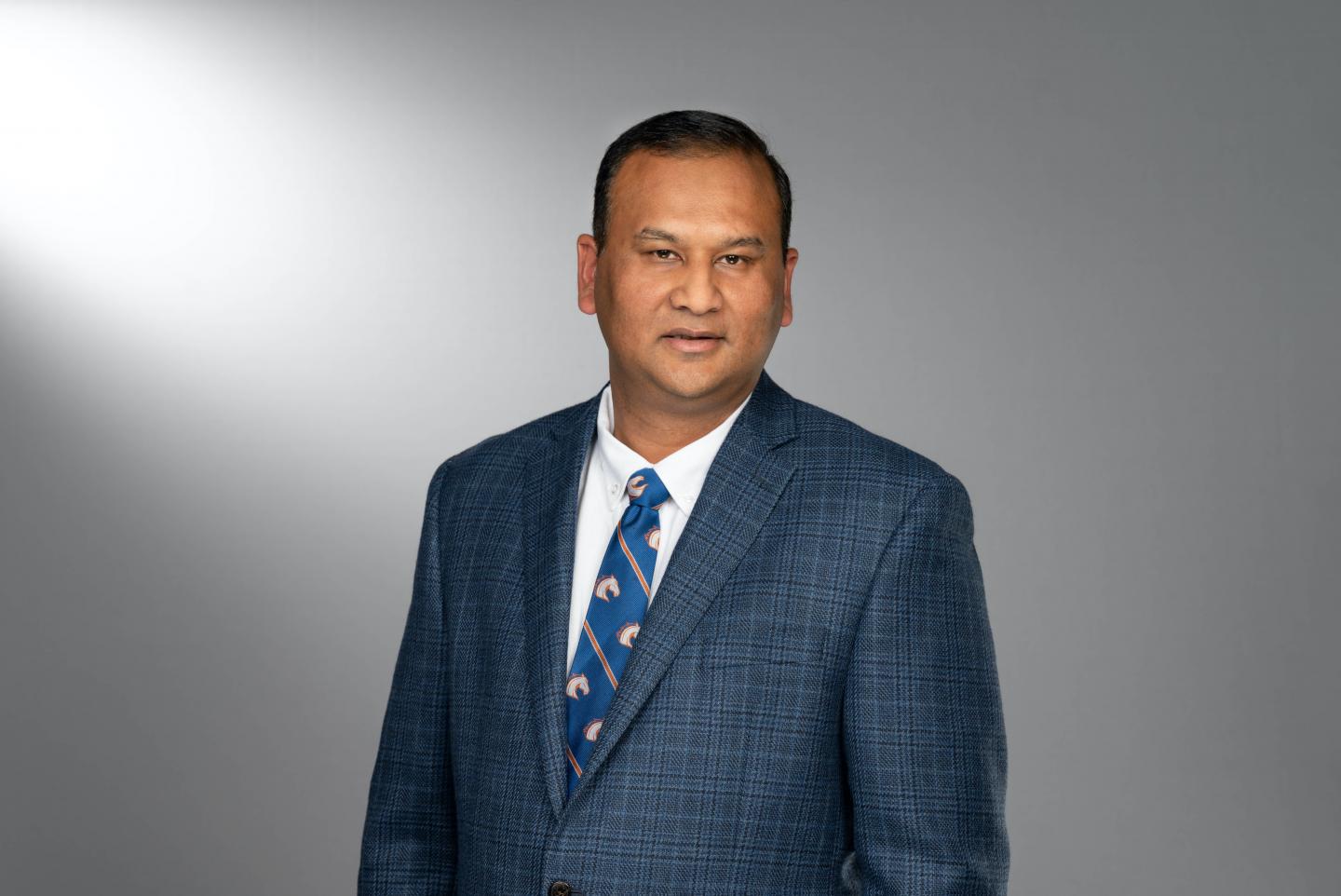
IMAGE

Credit: UT Arlington

A University of Texas at Arlington researcher is investigating the capabilities of “smart” protective helmets that could sense head and brain injuries and allow soldiers to more rapidly receive medical treatment.

Ashfaq Adnan, a mechanical and aerospace engineering professor, has received a three-year, $1.1 million grant from the Office of Naval Research (ONR) to study “smart” protective equipment in a dynamic environment. Kamesh Subbarao, a mechanical and aerospace engineering professor, is a co-principal investigator on the project.

“Our research will focus on the interface between the helmet and the brain and how to use smart sensing to recognize brain trauma,” Adnan said. “If we are successful, the results generated from this study will pave the way for the development of smart helmets to better ensure the well-being of soldiers in combat. We are hoping not only to prevent brain injuries, but to be able to promptly detect situations in which a brain injury may have occurred.

“I am thankful to ONR and Dr. Timothy Bentley, program manager and deputy of ONR’s Force Health Protection program, for supporting our research ideas.”

Adnan will use equipment purchased through previous grants for the study, including a realistic “phantom” head model and high-speed cameras capable of capturing images at up to 10 million frames per second. He will trap living neuron cells inside the head model, then cover the head with a protective layer laden with sensors, including an electroencephalogram to track brain activity and pressure and acceleration sensors to capture when a traumatic event occurs.

He will subject the model to various impact forces, rapid acceleration and deceleration, and sonic and laser waves. Then Adnan and Subbarao will capture photos of the high-speed dynamics within the model to show both the damage and how trauma transmits from the skull through the brain in real time.

“Dr. Adnan’s research is providing insight into how traumatic brain injuries propagate,” said Erian Armanios, chair of the Mechanical and Aerospace Engineering Department. “This insight will accelerate progress in the development of efficient protective gear on the battlefield and beyond.”

Adnan has earned ONR grants exceeding $4 million in support of his research involving blast-induced traumatic brain injury.

He previously published research determining that, under certain circumstances, the mechanical forces of a blast-like event could damage the perineuronal net located adjacent to the neurons, which could in turn damage the neurons themselves.

He and his team simulated a shock wave-induced cavitation collapse within the perineuronal net, which is a specialized extracellular matrix that stabilizes synapses in the brain. The team focused on the damage in the hyaluronan–the net’s main structural component–showing that the localized supersonic forces created by an asymmetrical bubble collapse may break it. This improved current knowledge and understanding of the connection between damage to the perineuronal net and neurodegenerative disorders.

###

– Written by Jeremy Agor, College of Engineering

Media Contact
Herb Booth
[email protected]

Original Source

https://www.uta.edu/news/news-releases/2021/03/09/adnan-smart-helmet

Tags: Biomedical/Environmental/Chemical EngineeringBiotechnologyMechanical EngineeringTechnology/Engineering/Computer Science
Share12Tweet8Share2ShareShareShare2

Related Posts

Evaluating Digoxin Use in Patients with Symptomatic Rheumatic Heart Disease

May 10, 2026

Evaluating the Effectiveness and Safety of Digitalis Glycosides in Treating Heart Failure

May 10, 2026

Urdu Fall Risk Questionnaire Adapted for Elderly

May 10, 2026

Key Pharmacological Markers for HIV Prevention in MSM

May 10, 2026
Please login to join discussion

POPULAR NEWS

  • Research Indicates Potential Connection Between Prenatal Medication Exposure and Elevated Autism Risk

    840 shares
    Share 336 Tweet 210
  • New Study Reveals Plants Can Detect the Sound of Rain

    727 shares
    Share 290 Tweet 181
  • Scientists Investigate Possible Connection Between COVID-19 and Increased Lung Cancer Risk

    68 shares
    Share 27 Tweet 17
  • Salmonella Haem Blocks Macrophages, Boosts Infection

    61 shares
    Share 24 Tweet 15

About

We bring you the latest biotechnology news from best research centers and universities around the world. Check our website.

Follow us

Recent News

Evaluating Digoxin Use in Patients with Symptomatic Rheumatic Heart Disease

Evaluating the Effectiveness and Safety of Digitalis Glycosides in Treating Heart Failure

Urdu Fall Risk Questionnaire Adapted for Elderly

Subscribe to Blog via Email

Success! An email was just sent to confirm your subscription. Please find the email now and click 'Confirm' to start subscribing.

Join 82 other subscribers
  • Contact Us

Bioengineer.org © Copyright 2023 All Rights Reserved.

Welcome Back!

Login to your account below

Forgotten Password?

Retrieve your password

Please enter your username or email address to reset your password.

Log In
No Result
View All Result
  • Homepages
    • Home Page 1
    • Home Page 2
  • News
  • National
  • Business
  • Health
  • Lifestyle
  • Science

Bioengineer.org © Copyright 2023 All Rights Reserved.