• HOME
  • NEWS
  • EXPLORE
    • CAREER
      • Companies
      • Jobs
    • EVENTS
    • iGEM
      • News
      • Team
    • PHOTOS
    • VIDEO
    • WIKI
  • BLOG
  • COMMUNITY
    • FACEBOOK
    • INSTAGRAM
    • TWITTER
Monday, July 6, 2026
BIOENGINEER.ORG
No Result
View All Result
  • Login
  • HOME
  • NEWS
  • EXPLORE
    • CAREER
      • Companies
      • Jobs
        • Lecturer
        • PhD Studentship
        • Postdoc
        • Research Assistant
    • EVENTS
    • iGEM
      • News
      • Team
    • PHOTOS
    • VIDEO
    • WIKI
  • BLOG
  • COMMUNITY
    • FACEBOOK
    • INSTAGRAM
    • TWITTER
  • HOME
  • NEWS
  • EXPLORE
    • CAREER
      • Companies
      • Jobs
        • Lecturer
        • PhD Studentship
        • Postdoc
        • Research Assistant
    • EVENTS
    • iGEM
      • News
      • Team
    • PHOTOS
    • VIDEO
    • WIKI
  • BLOG
  • COMMUNITY
    • FACEBOOK
    • INSTAGRAM
    • TWITTER
No Result
View All Result
Bioengineer.org
No Result
View All Result
Home NEWS Science News Health

UTA patents headset that allows persons to point to objects of interest using their eyes

Bioengineer by Bioengineer
July 3, 2018
in Health
Reading Time: 2 mins read
0
Share on FacebookShare on TwitterShare on LinkedinShare on RedditShare on Telegram
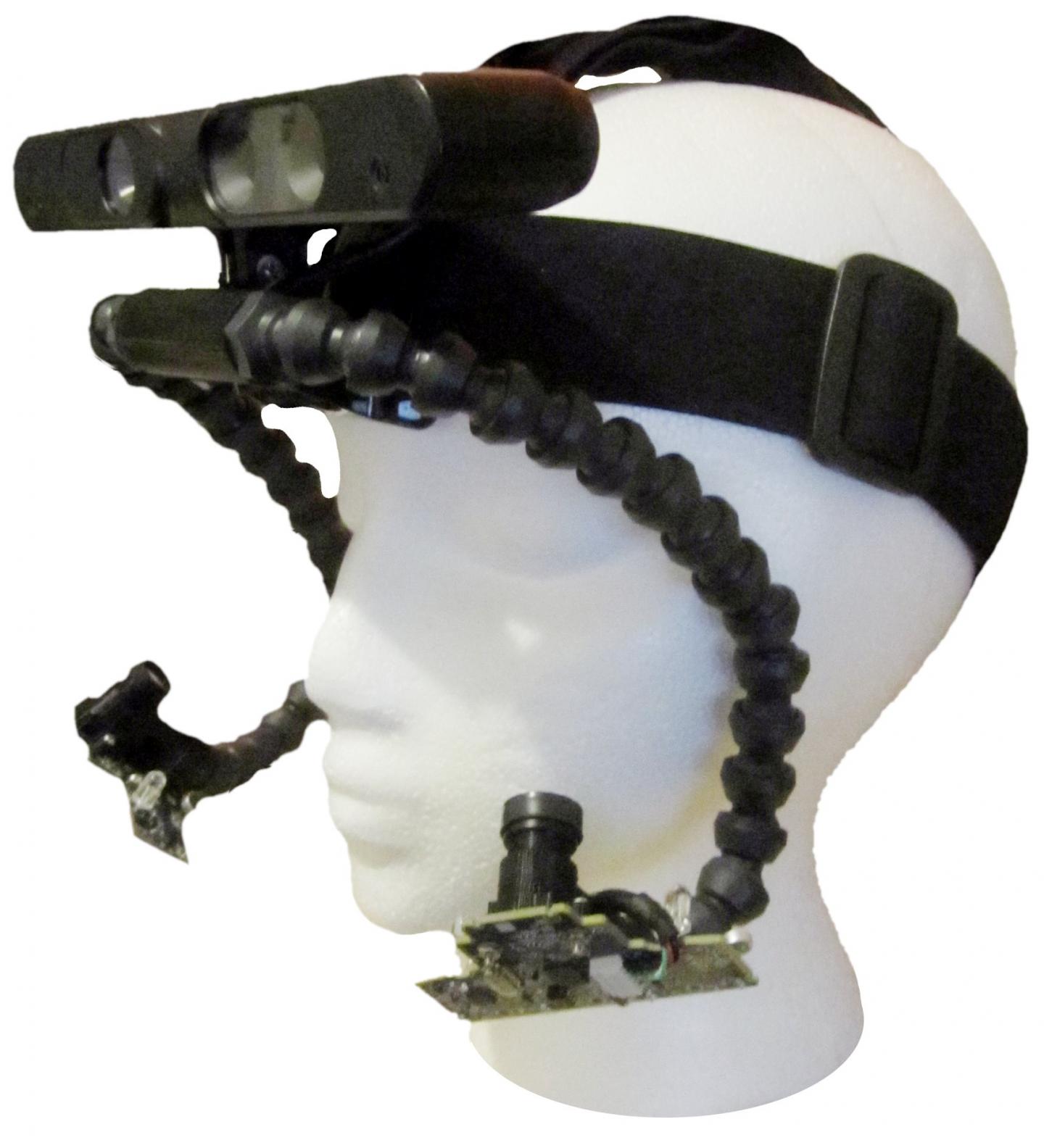
IMAGE

Credit: UTA

People with disabilities such as ALS, spinal injury or Lou Gehrig's disease, often lose use of their legs, arms or hands. Even at advanced stages of the disease, one may still retain movement in their eyes. Some technologies have incorporated eye-tracking to enable disabled persons to interact with a computer to communicate messages to a caregiver, but the devices are often difficult to calibrate without expert assistance and do not allow patients to express their wishes right away.

The University of Texas at Arlington has been awarded a patent for a revolutionary new technology that is able to scan a user's eye movements and enable them to navigate mobile platforms, such as electric wheelchairs, without the use of hands. The technology would also allow users to communicate to a robotic platform when they would like to use an object, such as a glass of water.

"My interest in this technology grew out of seeing how my mother-in-law struggled with eye-tracking devices as an ALS patient," said inventor Christopher McMurrough, now a computer science and engineering lecturer at UTA.

"The latest version of our device can be worn as a pair of ski goggles with cameras on top and eye-trackers embedded in the lenses, making it very easy for patients to use it over long periods of time as it moves with them," he added.

This new technology, called a 3-D point of gaze headset, grew out of McMurrough's doctoral thesis in computer science and engineering as a student at UTA. The device combines 3-D mapping using a 3-D camera on the top of the glasses, with eye tracking. The data is then fed into a program that models the user's surrounding environment and what is currently being looked at by projecting the line of vision out and crossing it with the 3-D view from the camera.

"This technology could also be important to track medical problems that affect eye movement patterns, such as stroke, low blood pressure and other conditions," McMurrough said. "We are also seeing that it could have implications for video games and emerging augmented reality applications."

###

Media Contact

Louisa Kellie
[email protected]
817-524-8926
@utarlington

http://www.uta.edu

Original Source

https://www.uta.edu/news/releases/2018/07/McMurrough%20patent.php

Share12Tweet7Share2ShareShareShare1

Related Posts

Flame retardant BDE-209 targets molecularly linked to ulcerative colitis

July 6, 2026

Kidney transplant outcomes in older adults studied by German researchers

July 6, 2026

Salmonella protein SopB curbs early inflammation to slow disease progression

July 6, 2026

Multi-metal cooperation drives lung cancer chemoresistance, reversed by MiADMSA

July 6, 2026
Please login to join discussion

POPULAR NEWS

  • Detection of EDCs in Breast Milk and Infant Urine Up to Six Months Highlights Early Exposure Risks

    77 shares
    Share 31 Tweet 19
  • New Drug Candidate Developed at McMaster Shows Potential for Treating Brain Cancer

    58 shares
    Share 23 Tweet 15
  • Saying Goodbye to PGY-6: Pediatric Fellowship Realities

    103 shares
    Share 41 Tweet 26
  • KTU Researchers Explore Ultrasound’s Role in Enhancing Blood Flow Beyond Diagnostics

    53 shares
    Share 21 Tweet 13

About

We bring you the latest biotechnology news from best research centers and universities around the world. Check our website.

Follow us

Recent News

Flame retardant BDE-209 targets molecularly linked to ulcerative colitis

Ultra-high frequency particle impacts mimic rockbursts to shatter hard rock

Kidney transplant outcomes in older adults studied by German researchers

Subscribe to Blog via Email

Enter your email address to subscribe to this blog and receive notifications of new posts by email.

Join 83 other subscribers
  • Contact Us

Bioengineer.org © Copyright 2023 All Rights Reserved.

Welcome Back!

Login to your account below

Forgotten Password?

Retrieve your password

Please enter your username or email address to reset your password.

Log In
No Result
View All Result
  • Homepages
    • Home Page 1
    • Home Page 2
  • News
  • National
  • Business
  • Health
  • Lifestyle
  • Science

Bioengineer.org © Copyright 2023 All Rights Reserved.