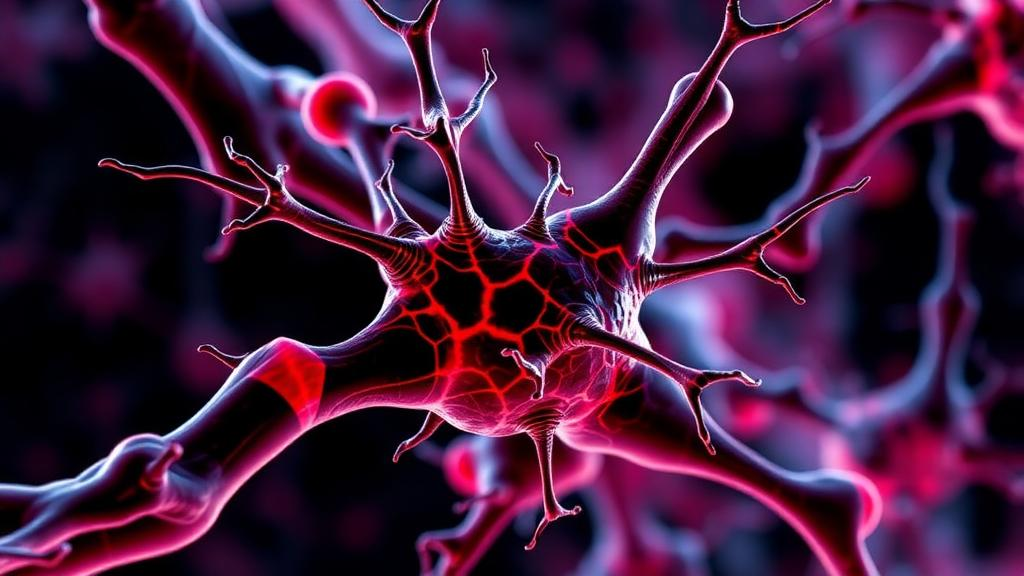
For the tens of thousands of adults diagnosed with non-Hodgkin lymphoma each year, the chemotherapy drug vincristine is a double-edged sword. It is a cornerstone of the standard CHOP and EPOCH regimens that cure or control many lymphoid malignancies, yet it attacks the very nerve fibers that allow patients to walk, button a shirt, or feel the ground beneath their feet. Up to 75 percent of adults with non-Hodgkin lymphoma develop chemotherapy-induced peripheral neuropathy, or CIPN, during vincristine-containing treatment, and the numbness, tingling, weakness, and pain can persist for years after the last infusion. A new prospective cohort study published in the Journal of Neurology now offers the clearest picture yet of how this nerve injury unfolds in real time, using an ultrasensitive blood test that detects fragments of damaged neurons.
The study, led by Gretchen A. McNally and Grace Ji-eun Shin of The Ohio State University Comprehensive Cancer Center, tracked 25 adults with non-Hodgkin lymphoma who were beginning first-line chemotherapy with vincristine-containing CHOP or EPOCH regimens. Rather than conducting an artificial clinical-trial setting, the researchers embedded their measurements directly into routine care, drawing blood and administering questionnaires at the same visits where patients received their infusions. Sixteen participants received CHOP, typically delivered in an outpatient infusion lasting about ninety minutes, while nine received EPOCH, which required roughly five days of inpatient admission with continuous drug infusion over 96 hours. The team followed participants through four to six months of chemotherapy, and a small subset of six survivors for an additional 24 to 42 months after treatment ended.
The centerpiece of the research is neurofilament light chain, or NfL, a structural protein that forms part of the internal scaffolding of nerve axons. When axons are injured, NfL leaks into the surrounding fluid and eventually reaches the bloodstream, where it can be quantified with single-molecule array technology capable of detecting concentrations as low as 0.038 picograms per milliliter. Because NfL rises after virtually any form of neuroaxonal damage, from multiple sclerosis to traumatic brain injury, its interpretation requires careful longitudinal context. In the case of vincristine, the biological logic is compelling: the drug disrupts microtubule assembly and axonal transport, the cellular freight system that keeps long peripheral nerves alive, and the resulting distal axonal injury should release NfL into circulation.
That prediction was borne out dramatically. Using mixed-effects statistical models on log-transformed data, the researchers found that model-estimated plasma NfL rose from a geometric mean of 26.3 picograms per milliliter before the first chemotherapy cycle to 91.6 picograms per milliliter before the second cycle, 107.2 before the fourth, and 94.3 before the sixth. Relative to the pretreatment measurement, these values represent increases of roughly 248 to 307 percent, with every timepoint reaching statistical significance at p less than 0.001. Notably, the rise was not a simple cumulative-dose curve of the kind reported for platinum drugs or paclitaxel; instead, NfL surged early and then plateaued at a sustained elevation, a pattern consistent with prior clinical observations that vincristine neuropathy does not track neatly with total cumulative dose.
Alongside the biomarker measurements, patients completed the EORTC QLQ-CIPN20 questionnaire, a validated 20-item instrument capturing sensory, motor, and autonomic neuropathy symptoms, as well as the Brief Pain Inventory Short Form for pain severity. Clinicians recorded neuropathy grades using the National Cancer Institute’s Common Terminology Criteria for Adverse Events as part of standard toxicity documentation. Patient-reported symptom scores climbed significantly during treatment, with the model-estimated CIPN20 score rising 23.4 percent by the time of the sixth cycle compared with baseline. Clinician-graded CTCAE neuropathy also increased, with grade 1 or higher neuropathy documented in a third of participants by the final on-treatment assessment, though the clinician-recorded changes were smaller and less clearly longitudinal than what patients reported about themselves.
The relationship between the blood biomarker and the lived experience of neuropathy proved more nuanced than a simple one-to-one correspondence. When the researchers pooled all paired NfL and CIPN20 observations across treatment visits, they found a modest but statistically significant association, with a repeated-measures correlation of 0.439 and a p value of 0.020 across 51 paired observations. However, at any single timepoint, the two measures did not correlate reliably, and exploratory lagged analyses of whether early NfL change predicted later symptom worsening were inconclusive in the full dataset. A post hoc sensitivity analysis, excluding one participant with extreme symptom severity, hinted that early NfL concentrations might anticipate later patient-reported symptoms, but the authors are careful to frame this as hypothesis-generating rather than proof of predictive value.
This imperfect alignment between biology and symptom is not a failure of the biomarker; it is a window into the complexity of chemotherapy neurotoxicity. Patient-perceived symptoms may emerge before, during, or after detectable NfL release, reflecting not just structural axonal injury but also altered nerve excitability, immune activation, pain sensitization, and functional adaptation. Emerging mechanistic research suggests that NfL itself may not be a passive bystander: a recent study reported that NfL released after neuronal damage can activate myeloid immune cells and promote neuroinflammation, and preclinical work has implicated astrocyte activation, macrophage infiltration, cytokine release, and NLRP3 inflammasome signaling in vincristine-induced pain. NfL may therefore be best understood as one node in a broader injury-and-immune response rather than a same-day readout of symptom severity.
The study also illuminated the messy realities of real-world oncology that biomarker research must eventually confront. A quarter of participants, six of 25, underwent vincristine dose modifications, including reductions, holds, or discontinuations, for reasons ranging from neuropathy to ileus and constipation. Dose-modified participants showed a numerically larger median rise in NfL, approximately 4.3-fold versus 1.75-fold, but paradoxically reported no median increase in CIPN20 scores, while non-modified participants reported a median increase of six points. These exploratory comparisons did not reach statistical significance, but they suggest that clinical decisions to reduce drug exposure reshape both the biology and the symptom trajectory in ways that any future predictive model must account for. Among the six survivors followed two to three and a half years after treatment, patient-reported neuropathy scores remained elevated, ranging from 20 to 36, and the two participants with the highest long-term symptom burden had also experienced dose modification during therapy.
The authors are candid about the limitations of their pilot. Twenty-five participants from a single center constitute a small cohort with substantial missing data, heterogeneous early sampling because some patients were recruited after treatment had already begun, and no standardized neurologic examination, nerve conduction studies, or quantitative sensory testing to validate the biomarker against objective nerve function. NfL concentrations are also influenced by age, kidney function, body size, and neurological comorbidities, all of which complicate interpretation in a small and demographically diverse sample. The clinician-recorded CTCAE grades came from routine care rather than a standardized assessment protocol, introducing provider-level variability. These constraints mean the study cannot establish NfL as a standalone diagnostic or predictive tool, and the authors explicitly caution that larger studies with standardized pretreatment sampling are needed before NfL can inform routine clinical decisions.
What the study does establish is a methodological foundation and a compelling proof of concept. All prespecified feasibility criteria were met: every enrolled participant contributed early assessment data, retention through the final on-treatment timepoint reached 100 percent among those who remained eligible, and the full sampling schedule fit within the six-month treatment window. Plasma NfL proved sensitive to vincristine exposure, rising early and staying elevated, while patient-reported symptoms rose in parallel without perfectly mirroring the biomarker. The most productive path forward, the researchers argue, is not to replace patient questionnaires or clinician grading with a blood test, but to combine all three into a multimodal monitoring framework in which NfL provides biological context that symptoms alone cannot supply. For a growing population of lymphoma survivors facing persistent neuropathy with few treatment options, the prospect of identifying nerve injury early, before symptoms become disabling, represents a meaningful step toward personalized neuroprotection during cancer therapy.
Subject of Research: Neurofilament light chain as a blood biomarker of vincristine-induced peripheral neuropathy in lymphoma chemotherapy
Article Title: Longitudinal plasma neurofilament light chain and patient-reported outcomes as complementary markers of vincristine-associated peripheral neuropathy in adults with lymphoma: a cohort study
Article References: McNally, G. A., Shin, G. J.-E., Worthen-Chaudhari, L., Schnell, P. M., Flora, L., Krishna, S. S., Voorhees, T., Baiocchi, R., Bond, D., Christian, B., Maddocks, K., Sawalha, Y., & Lustberg, M. B. (2026). Longitudinal plasma neurofilament light chain and patient-reported outcomes as complementary markers of vincristine-associated peripheral neuropathy in adults with lymphoma: a cohort study. Journal of Neurology, 273(10), Article 594. https://doi.org/10.1007/s00415-026-14096-2
Image Credits: AI Generated
DOI: 10.1007/s00415-026-14096-2
Keywords: neurofilament light chain, chemotherapy-induced peripheral neuropathy, vincristine, non-Hodgkin lymphoma, biomarker, patient-reported outcomes, CHOP, EPOCH, neuroaxonal injury, survivorship, CTCAE, longitudinal cohort study
News Source: Nathaniel Bowman. (October 5, 2026). Blood Protein Surge Reveals Nerve Damage From Common Lymphoma Chemotherapy. Scienmag.