• HOME
  • NEWS
  • EXPLORE
    • CAREER
      • Companies
      • Jobs
    • EVENTS
    • iGEM
      • News
      • Team
    • PHOTOS
    • VIDEO
    • WIKI
  • BLOG
  • COMMUNITY
    • FACEBOOK
    • INSTAGRAM
    • TWITTER
Thursday, May 21, 2026
BIOENGINEER.ORG
No Result
View All Result
  • Login
  • HOME
  • NEWS
  • EXPLORE
    • CAREER
      • Companies
      • Jobs
        • Lecturer
        • PhD Studentship
        • Postdoc
        • Research Assistant
    • EVENTS
    • iGEM
      • News
      • Team
    • PHOTOS
    • VIDEO
    • WIKI
  • BLOG
  • COMMUNITY
    • FACEBOOK
    • INSTAGRAM
    • TWITTER
  • HOME
  • NEWS
  • EXPLORE
    • CAREER
      • Companies
      • Jobs
        • Lecturer
        • PhD Studentship
        • Postdoc
        • Research Assistant
    • EVENTS
    • iGEM
      • News
      • Team
    • PHOTOS
    • VIDEO
    • WIKI
  • BLOG
  • COMMUNITY
    • FACEBOOK
    • INSTAGRAM
    • TWITTER
No Result
View All Result
Bioengineer.org
No Result
View All Result
Home NEWS Science News

UTA bioengineer uses NSF grant in novel approach to protein analysis

Bioengineer by Bioengineer
June 1, 2020
in Science News
Reading Time: 2 mins read
0
IMAGE
Share on FacebookShare on TwitterShare on LinkedinShare on RedditShare on Telegram

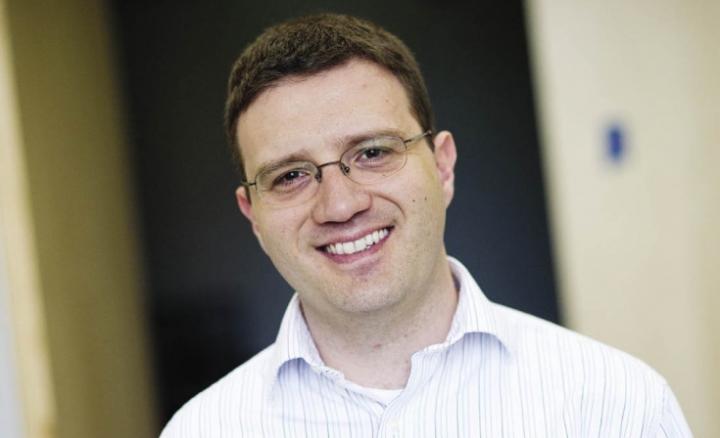
Iron-detecting nanosensors used to study proteins in blood
IMAGE

Credit: UT Arlington

A University of Texas at Arlington bioengineering researcher will use nanotechnology to detect defective iron-carrying proteins in a patient’s blood, which could help explain why these patients have anemia.

The National Science Foundation (NSF) project could become integral to finding other defective proteins in a patient’s blood or tissue biopsy due to cancer or some other illness.

George Alexandrakis, UT Arlington associate professor in bioengineering, is teaming with MinJun Kim, an endowed engineering professor at Southern Methodist University, on the three-year, $500,000 NSF grant. Each professor will receive $250,000.

“One key in this research is that a very small amount of blood is needed,” Alexandrakis said. “The protein carries iron, and it can be trapped by our nanosensor. It’s then stretched or heated at the single molecule level so we can probe how it refolds again once left alone. The way it refolds or misfolds gives us a way to see if it is defective or not.”

Alexandrakis said this project could lead to new knowledge about the dynamic structure of a large menu of proteins, which could help design precision therapeutics.

Michael Cho, chair of the UT Arlington Bioengineering Department, said Alexandrakis’ research could carry implications across the medical analysis sector.

“His work has ramifications on so much of our medical lives,” Cho said. “I’m sure it will provide a baseline for protein analysis in the future.”

Alexandrakis also specializes in research for brain and cell imaging, especially for children with cerebral palsy. That work is ongoing.

He said UTA supported his sabbatical to England’s Oxford University in 2015, when he became interested in using nanosensors for blood detection. Alexandrakis credited Jon Weidanz, associate vice president for research, and Duane Dimos, former vice president for research, for providing him with seed funding that made his current work possible.

###

Media Contact
Herb Booth
[email protected]

Original Source

https://www.uta.edu/news/news-releases/2020/05/29/blood-protein-nanotech

Tags: BioinformaticsBiomedical/Environmental/Chemical EngineeringBiotechnologyCell BiologyNanotechnology/MicromachinesTechnology/Engineering/Computer Science
Share12Tweet8Share2ShareShareShare2

Related Posts

New Breakthrough Enables the Body to Combat Entire Families of Viruses

May 21, 2026
Early Delivery Improves Outcomes for Mothers and Babies in Hypertensive Pregnancies — Biology

Early Delivery Improves Outcomes for Mothers and Babies in Hypertensive Pregnancies

May 21, 2026

Polypharmacy’s Impact on Elderly Staircase Fall Deaths

May 21, 2026

Innovative Peptides Point to Safer Immunotherapy Breakthroughs

May 21, 2026
Please login to join discussion

POPULAR NEWS

  • blank

    New Study Reveals Plants Can Detect the Sound of Rain

    733 shares
    Share 292 Tweet 183
  • ESMO 2025: mRNA COVID Vaccines Enhance Efficacy of Cancer Immunotherapy

    302 shares
    Share 121 Tweet 76
  • Research Indicates Potential Connection Between Prenatal Medication Exposure and Elevated Autism Risk

    846 shares
    Share 338 Tweet 212
  • Breastmilk Balances E. coli and Beneficial Bacteria in Infant Gut Microbiomes

    58 shares
    Share 23 Tweet 15

About

We bring you the latest biotechnology news from best research centers and universities around the world. Check our website.

Follow us

Recent News

New Breakthrough Enables the Body to Combat Entire Families of Viruses

Early Delivery Improves Outcomes for Mothers and Babies in Hypertensive Pregnancies

Polypharmacy’s Impact on Elderly Staircase Fall Deaths

Subscribe to Blog via Email

Enter your email address to subscribe to this blog and receive notifications of new posts by email.

Join 82 other subscribers
  • Contact Us

Bioengineer.org © Copyright 2023 All Rights Reserved.

Welcome Back!

Login to your account below

Forgotten Password?

Retrieve your password

Please enter your username or email address to reset your password.

Log In
No Result
View All Result
  • Homepages
    • Home Page 1
    • Home Page 2
  • News
  • National
  • Business
  • Health
  • Lifestyle
  • Science

Bioengineer.org © Copyright 2023 All Rights Reserved.