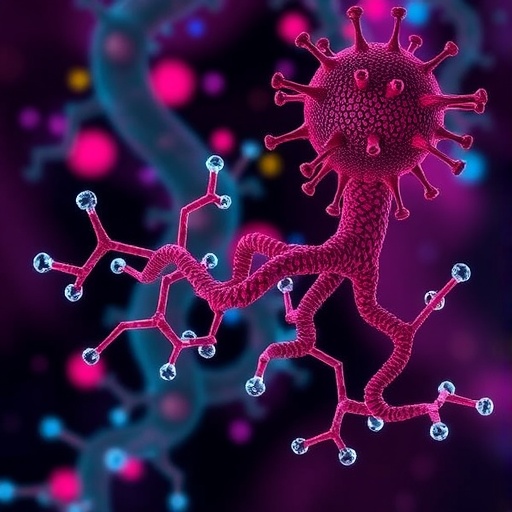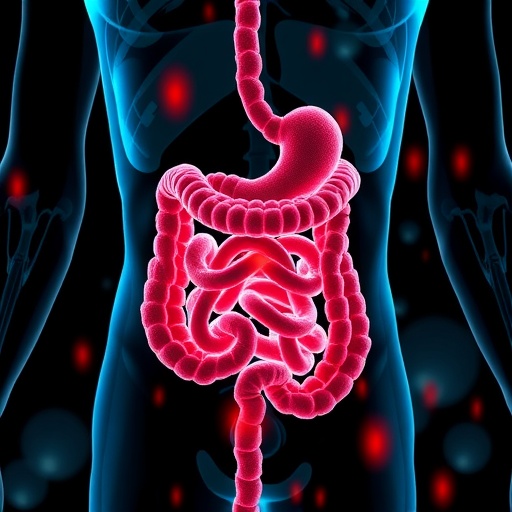
In an exciting advancement that bridges the intricate world of gut microbiota metabolites with immune regulation, a team of researchers has illuminated the molecular crosstalk by which Urolithin A—an intestine-derived metabolite—reinforces mucosal immunity and enhances the gut barrier. This breakthrough study, recently published in Nature Communications, unravels how Urolithin A leverages the aryl hydrocarbon receptor (AHR) to orchestrate NLRP6 inflammasome pathways in intestinal epithelial cells, ultimately modulating immune responses and sustaining gut integrity.
The human gastrointestinal tract interfaces directly with trillions of microbes, rendering the gut a key hub of immune signaling and homeostasis. To maintain a balanced environment, epithelial cells lining the gut coordinate complex defense mechanisms that both protect against pathogens and tolerate beneficial microbes. Among these regulatory gateways, the NLRP6 inflammasome has emerged as a pivotal player in mucosal immunity, though the precise modulatory signals governing its activity have remained partially elusive.
Urolithin A (UA) is a microbiota-derived metabolite generated from dietary polyphenols such as ellagitannins abundant in pomegranates, berries, and nuts. Previous studies have attributed various health-promoting effects to UA including anti-inflammatory and anti-aging benefits; however, the underlying molecular pathways by which UA influences intestinal immunity have not been fully clarified until now. The new study delves deeply into these mechanisms, revealing a signaling axis that could be harnessed therapeutically to bolster gut health.
Central to the findings is the role of the aryl hydrocarbon receptor, a ligand-activated transcription factor widely expressed in intestinal epithelial cells and immune compartments. Known for detecting environmental toxins, AHR also senses endogenous and microbial metabolites to fine-tune immune responses. Ghosh and colleagues demonstrate that Urolithin A functions as a potent ligand for AHR, triggering downstream gene expression responsible for activating NLRP6 inflammasomes.
The inflammasome complex NLRP6 has been recognized for its role in promoting IL-18 secretion and maintaining epithelial cell homeostasis, thereby preventing dysbiosis and inflammatory bowel diseases. However, explicit understanding of how microbial metabolites impact NLRP6 activation has remained elusive, until the present study. By employing sophisticated molecular and cellular assays combined with in vivo models, the researchers establish that UA-mediated AHR activation modulates NLRP6-dependent pathways, resulting in enhanced secretion of mucosal immune factors and reinforcement of tight junction proteins that seal the gut barrier.
The study’s comprehensive approach involved exposing intestinal epithelial cell cultures to Urolithin A, observing a dose-dependent increase in AHR activation and subsequent transcriptional upregulation of NLRP6 and its effector molecules. Additionally, genetic ablation of AHR abolished these effects, affirming the receptor’s indispensable role in UA’s immunomodulatory capacity. Furthermore, in mouse models, oral administration of UA led to fortified gut barrier integrity, reduced intestinal permeability, and a balanced microbial milieu, thus demonstrating translational relevance.
By strategically modulating the AHR-NLRP6 axis, Urolithin A not only curtails excessive inflammatory signaling but also enhances mucosal defenses, showcasing a dual mechanism that safeguards intestinal health. These insights advance our comprehension of host-microbe interactions and underscore dietary metabolites’ potential as precision therapeutics that orchestrate immune homeostasis at mucosal surfaces.
Of particular interest is how NLRP6 activation by UA affects downstream cytokine networks, primarily involving IL-18—a key cytokine implicated in epithelial repair and antimicrobial defense. Enhanced IL-18 secretion amplifies epithelial renewal and maintains a resilient barrier against pathogenic incursions, thereby mitigating risks associated with chronic intestinal inflammation. This nuanced understanding of the cytokine milieu enriches prospects for targeting inflammatory bowel diseases and other gut disorders.
Moreover, the researchers highlight that Urolithin A supplementation offers a novel dietary intervention strategy by complementing the gut’s intrinsic immune defenses. Unlike classical immunosuppressive treatments, modulating the AHR-NLRP6 axis through UA preserves immune vigilance and mucosal tolerance, suggesting fewer adverse effects and sustained gut symbiosis. This paradigm shift could revolutionize dietary therapeutics aimed at maintaining intestinal homeostasis in both healthy and diseased states.
The study also illuminates how UA’s immunoregulatory effects cascade beyond epithelial cells to influence resident immune populations such as innate lymphoid cells and macrophages, although these dimensions warrant further exploration. By mediating epithelial-immune crosstalk, UA potentially orchestrates broader systemic immunity, linking gut health intimately to overall wellness.
Importantly, the research highlights that this metabolite-driven signaling cascade can be influenced by dietary patterns that affect polyphenol availability and microbiota composition. This insight accentuates the significance of personalized nutrition, where modulation of dietary intake can tailor gut-derived metabolite profiles and, in turn, fine-tune mucosal immunity through pathways like AHR-NLRP6.
The authors conclude by noting that their discovery opens fruitful avenues for developing UA-based or AHR-targeting therapeutics designed to reinforce gut barrier function. Such treatments could prove invaluable for patients suffering from conditions marked by compromised intestinal integrity, such as Crohn’s disease, ulcerative colitis, and even systemic disorders linked to gut dysbiosis.
In sum, this pivotal study advances the frontier of mucosal immunology by linking the dietary metabolite Urolithin A with aryl hydrocarbon receptor-dependent activation of NLRP6 inflammasomes. By decoding this intricate molecular dialogue, researchers have charted a promising path toward leveraging endogenous metabolites to promote intestinal health, offering exciting prospects for novel dietary and pharmacological interventions in gut-associated diseases.
As gut health increasingly gains recognition as a linchpin of systemic wellbeing, unraveling the molecular underpinnings of metabolite-immune crosstalk heralds a new era of therapeutic opportunities. The insights provided by Ghosh and colleagues exemplify how integrative research bridging microbiota metabolism and immunology can yield innovative strategies to sustain and restore health at the critical mucosal interface.
Ultimately, translating these experimental insights into clinical applications will require comprehensive human trials and further mechanistic studies. However, the foundational groundwork laid by this investigation effectively spotlights Urolithin A as a potent modulator of gut immunity operating through the AHR-NLRP6 axis, emphasizing the therapeutic value of harnessing host-microbe metabolic cross-talk in medicine’s future.
Subject of Research: The interaction between Urolithin A and intestinal immunity, focusing on aryl hydrocarbon receptor (AHR) activation and NLRP6 inflammasome-mediated pathways in intestinal epithelial cells.
Article Title: Urolithin A activates aryl hydrocarbon receptor-NLRP6-mediated pathways in intestinal epithelial cells to modulate mucosal immunity and strengthen gut barrier integrity.
Article References:
Ghosh, S., Vanwinkle, Z.M., Bodduluri, S.R. et al. Urolithin A activates aryl hydrocarbon receptor-NLRP6-mediated pathways in intestinal epithelial cells to modulate mucosal immunity and strengthen gut barrier integrity. Nat Commun 17, 5411 (2026). https://doi.org/10.1038/s41467-026-73760-3
Image Credits: AI Generated
DOI: https://doi.org/10.1038/s41467-026-73760-3
Tags: anti-inflammatory effects of Urolithin Aaryl hydrocarbon receptor in gut healthdietary polyphenols and gut microbiotaellagitannins metabolism in gut healthgut barrier function and immune signalinggut epithelial cell immune modulationmicrobiota metabolites and immune homeostasismicrobiota-derived metabolites and immune regulationmucosal immunity enhancement by Urolithin ANLRP6 inflammasome intestinal functionUrolithin AUrolithin A gut immunity