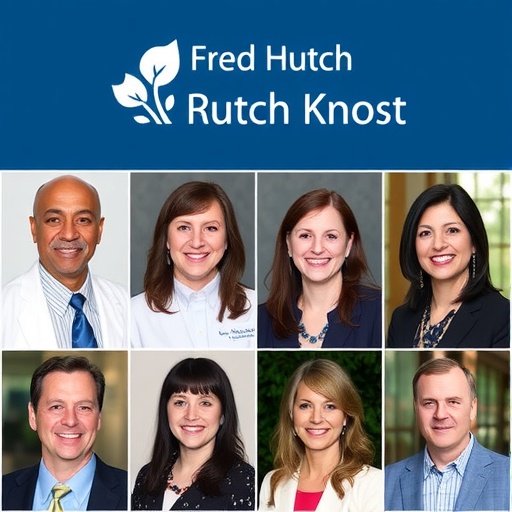
In a significant announcement from the Fred Hutch Cancer Center, the prestigious Dr. Eddie Méndez Scholar Award has been bestowed upon an extraordinary group of early-career scientists advancing the frontiers of cancer research and related biomedical sciences. These eight recipients, selected from a competitive nationwide pool, exemplify a new generation dedicated to unveiling the molecular mechanisms underpinning cancer progression and immune response, thereby pushing the boundaries of therapeutic science.
The Dr. Eddie Méndez Scholar Award, named to honor the legacy of Dr. Eddie Méndez—a pioneering clinician and researcher renowned for exemplary contributions to head and neck oncology—serves as a beacon of encouragement and support for emerging researchers. Its purpose is to accelerate innovative investigations that address complex biological challenges within oncology and infectious diseases, focusing on areas such as tumor microenvironment dynamics, T-cell differentiation pathways, and metastatic dissemination processes.
This year’s cohort includes investigators affiliated with leading academic institutions including Stanford Medicine, Harvard-affiliated research bodies, UCSF, and the Howard Hughes Medical Institute. Their collective expertise spans a range of cutting-edge disciplines, from cellular immunology to molecular biology, underscoring the multidisciplinary approach necessary for contemporary biomedical breakthroughs. The recipients’ research delves deeply into the cellular ecosystems of tumors, deciphering how stromal interactions influence immune evasion and metastatic potential, and examining the genetic and epigenetic regulation of immune effector cells.
Among the awarded scientists, Dr. Rachael Chanin from Stanford Medicine investigates the complexities of tumor ecology, particularly emphasizing how cancer cells manipulate their surrounding microenvironment to facilitate evasion of immune surveillance. Her work employs high-dimensional single-cell sequencing and spatial transcriptomics, technologies that enable resolution of tumor architecture at unprecedented granularity. This approach is critical for identifying novel biomarkers and therapeutic targets that disrupt protumorigenic niches.
Similarly, Dr. Mohamed El-Brolosy of the Whitehead Institute applies cutting-edge CRISPR-based functional genomics to dissect the regulatory networks controlling T-cell differentiation. His focus on T-cell lineage commitment offers profound implications for immunotherapy design, particularly in enhancing the efficacy of adoptive cell transfer and checkpoint blockade therapies. By elucidating molecular switch points, this research aims to overcome resistance mechanisms that limit current immunotherapies.
Dr. Amy C. Fan at UCSF explores the molecular pathways driving cancer metastasis, a process responsible for the majority of cancer-related deaths. Utilizing sophisticated in vivo imaging and genetic lineage tracing, her studies elucidate how metastatic cells acquire invasive phenotypes and adapt to distant microenvironments. These insights are poised to inform innovative intervention strategies capable of arresting metastatic dissemination at its earliest stages.
The cohort also includes Dr. Mario Palma from the Harvard T.H. Chan School of Public Health, whose investigations into immune modulation focus on cytokine signaling and its impact on tumor progression. His work integrates systems biology modeling with experimental immunology to uncover how inflammatory circuits within tumors influence disease trajectory and patient response to therapy.
Reflecting on the significance of the award, Dr. Christina Termini, assistant professor and co-director of the program, emphasized the rigorous selection process and the exceptional caliber of candidates. She highlighted the transformative potential embodied by these emerging leaders as they apply novel methodologies to unravel complex biological questions that underpin effective cancer treatment paradigms.
Dr. Christopher Li, who co-directs the awards alongside Termini, noted that the award’s namesake embodied a holistic approach to cancer care, one that prioritized patient welfare alongside scientific innovation. The recipients resonate with this philosophy by striving not only for mechanistic insights but also translational impact, ensuring that their discoveries will improve treatment outcomes and patient quality of life.
Since its inception in memory of Dr. Méndez, the award has recognized over seventy postdoctoral researchers, creating a vibrant network of scholars who collectively advance cancer biology and therapeutics. This year’s symposium, scheduled for mid-July at the Fred Hutch Campus in Seattle, provides a vital forum for dialogue, collaboration, and dissemination of these pioneering works among faculty, clinical leaders, and peers.
Fred Hutchinson Cancer Center continues to cement its reputation as a powerhouse of innovation, leveraging cross-disciplinary expertise and state-of-the-art technologies to confront some of the most challenging issues in oncology and infectious disease research. Through initiatives like the Dr. Eddie Méndez Scholar Award, it nurtures the next wave of visionary scientists dedicated to transforming cancer care and ultimately achieving curative therapies.
The accomplishments and ambitions of these eight distinguished awardees underline the evolving landscape of cancer research, where integrated approaches spanning molecular biology, immunology, and clinical translation are essential. Their work not only expands the fundamental understanding of cancer pathophysiology but also promises to define new paradigms for precision medicine, immunotherapy, and patient-centered care.
As the scientific community awaits the outcomes of these promising investigations, the Dr. Eddie Méndez Scholar Award stands as a testament to the enduring impact of mentorship, innovation, and dedication in the relentless pursuit of cancer eradication.
Subject of Research: Cancer biology, tumor microenvironment, T-cell differentiation, cancer metastasis, immunotherapy
Article Title: Rising Stars in Cancer Research: The 2026 Dr. Eddie Méndez Scholar Award Recipients
News Publication Date: June 23, 2026
Web References:
– Fred Hutch Cancer Center faculty directory and award program information
References: Not explicitly provided within the article content
Image Credits: Fred Hutch Cancer Center
Keywords: Dr. Eddie Méndez Scholar Award, cancer research, tumor microenvironment, T-cell differentiation, metastasis, immunotherapy, early-career scientists, Fred Hutchinson Cancer Center
Tags: biomedical sciences innovationcancer progression molecular mechanismscellular immunology in cancerDr. Eddie Méndez Scholar Awardearly-career cancer researchersemerging biomedical scientistsFred Hutch Cancer Center awardshead and neck oncology advancementsmetastatic dissemination researchmultidisciplinary cancer researchT-cell differentiation in oncologytumor microenvironment dynamics