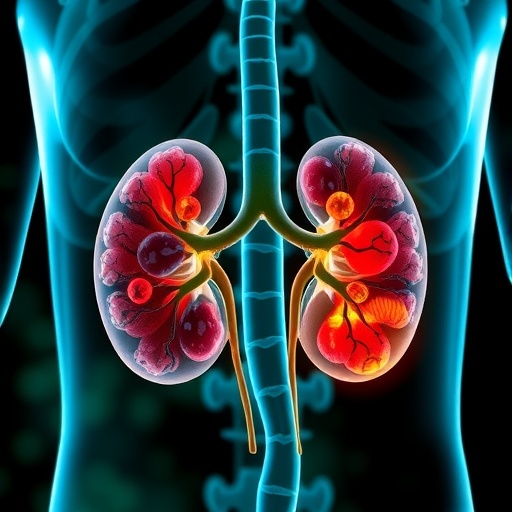
Clear cell renal cell carcinoma (ccRCC) stands as the most prevalent and aggressive subtype of kidney cancer, presenting formidable challenges in clinical management due to its high rates of recurrence and progression. Despite advancements in imaging and surgical techniques, early detection remains a critical unmet need. New research, spearheaded by teams investigating the molecular underpinnings of ccRCC, has taken a revolutionary step by harnessing the potential of liquid biopsies to not only illuminate the tumor microenvironment but also reveal comprehensive metabolic derangements associated with this malignancy. Recent findings published in the British Journal of Cancer unravel how urinary proteomic and metabolomic profiles can be exploited for early, non-invasive detection of ccRCC, thus forging a promising path toward enhancing patient survival outcomes.
Liquid biopsies have increasingly gained attention in oncology for their minimally invasive nature and capacity to capture dynamic, real-time molecular snapshots of tumors. Unlike traditional biopsies that require direct tissue sampling—often costly, invasive, and limited by tumor heterogeneity—liquid biopsies analyze circulating biomolecules shed from tumors into bodily fluids. Particularly, urine, as a readily accessible biofluid, offers a fertile ground for detecting biochemical signals reflective of renal pathology. This approach not only overcomes many practical limitations but also holds promise for regular monitoring, early detection, and personalized therapeutic strategies in renal cancers.
The study at the center of this breakthrough undertook a comprehensive profiling of urinary proteins and metabolites in patients diagnosed with ccRCC. Utilizing state-of-the-art mass spectrometry coupled with advanced computational analyses, the researchers cataloged significant alterations in the urine proteome and metabolome that mirror pathological changes within the renal tumor microenvironment and cellular metabolism. The nuanced interplay of tumor cells with surrounding stromal and immune components is often obscured in tissue biopsy snapshots, yet it leaves identifiable biochemical footprints in urine—signatures that this research aimed to decode meticulously.
Their proteomic analysis revealed a distinct constellation of proteins that are differentially expressed in ccRCC patients compared to healthy controls. These proteins include key regulators of extracellular matrix remodeling, immune modulation, and angiogenesis, underscoring the complexity of tumor-host interactions. Simultaneously, the metabolomic landscape presented profound shifts in pathways linked to energy metabolism, including glycolysis, the tricarboxylic acid (TCA) cycle, and amino acid biosynthesis. The metabolic reprogramming observed aligns with the well-documented Warburg effect and other hallmarks of cancer metabolism, signaling a systemic perturbation that is readily traceable through the urinary metabolome.
Importantly, these molecular signatures correlate with clinical parameters such as tumor stage and grade, suggesting their potential prognostic value. Through rigorous validation in independent patient cohorts, the study demonstrated that specific urinary protein-metabolite panels possess high sensitivity and specificity for discriminating ccRCC from benign renal conditions and healthy states. This establishes a compelling case for integrating urinary biomarker assays into clinical workflows to facilitate early diagnosis, particularly in populations at elevated risk or in surveillance post-nephrectomy.
Beyond diagnostic utility, the study’s revelations extend into mechanistic insights. The identified urinary biomarkers reflect underlying oncogenic pathways and tumor microenvironmental changes critical for ccRCC pathogenesis. For instance, elevated urinary levels of matrix metalloproteinases signify active extracellular matrix degradation facilitating invasion. Concurrently, shifts in metabolites associated with glutamine and lipid metabolism hint at adaptive metabolic circuits that fuel tumor growth under hypoxic conditions characteristic of ccRCC. Such insights pave the way for targeted therapies that disrupt these metabolic dependencies, potentially enhancing treatment efficacy.
This research also illustrates the transformative power of multi-omics approaches in oncology. By integrating proteomic and metabolomic data, the investigators captured a multidimensional portrait of ccRCC biology. This holistic view surpasses the limitations of single-modality analyses, which may miss subtle yet clinically relevant alterations. The synergy between proteins and metabolites elucidates functional networks and biochemical fluxes integral to tumor development, advancing our understanding from descriptive to mechanistic paradigms.
Understanding the tumor microenvironment is especially crucial in ccRCC, where immune infiltration and vascular remodeling dramatically influence disease trajectory. The study’s identification of immune-related urinary proteins suggests that liquid biopsy can reflect immune dynamics, offering a non-invasive window into tumor immunobiology. This has profound implications for immunotherapy optimization, enabling real-time monitoring of immune response and potential resistance mechanisms in ccRCC patients.
Moreover, the application of cutting-edge analytical platforms such as high-resolution mass spectrometry and sophisticated bioinformatics facilitated unprecedented sensitivity and accuracy in detecting low-abundance biomarkers in the complex urinary matrix. The technical rigor embedded in the study fortifies the reliability of the findings and exemplifies the evolving landscape of precision medicine tools.
From a clinical translation perspective, these discoveries herald a paradigm shift. Urologists and oncologists could soon access easily deployable urine tests that complement imaging and histopathology, enabling screening of asymptomatic individuals or rapid triaging of suspicious masses. Early-stage tumors catchable through such assays might be amenable to less invasive interventions, curbing disease progression and sparing patients from morbid surgeries.
Nonetheless, challenges remain before widespread adoption. Large-scale prospective clinical trials must confirm the robustness, reproducibility, and cost-effectiveness of urinary proteome-metabolome assays across diverse populations and clinical settings. Additionally, standardized protocols for urine collection, handling, and analysis will be essential to mitigate pre-analytical variability that could confound biomarker accuracy.
Importantly, the findings propel further inquiry into how tumor heterogeneity influences urinary biomarker profiles. Since ccRCC tumors vary widely in genetic mutations and microenvironmental features, personalized biomarker panels refined through artificial intelligence and machine learning hold promise to capture this complexity and tailor diagnostics accordingly.
Overall, this landmark study catalyzes a transformative approach to renal cancer care by elucidating how non-invasive urinary biomarker profiling can illuminate tumor biology, facilitate early detection, and ultimately improve patient prognoses. As the global burden of renal carcinoma escalates, integrating such innovative liquid biopsy tools into clinical practice represents a powerful stride toward precision oncology’s vision of individualized, timely, and minimally invasive diagnosis and monitoring.
In conclusion, the fusion of urinary proteomics and metabolomics heralds an exciting frontier in ccRCC research and clinical management. By capturing the intricate molecular dialogues reflecting tumor microenvironment and metabolic rewiring, this strategy transcends conventional diagnostics. It taps into the liquid landscape of urine, unlocking a reservoir of biomarkers that could revolutionize early ccRCC detection. As further validation and technological refinements advance, we anticipate an era where simple urine tests enable clinicians to catch kidney cancer at its genesis, revolutionizing outcomes and patient care worldwide.
Subject of Research: Early diagnosis and molecular characterization of clear cell renal cell carcinoma through urinary proteome and metabolome analysis
Article Title: Urinary proteome and metabolome uncover tumor microenvironment and cellular metabolism changes of renal clear cell carcinoma
Article References:
Liu, X., Zhang, M., Zhao, Y. et al. Urinary proteome and metabolome uncover tumor microenvironment and cellular metabolism changes of renal clear cell carcinoma. Br J Cancer (2026). https://doi.org/10.1038/s41416-026-03434-w
Image Credits: AI Generated
DOI: 10.1038/s41416-026-03434-w
Keywords: clear cell renal cell carcinoma, ccRCC, kidney cancer, liquid biopsy, urinary proteomics, urinary metabolomics, tumor microenvironment, cancer metabolism, early cancer detection, biomarkers
Tags: advances in kidney cancer managementclear cell renal cell carcinoma early detectionkidney cancer urine biomarkersliquid biopsy in oncologymetabolic shifts in kidney cancermetabolomic profiling of renal tumorsmolecular diagnostics for ccRCCnon-invasive cancer detection methodsrenal cell carcinoma recurrence monitoringtumor microenvironment analysisurinary proteomics for cancer diagnosisurine-based cancer biomarker discovery