• HOME
  • NEWS
  • EXPLORE
    • CAREER
      • Companies
      • Jobs
    • EVENTS
    • iGEM
      • News
      • Team
    • PHOTOS
    • VIDEO
    • WIKI
  • BLOG
  • COMMUNITY
    • FACEBOOK
    • INSTAGRAM
    • TWITTER
Sunday, May 10, 2026
BIOENGINEER.ORG
No Result
View All Result
  • Login
  • HOME
  • NEWS
  • EXPLORE
    • CAREER
      • Companies
      • Jobs
        • Lecturer
        • PhD Studentship
        • Postdoc
        • Research Assistant
    • EVENTS
    • iGEM
      • News
      • Team
    • PHOTOS
    • VIDEO
    • WIKI
  • BLOG
  • COMMUNITY
    • FACEBOOK
    • INSTAGRAM
    • TWITTER
  • HOME
  • NEWS
  • EXPLORE
    • CAREER
      • Companies
      • Jobs
        • Lecturer
        • PhD Studentship
        • Postdoc
        • Research Assistant
    • EVENTS
    • iGEM
      • News
      • Team
    • PHOTOS
    • VIDEO
    • WIKI
  • BLOG
  • COMMUNITY
    • FACEBOOK
    • INSTAGRAM
    • TWITTER
No Result
View All Result
Bioengineer.org
No Result
View All Result
Home NEWS Science News Biology

Urbanization may hold key to tiger survival

Bioengineer by Bioengineer
January 16, 2019
in Biology
Reading Time: 3 mins read
0
IMAGE
Share on FacebookShare on TwitterShare on LinkedinShare on RedditShare on Telegram

Conservationists look at five human socioeconomic scenarios to better understand fate of endangered big cat
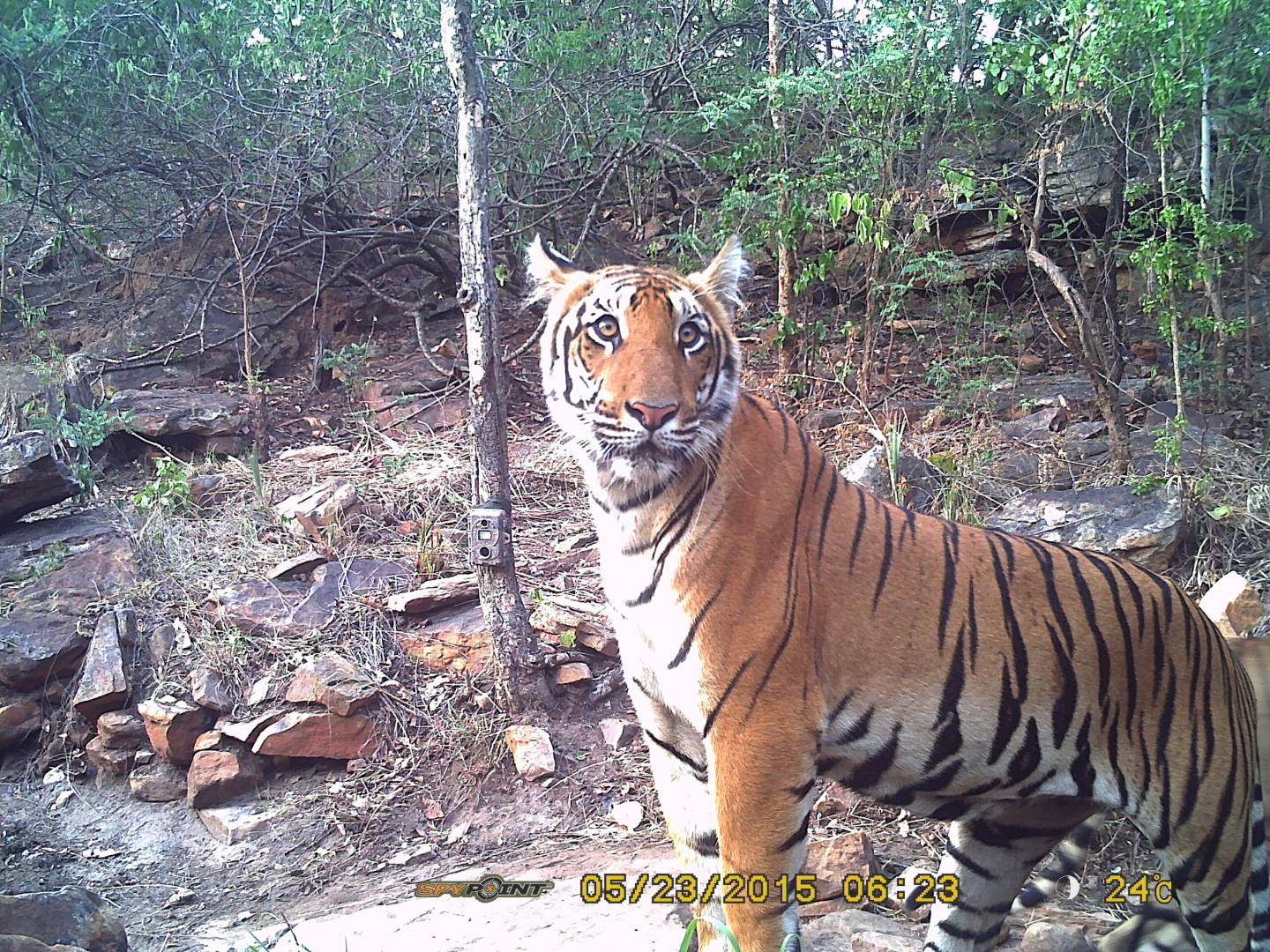
IMAGE

Credit: TSFD/WCS-India/HyTiCoS


A new WCS-led study published in the journal Biological Conservation says the future of tigers in Asia is linked the path of demographic transition–for humans. The study marks the first-of-its-kind analysis that overlays human population scenarios with the fate of these endangered big cats.

Prior to the 20th century, some experts estimate there were more than 100,000 tigers living in the wild; today that number is between 3000 – 4000. At the same, over the last 150 years, the human population of Asia as grown from 790 million to over 4 billion, with dire consequences for tigers and other wildlife.

But these trends are changing. The demographic transition is the process by which human populations peak and then go down. The researchers looked at different scenarios of economic, education, migration, and urbanization policy. In 2010, 57 million people lived in areas defined as “tiger conservation landscapes” that contained all of the world’s remaining wild tigers. However, by 2100, depending on population trends, as few as 40 million people could be sharing space with tigers, or it could be as many as 106 million.

Different population scenarios depend on the course of the demographic transition. Over the long-term, the scenarios associated with the lowest human populations are also associated with the greatest levels of urbanization and education. At the same time, urban consumption is the source of many of the threats to tigers. Therefore, the authors say conservation authorities must engage with people in cities to save tigers, while continuing to support site-level protection efforts around tiger source sites.

Said lead author Eric Sanderson, Senior Conservation Ecologist with WCS: “Urbanization and the subsequent human demographic transition is arguably the most important historical trend shaping the future of conservation. How that transition plays out is not pre-determined. Rather it depends on the policy decisions that governments, and the societies they represent, take with respect to fundamental matters such as urban governance, education, economic reform, and the movement of people and trade goods. These decisions matter for us and tigers too.”

Said co-author and WCS Senior Vice President of Field Conservation Joe Walston: “If we want a world with tigers, forests, and wildness to persist beyond the 21st century, conservation needs to join forces with groups working to alleviate poverty, enhance education for girls, reduce meat consumption, and build sustainable cities.”

Said co-author Professor Bryan Jones of Baruch College: “Demographic futures, and the socioeconomic causes and consequences thereof, are notoriously difficult to predict. As such, biophysical futures are similarly fraught with uncertainty. Understanding the consequences of different pathways, driven in large part by policy decisions, is crucial to developing a conservation strategy to protect the planets most endangered habitats. Our ability to understand the future will depend in part on how well we understand urbanization, in terms of both land use and demographic behavior.”

The paper builds on a 2018 WCS study that found that the enormous trends toward population stabilization, poverty alleviation, and urbanization are rewriting the future of biodiversity conservation in the 21st century, offering new hope for the world’s wildlife and wild places.

###

Media Contact
Stephen Sautner
[email protected]
718-220-3682

Original Source

https://newsroom.wcs.org/News-Releases/articleType/ArticleView/articleId/11820/New-WCS-Study-Says-Urbanization-May-Hold-Key-to-Tiger-Survival.aspx

Related Journal Article

http://dx.doi.org/10.1016/j.biocon.2018.12.017

Tags: BiodiversityEcology/EnvironmentImmigrants & MigrationNatureSocial/Behavioral ScienceUrbanizationZoology/Veterinary Science
Share12Tweet8Share2ShareShareShare2

Related Posts

Ancient Plant Populations Reveal Fresh Insights into Climate Resilience — Biology

Ancient Plant Populations Reveal Fresh Insights into Climate Resilience

May 8, 2026
Rare Brain Disorders in Children Linked to Mutations in Lesser-Known Protein Complex — Biology

Rare Brain Disorders in Children Linked to Mutations in Lesser-Known Protein Complex

May 8, 2026

From Odd Insect to Underwater Predator: The Remarkable Evolution of a Bloodthirsty Fruit Fly

May 8, 2026

SNU Professor Sangwoo Seo’s Team Develops Next-Generation CRISPR Biocontainment Technology to Control Microbial Survival Without DNA Cleavage

May 8, 2026
Please login to join discussion

POPULAR NEWS

  • Research Indicates Potential Connection Between Prenatal Medication Exposure and Elevated Autism Risk

    840 shares
    Share 336 Tweet 210
  • New Study Reveals Plants Can Detect the Sound of Rain

    727 shares
    Share 290 Tweet 181
  • Scientists Investigate Possible Connection Between COVID-19 and Increased Lung Cancer Risk

    68 shares
    Share 27 Tweet 17
  • Salmonella Haem Blocks Macrophages, Boosts Infection

    61 shares
    Share 24 Tweet 15

About

We bring you the latest biotechnology news from best research centers and universities around the world. Check our website.

Follow us

Recent News

Evaluating Digoxin Use in Patients with Symptomatic Rheumatic Heart Disease

Evaluating the Effectiveness and Safety of Digitalis Glycosides in Treating Heart Failure

Urdu Fall Risk Questionnaire Adapted for Elderly

Subscribe to Blog via Email

Enter your email address to subscribe to this blog and receive notifications of new posts by email.

Join 82 other subscribers
  • Contact Us

Bioengineer.org © Copyright 2023 All Rights Reserved.

Welcome Back!

Login to your account below

Forgotten Password?

Retrieve your password

Please enter your username or email address to reset your password.

Log In
No Result
View All Result
  • Homepages
    • Home Page 1
    • Home Page 2
  • News
  • National
  • Business
  • Health
  • Lifestyle
  • Science

Bioengineer.org © Copyright 2023 All Rights Reserved.