• HOME
  • NEWS
  • EXPLORE
    • CAREER
      • Companies
      • Jobs
    • EVENTS
    • iGEM
      • News
      • Team
    • PHOTOS
    • VIDEO
    • WIKI
  • BLOG
  • COMMUNITY
    • FACEBOOK
    • INSTAGRAM
    • TWITTER
Tuesday, May 26, 2026
BIOENGINEER.ORG
No Result
View All Result
  • Login
  • HOME
  • NEWS
  • EXPLORE
    • CAREER
      • Companies
      • Jobs
        • Lecturer
        • PhD Studentship
        • Postdoc
        • Research Assistant
    • EVENTS
    • iGEM
      • News
      • Team
    • PHOTOS
    • VIDEO
    • WIKI
  • BLOG
  • COMMUNITY
    • FACEBOOK
    • INSTAGRAM
    • TWITTER
  • HOME
  • NEWS
  • EXPLORE
    • CAREER
      • Companies
      • Jobs
        • Lecturer
        • PhD Studentship
        • Postdoc
        • Research Assistant
    • EVENTS
    • iGEM
      • News
      • Team
    • PHOTOS
    • VIDEO
    • WIKI
  • BLOG
  • COMMUNITY
    • FACEBOOK
    • INSTAGRAM
    • TWITTER
No Result
View All Result
Bioengineer.org
No Result
View All Result
Home NEWS Science News Biology

Urban seagulls still prefer seafood

by
July 11, 2024
in Biology
Reading Time: 3 mins read
0
Gulls were presented with all four foods together on days 5, 10, 15 and 35 of the study
Share on FacebookShare on TwitterShare on LinkedinShare on RedditShare on Telegram

Seagull chicks raised on an “urban” diet still prefer seafood, new research shows.
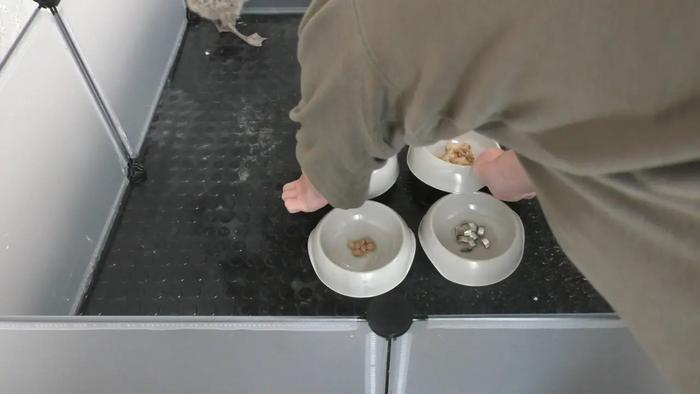
Gulls were presented with all four foods together on days 5, 10, 15 and 35 of the study

Credit: Emma Inzani

Seagull chicks raised on an “urban” diet still prefer seafood, new research shows.

University of Exeter scientists studied herring gull chicks that had been rescued after falling off roofs in towns across Cornwall, UK.

Raised in captivity (before being released), they were given either a “marine” diet consisting mainly of fish and mussels, or an “urban” diet containing mostly bread and cat food.

Every few days the gull chicks were presented with a choice of all four foods in different bowls, to test which they preferred – and all gulls strongly favoured fish.

“Our results suggest that, even when reared on an ‘urban’ diet of foods found only around people, these chicks might be unlikely to seek out urban foods as adults,” said lead author Emma Inzani, from the Centre for Ecology and Conservation on Exeter’s Penryn Campus in Cornwall.

“Human-associated foods are often both reliably present and easy to obtain – but when fish is available they clearly prefer it.”

Herring gulls are often seen as a pest in urban areas, where they scavenge for dropped food and in bins, and sometimes take food from people.

However, the species is on the UK’s List of Highest Conservation Concern due to ongoing population declines.

Inzani said a combination of reduced fish stocks in UK waters – coupled with abundant and easy access to food waste in towns – may mean it is not as profitable for gulls to spend a lot of energy going out to sea to forage.

Previous research has shown that parent gulls often switch to finding more seafood once their chicks hatch, possibly due to seafood providing more of the nutrients chicks need to grow.

In this new study, all 27 chicks had access to food all day, but half of the chicks had urban food for 80% of the day and seafood for 20%, while the other half of the chicks received the opposite diet.

When presented with all four foods together on days 5, 10, 15 and 35 of the study, both groups consistently favoured fish – and even those that tried the bread rarely ate much of it.

Chicks’ preferences for fish found in this study may reinforce the behaviour observed in parent gulls to switch to provisioning more marine-sourced foods upon chick hatching.

“Animals can live and exploit urban areas for human food waste,” said senior author Dr Neeltje Boogert.

“However, this does not necessarily mean they’re thriving or that they prefer this food, rather than making the best of a bad situation.

“More research is needed to investigate how the food young animals receive affects their later life, including their food choices, health and breeding.”

The study was funded by the Natural Environment Research Council and the Royal Society.

The paper, published in the journal PeerJ, is entitled: “Early-life diet does not affect preference for fish in herring gulls (Larus argentatus).”


Journal

PeerJ

DOI

10.7717/peerj.17565

Article Title

Early-life diet does not affect preference for fish in herring gulls (Larus argentatus).

Article Publication Date

11-Jul-2024
Share12Tweet8Share2ShareShareShare2

Related Posts

Rattlesnakes Identified as Highly Susceptible to Fungal Diseases and Parasitic Lung Infections

May 26, 2026
Tracing 700 Million Years of Blood Cell Evolution — Biology

Tracing 700 Million Years of Blood Cell Evolution

May 25, 2026

How Wasp Societies Conquer Intense Leadership Conflicts

May 25, 2026

Tiny Blue Octopus from the Galápagos Islands: Small Enough to Fit in the Palm of Your Hand

May 25, 2026

POPULAR NEWS

  • ESMO 2025: mRNA COVID Vaccines Enhance Efficacy of Cancer Immunotherapy

    316 shares
    Share 126 Tweet 79
  • New Study Reveals Plants Can Detect the Sound of Rain

    734 shares
    Share 293 Tweet 183
  • Common Food Preservatives Associated with Elevated Blood Pressure and Increased Heart Disease Risk

    56 shares
    Share 22 Tweet 14
  • Research Indicates Potential Connection Between Prenatal Medication Exposure and Elevated Autism Risk

    847 shares
    Share 339 Tweet 212

About

We bring you the latest biotechnology news from best research centers and universities around the world. Check our website.

Follow us

Recent News

New Frailty Model Aids Older Hemodialysis Patients

A Century of Innovation: Optical Science’s Quest

Stability and Accuracy of Framingham Heart Risk Models

Subscribe to Blog via Email

Enter your email address to subscribe to this blog and receive notifications of new posts by email.

Join 82 other subscribers
  • Contact Us

Bioengineer.org © Copyright 2023 All Rights Reserved.

Welcome Back!

Login to your account below

Forgotten Password?

Retrieve your password

Please enter your username or email address to reset your password.

Log In
No Result
View All Result
  • Homepages
    • Home Page 1
    • Home Page 2
  • News
  • National
  • Business
  • Health
  • Lifestyle
  • Science

Bioengineer.org © Copyright 2023 All Rights Reserved.