• HOME
  • NEWS
  • EXPLORE
    • CAREER
      • Companies
      • Jobs
    • EVENTS
    • iGEM
      • News
      • Team
    • PHOTOS
    • VIDEO
    • WIKI
  • BLOG
  • COMMUNITY
    • FACEBOOK
    • INSTAGRAM
    • TWITTER
Monday, May 4, 2026
BIOENGINEER.ORG
No Result
View All Result
  • Login
  • HOME
  • NEWS
  • EXPLORE
    • CAREER
      • Companies
      • Jobs
        • Lecturer
        • PhD Studentship
        • Postdoc
        • Research Assistant
    • EVENTS
    • iGEM
      • News
      • Team
    • PHOTOS
    • VIDEO
    • WIKI
  • BLOG
  • COMMUNITY
    • FACEBOOK
    • INSTAGRAM
    • TWITTER
  • HOME
  • NEWS
  • EXPLORE
    • CAREER
      • Companies
      • Jobs
        • Lecturer
        • PhD Studentship
        • Postdoc
        • Research Assistant
    • EVENTS
    • iGEM
      • News
      • Team
    • PHOTOS
    • VIDEO
    • WIKI
  • BLOG
  • COMMUNITY
    • FACEBOOK
    • INSTAGRAM
    • TWITTER
No Result
View All Result
Bioengineer.org
No Result
View All Result
Home NEWS Science News Chemistry

Unreliable neurons improve brain functionalities

Bioengineer by Bioengineer
September 29, 2022
in Chemistry
Reading Time: 2 mins read
0
Unreliable neurons improve brain functionalities and cryptography
Share on FacebookShare on TwitterShare on LinkedinShare on RedditShare on Telegram

The brain is composed of millions of billions of neurons which communicate with each other. Each neuron collects its many inputs and transmits a spike to its connecting neurons. The dynamics of such large and highly interconnected neural networks is the basis of all high order brain functionalities.
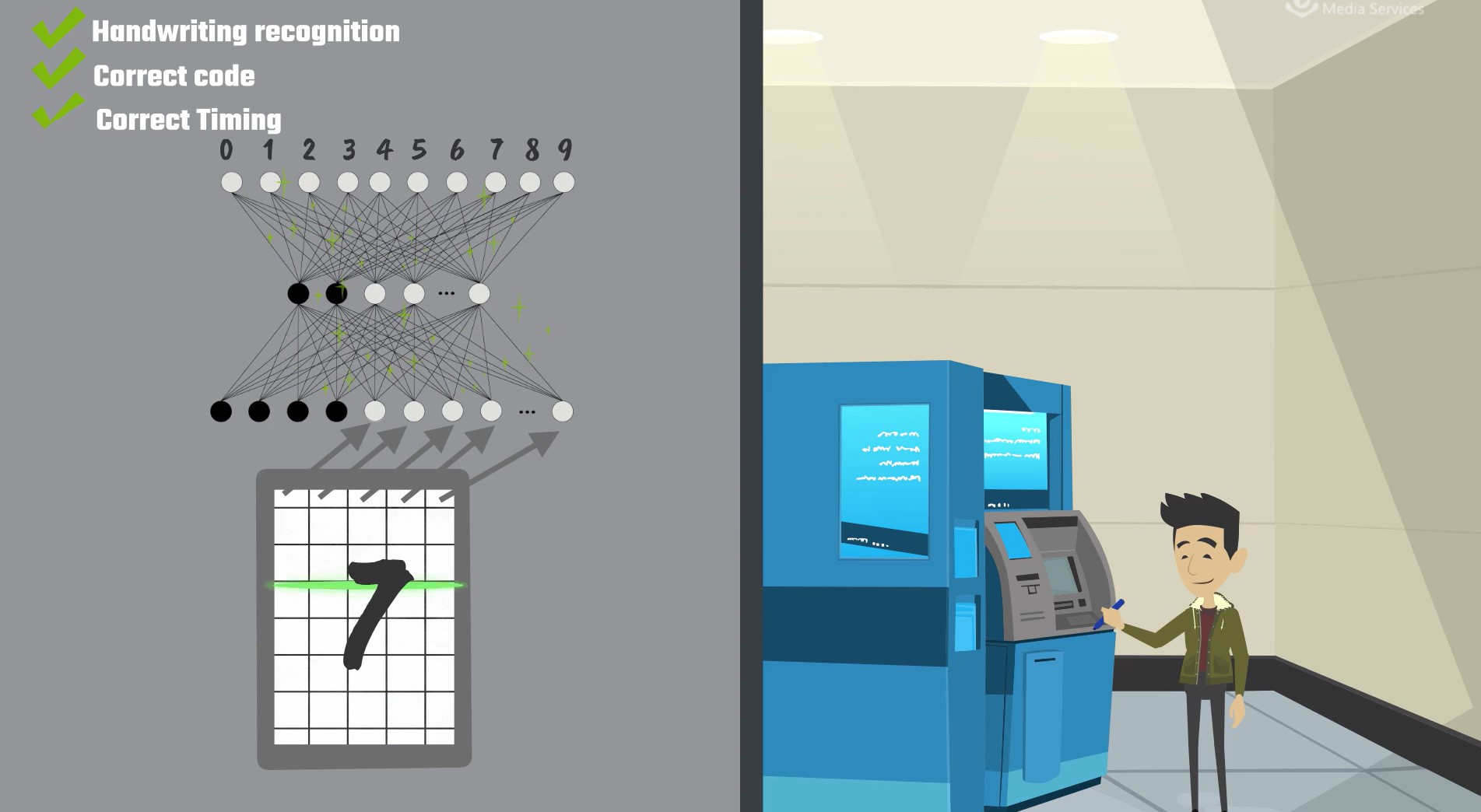
Unreliable neurons improve brain functionalities and cryptography

Credit: Prof. Ido Kanter, Bar-Ilan University

The brain is composed of millions of billions of neurons which communicate with each other. Each neuron collects its many inputs and transmits a spike to its connecting neurons. The dynamics of such large and highly interconnected neural networks is the basis of all high order brain functionalities.

In an article published today in the journal Scientific Reports, a group of scientists has experimentally demonstrated that there are frequent periods of silence in which a neuron fails to respond to its inputs. As opposed to elecronic devices, which are fast and reliable, the brain is composed of unreliable neurons. “A logic-gate always gives the same output to the same input, otherwise electronic devices like cellphones and computers, which are composed of many billions of interconnected logic-gates, wouldn’t function well,” said Prof. Ido Kanter, of Bar-Ilan University’s Department of Physics and Gonda (Goldschmied) Multidisciplinary Brain Research Center, who led the study. “Comparing the unreliability of the brain to a computer or cellphone: one time your computer answers 1+1=2 and other times 1+1=5, or dialing 7 in your cellphone many times can result in 4 or 9. Silencing periods would appear to be a major disadvantage of the brain, but our latest findings have shown otherwise.”

Contrary to what one might think, Kanter and team have demonstrated that neuronal silencing periods are not a disadvantage representing biological limitations, but rather an advantage for temporal sequence identification. “Assume you would like to remember a phone number, 0765…,” said Yuval Meir, a co-author of the study. “Neurons which were active when the digit 0 was presented might be silenced when the next digit 7 is presented, for example. Consequently, each digit is trained on a different dynamically created sub-network, and this silencing mechanism enables our brain to identify sequences efficiently.”

The brain silencing mechanism is a proposed source for a new AI mechanism, and in addition has been demonstrated as the origin for a new type of cryptosystem for handwriting recognition at automated teller machines (ATMs). This cryptosystem allows the user to write his personal identification number (PIN) on an electronic board rather than clicking a PIN into the ATM. The sequence identification developed by Kanter and team, based on neuronal silencing periods, is not only capable of identifying the correct PIN but also the user’s personal handwriting style and the timing in which each digit of the PIN is written on the board. These added features act as safeguards against stolen cards, even if a thief knows the user’s PIN.

This latest research by Kanter and team shows that it is not always beneficial to  improve the unreliablilty of stuttered neurons in the brain, because they have advantages for higher brain functions.

Learn more about this research in this video. 


Journal

Scientific Reports

Article Publication Date

29-Sep-2022

Share12Tweet8Share2ShareShareShare2

Related Posts

Alkali-Ion Enhanced Zeolitic Imidazolate Glasses — Chemistry

Alkali-Ion Enhanced Zeolitic Imidazolate Glasses

May 4, 2026
Exotic Quantum Phase Dynamically Links Vibrations Separated by Symmetry — Chemistry

Exotic Quantum Phase Dynamically Links Vibrations Separated by Symmetry

May 4, 2026

Revolutionary Magnon Discovery Opens Doors to Mini Quantum Computers

May 4, 2026

Unraveling the Origins of Hydrogen Cyanide on Early Earth

May 4, 2026

POPULAR NEWS

  • Research Indicates Potential Connection Between Prenatal Medication Exposure and Elevated Autism Risk

    834 shares
    Share 334 Tweet 209
  • New Study Reveals Plants Can Detect the Sound of Rain

    718 shares
    Share 287 Tweet 179
  • Scientists Investigate Possible Connection Between COVID-19 and Increased Lung Cancer Risk

    67 shares
    Share 27 Tweet 17
  • Salmonella Haem Blocks Macrophages, Boosts Infection

    61 shares
    Share 24 Tweet 15

About

We bring you the latest biotechnology news from best research centers and universities around the world. Check our website.

Follow us

Recent News

Janus Nanomotors Target Radiation-Induced Dermatitis Treatment

New Study Reveals Significant Shortfalls in Dementia Care Throughout Mississippi

From Lines to Lattices: High-Resolution PDMS Printing

Subscribe to Blog via Email

Enter your email address to subscribe to this blog and receive notifications of new posts by email.

Join 82 other subscribers
  • Contact Us

Bioengineer.org © Copyright 2023 All Rights Reserved.

Welcome Back!

Login to your account below

Forgotten Password?

Retrieve your password

Please enter your username or email address to reset your password.

Log In
No Result
View All Result
  • Homepages
    • Home Page 1
    • Home Page 2
  • News
  • National
  • Business
  • Health
  • Lifestyle
  • Science

Bioengineer.org © Copyright 2023 All Rights Reserved.