• HOME
  • NEWS
  • EXPLORE
    • CAREER
      • Companies
      • Jobs
    • EVENTS
    • iGEM
      • News
      • Team
    • PHOTOS
    • VIDEO
    • WIKI
  • BLOG
  • COMMUNITY
    • FACEBOOK
    • INSTAGRAM
    • TWITTER
Sunday, October 4, 2026
BIOENGINEER.ORG
No Result
View All Result
  • Login
  • HOME
  • NEWS
  • EXPLORE
    • CAREER
      • Companies
      • Jobs
        • Lecturer
        • PhD Studentship
        • Postdoc
        • Research Assistant
    • EVENTS
    • iGEM
      • News
      • Team
    • PHOTOS
    • VIDEO
    • WIKI
  • BLOG
  • COMMUNITY
    • FACEBOOK
    • INSTAGRAM
    • TWITTER
  • HOME
  • NEWS
  • EXPLORE
    • CAREER
      • Companies
      • Jobs
        • Lecturer
        • PhD Studentship
        • Postdoc
        • Research Assistant
    • EVENTS
    • iGEM
      • News
      • Team
    • PHOTOS
    • VIDEO
    • WIKI
  • BLOG
  • COMMUNITY
    • FACEBOOK
    • INSTAGRAM
    • TWITTER
No Result
View All Result
Bioengineer.org
No Result
View All Result
Home Headlines

Unpacking embryonic pluripotency

Bioengineer.org by Bioengineer.org
January 24, 2018
in Headlines, Health, Science News
Reading Time: 2 mins read
0
Share on FacebookShare on TwitterShare on LinkedinShare on RedditShare on Telegram
IMAGE

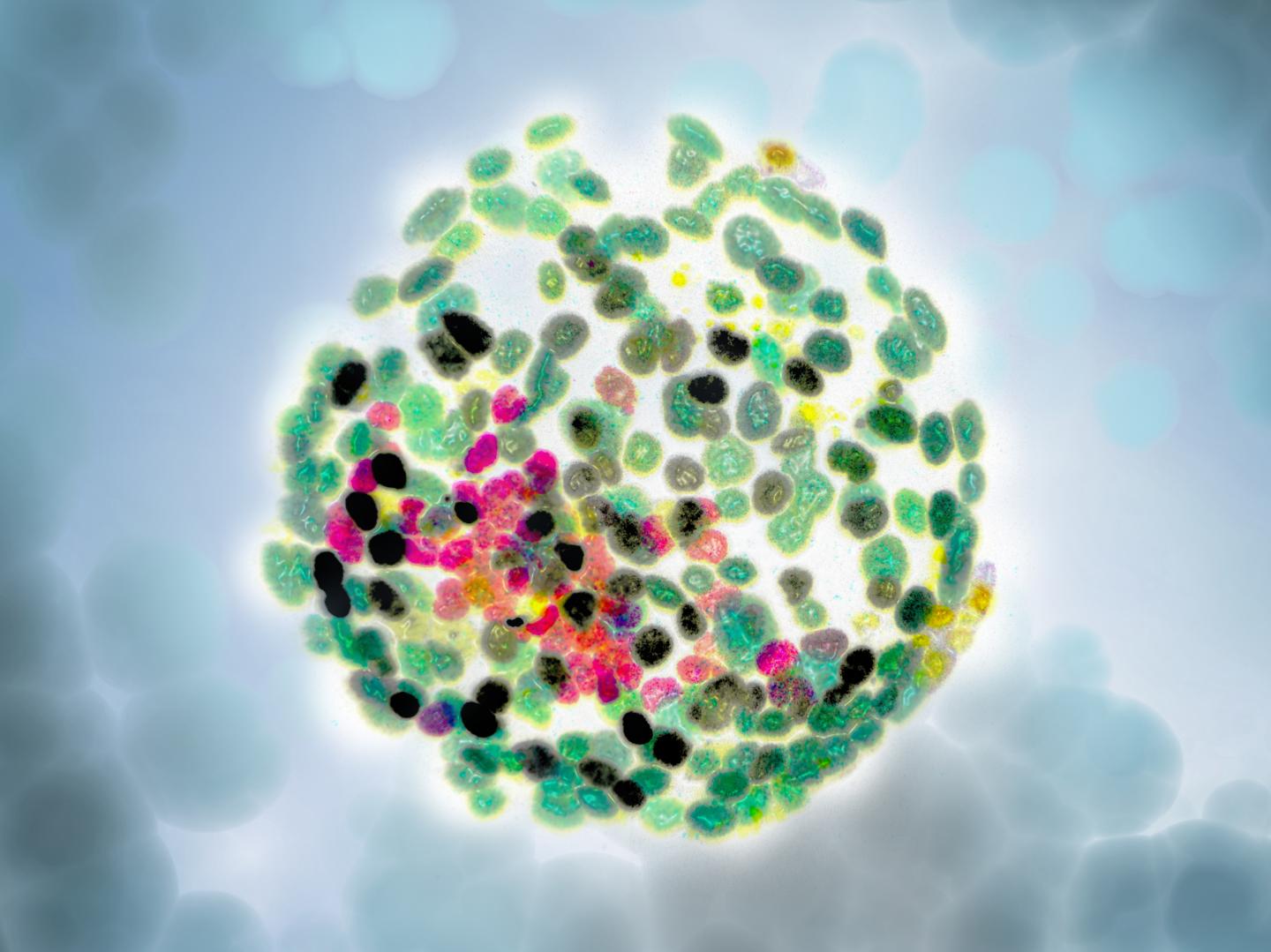
Cambridge, UK, 9 November 2015 – Researchers at EMBL's European Bioinformatics Institute (EMBL-EBI) and the Wellcome Trust- Medical Research Council Cambridge Stem Cell Institute at the University of Cambridge have identified factors that spark the formation of pluripotent cells. Their findings, published in Developmental Cell, shed light on human embryonic development and help research into cell reprogramming and assisted conception.

Embryonic stem cells are widely known for their ability to differentiate into any cell type – a state called pluripotency. This state is short lived in the embryo, but is essential to normal development. In this study, the researchers mapped when and where genes were expressed (turned on or off) during early development of the mouse and common marmoset, a nonhuman primate species. This allowed them to pinpoint changes that regulate pluripotency in both mammals. They analysed the complex network of gene regulation that supports pluripotency, looking closely at how this network comes together and later collapses as cells exit the pluripotent state to become specialised cell types.

"Our goal was to generate a comprehensive map of gene expression in the early stages of embryogenesis in the mouse, which has traditionally been the best model for mammalian development, and to see how that knowledge could be translated to primates," explains Paul Bertone, former EMBL-EBI group leader now at the Wellcome Trust-MRC Stem Cell Institute.

To compare pluripotent cells in rodents and primates, the researchers used single-cell RNA sequencing on small clusters of cells (8-20 cells) to establish precise gene-expression patterns for specific stages of early development. The results provide a framework for understanding the emergence and progression of pluripotency in different mammals.

"Many of the genes that give rise to the pluripotent identity in mice were also expressed in marmoset, demonstrating a common foundation for pluripotency in mammals," says Austin Smith, also of the Stem Cell Institute. "But there were some differences in signalling pathways between the two species, indicating that lineage specification in primates is not entirely conserved."

"We found that WNT signalling in the marmoset is critical for normal differentiation of one of the first three cell lineages to emerge," Paul continues. "Inhibiting this pathway has a profound effect – one of those lineages is subsumed by pluripotent cells rather than forming correctly. It will be interesting to see through in vitro studies whether WNT and perhaps other pathways are similarly utilised in humans."

This highly interdisciplinary study blends traditional embryology, genomics and bioinformatics. The result is a valuable resource for identifying the factors and pathways that regulate pluripotency in different mammals. The findings can also be used to optimise embryonic stem-cell derivation, and reprogramming to pluripotency, in cell cultures. The knowledge gained helps researchers understand early lineage decisions in embryonic cells, potentially leading to improved methods for human blastocyst development for assisted conception.

###
Share13Tweet8Share2ShareShareShare2

Related Posts

MRI Radiomics Model Predicts Breast Cancer Chemotherapy Response by Reading the Tumor and Its Surroundings

MRI Radiomics Model Predicts Breast Cancer Chemotherapy Response by Reading the Tumor and Its Surroundings

October 4, 2026
Silent Model Failure in Remote Health Monitoring Gets a Real-Time Drift Alarm

Silent Model Failure in Remote Health Monitoring Gets a Real-Time Drift Alarm

October 4, 2026

Simple Blood Test Could Reveal When Sepsis Kills, Even After Death

October 4, 2026

Calcium and Gallium Team Up to Fine-Tune Zinc Ferrite for Next-Gen Electronics

October 4, 2026
Please login to join discussion

POPULAR NEWS

  • Alloys That Shrink Their Own Grains: New PIX Mechanism Refines Metals With Heat Alone

    Alloys That Shrink Their Own Grains: New PIX Mechanism Refines Metals With Heat Alone

    29 shares
    Share 12 Tweet 7
  • Endurance Exercise Reshapes the Liver in Males and Females Through Distinct Molecular Routes

    29 shares
    Share 12 Tweet 7
  • Single Transcription Factor PU.1 Rapidly Converts Fibroblasts into Macrophage-Lineage Cells

    29 shares
    Share 12 Tweet 7
  • New Scale Measures How Ready Nurse Educators Really Are for the AI Era

    29 shares
    Share 12 Tweet 7

About

We bring you the latest biotechnology news from best research centers and universities around the world. Check our website.

Follow us

Recent News

Alloys That Shrink Their Own Grains: New PIX Mechanism Refines Metals With Heat Alone

Endurance Exercise Reshapes the Liver in Males and Females Through Distinct Molecular Routes

Single Transcription Factor PU.1 Rapidly Converts Fibroblasts into Macrophage-Lineage Cells

Subscribe to Blog via Email

Success! An email was just sent to confirm your subscription. Please find the email now and click 'Confirm' to start subscribing.

Join 85 other subscribers
  • Contact Us

Bioengineer.org © Copyright 2023 All Rights Reserved.

Welcome Back!

Login to your account below

Forgotten Password?

Retrieve your password

Please enter your username or email address to reset your password.

Log In
No Result
View All Result
  • Homepages
    • Home Page 1
    • Home Page 2
  • News
  • National
  • Business
  • Health
  • Lifestyle
  • Science

Bioengineer.org © Copyright 2023 All Rights Reserved.