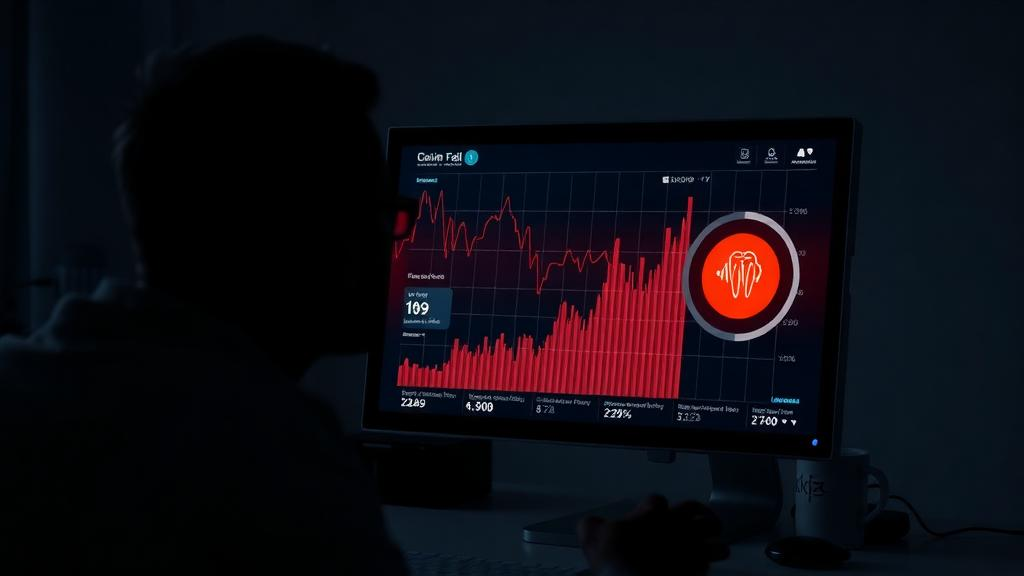
Machine learning models deployed in hospitals and remote monitoring systems have a quiet weakness that rarely makes headlines: they decay. A classifier trained to flag dangerous heart rhythms or predict COVID-19 severity performs brilliantly on the day it ships, and then, month by month, its accuracy erodes as the real world drifts away from the data it was trained on. This phenomenon, known as concept drift, is one of the most consequential unsolved problems in applied artificial intelligence, and it is especially dangerous in healthcare, where a silently degrading model can misclassify patients without anyone noticing. A new study published in Cluster Computing by Salman Ahmed and Nayyer Masood of the Capital University of Science and Technology in Islamabad proposes a practical answer: a Real-time Drift Detection Method, or RTDDM, designed specifically for the fog computing architectures that underpin modern remote healthcare systems.
The problem the researchers tackle is deceptively simple to state and brutally hard to solve. When a machine learning model is trained, it learns the statistical patterns of its training data, the relationships between symptoms, vital signs, and outcomes. But patient populations change, diseases evolve, sensor hardware ages, and clinical practices shift. The underlying data distribution begins to exhibit patterns that differ from those seen during training, and the model’s performance deteriorates over time. In a centralized cloud system, engineers can periodically re-evaluate a model against labeled data. But in fog computing, where intelligence is pushed down to small gateways and edge devices scattered across clinics, ambulances, and patients’ homes, drift can occur independently at every device, and the labeled ground truth needed to measure accuracy is almost never available in real time.
Fog computing has become the dominant architecture for Internet of Things based healthcare precisely because it solves a different problem: latency. Systems such as HealthFog, which performs automatic heart disease diagnosis on integrated IoT and fog platforms, and smart e-health gateways that classify electrocardiogram signals locally, depend on processing patient data close to its source rather than round-tripping it to a distant data center. For time-critical applications such as arrhythmia detection or COVID-19 severity prediction, the milliseconds saved by local processing can matter clinically. But this same decentralization creates a monitoring blind spot. Each fog node runs its own copy of the model, ingests its own stream of patient data, and drifts in its own way. A drift detector that works at the cloud level is useless if the damage happens at the edge.
The core difficulty is that classic drift detection methods assume access to true labels. Techniques such as the Drift Detection Method of Gama and colleagues from 2004, or the Early Drift Detection Method published in 2006, monitor the error rate of a classifier as labeled examples stream in, and raise an alarm when the error rate rises beyond statistically expected bounds. Adaptive windowing approaches such as ADWIN, introduced by Bifet and Gavaldà in 2007, slice the stream into windows and compare performance across them. These methods are elegant and well understood, but in a deployed healthcare system, patient data arrives unlabeled. Nobody knows the true diagnosis the moment a wearable transmits a vital-sign vector. Waiting for a clinician’s confirmation to feed the detector would defeat the purpose of real-time monitoring, and would reintroduce exactly the human workload the automation was meant to reduce.
Ahmed and Masood’s insight is to manufacture an approximate error signal without labels, by making a classifier and a clustering model learn from the same data simultaneously. During training, the system fits a supervised classifier and an unsupervised clustering model on the same dataset. Because both models are exposed to identical examples, a statistical relationship emerges between them: the accuracy of the classifier becomes linked to the purity of the clusters. Cluster purity measures how homogeneous each cluster is with respect to class membership, so when the clusters cleanly separate the classes, the classifier tends to predict accurately, and when the cluster structure blurs, classifier performance degrades in a predictable way.
At deployment time, this relationship becomes the detection mechanism. Every unlabeled instance arriving at the fog node is processed twice: the classifier predicts a label, and the clustering model assigns the instance to a cluster that carries its own class label, derived from the training phase. The detector then simply compares the classifier’s predicted label with the label assigned to the instance’s cluster. When the two agree, the system treats the instance as likely correctly classified; when they disagree, it counts as an approximate error. Streaming these approximate errors over time produces a signal that behaves like a true error rate, and standard drift detection logic can be applied to it. If the approximate error rate climbs beyond expected statistical variation, the system concludes that concept drift has occurred and can trigger adaptation or retraining, without a single human-labeled example.
The elegance of this approach lies in its economy. It requires no additional annotation, no clinician in the loop, and no modification to the underlying prediction model beyond the parallel clustering fit. In a fog architecture, each node can run its own classifier-cluster pair and detect drift locally, which means the method scales naturally across the distributed devices where drift actually happens. The authors report that their experiments show the proposed method reduces the need for human intervention, which is the operational bottleneck in maintaining fleets of healthcare edge devices. Instead of waiting for a technician to notice that a remote monitoring station has gone stale, the system notices on its own.
The study situates itself within a rapidly growing literature on drift under constraint. Recent work has pushed toward fully unsupervised drift detection, including benchmarks of unsupervised detectors on real-world data streams and adaptive windowing methods designed specifically for unlabeled data, such as ADWIN-U published in 2025. Others have attacked the problem from the federated learning angle, where concept drift distributed across clients complicates model aggregation, and from the autoencoder angle, using reconstruction error as a drift proxy. Empirical studies on real medical imaging data have confirmed that data drift is not a theoretical worry but an observable clinical reality. What distinguishes RTDDM is its explicit targeting of the fog computing context, where computation is cheap enough to run a parallel clustering model but connectivity is too limited for centralized, label-dependent monitoring.
The experimental foundation of the paper draws on publicly available datasets, including a widely used COVID-19 clinical dataset originating from the Government of Mexico’s epidemiological authority, and the implementation builds on the River library for streaming machine learning in Python, a standard toolkit for this research community. The authors describe their preprocessing steps, model parameters, and evaluation procedure in sufficient detail to support reproducibility, with scripts available from the corresponding author on reasonable request. The work was carried out under the SAFE-RH project, funded by the European Commission through the Erasmus+ programme, reflecting the growing institutional investment in resilient remote healthcare infrastructure.
The implications extend well beyond the specific datasets tested. As healthcare systems worldwide embed machine learning into telemedicine platforms, wearable monitoring networks, and fog-assisted diagnostic gateways, the question of who notices when a model goes wrong becomes a patient-safety issue, not merely an engineering one. A drift detector that works on unlabeled data, at the edge, in real time, converts model maintenance from a reactive, labor-intensive chore into an automated property of the system itself. It is the kind of unglamorous infrastructure research that determines whether clinical AI fulfills its promise or quietly fails in the field. Ahmed and Masood’s method offers a concrete, testable step toward that resilience, and it signals a broader shift in the field: the era of assuming that a trained model is a finished product is ending, replaced by the understanding that intelligence, like the patients it serves, is something that must be continuously monitored as the world changes underneath it.
Subject of Research: Real-time machine learning concept drift detection for unlabeled data streams in fog computing based remote healthcare systems
Article Title: Implementing machine learning model drift detection in fog computing architectures for remote healthcare systems
Article References: Ahmed, S., & Masood, N. (2026). Implementing machine learning model drift detection in fog computing architectures for remote healthcare systems. Cluster Computing, 29(14), Article 790. https://doi.org/10.1007/s10586-026-06545-4
Image Credits: AI Generated
DOI: 10.1007/s10586-026-06545-4
Keywords: machine learning, concept drift, drift detection, fog computing, remote healthcare, unlabeled data, clustering, classifier accuracy, edge computing, telemedicine, data streams, RTDDM
News Source: Denise Maddox. (October 4, 2026). Silent Model Failure in Remote Health Monitoring Gets a Real-Time Drift Alarm. Scienmag.