• HOME
  • NEWS
  • EXPLORE
    • CAREER
      • Companies
      • Jobs
    • EVENTS
    • iGEM
      • News
      • Team
    • PHOTOS
    • VIDEO
    • WIKI
  • BLOG
  • COMMUNITY
    • FACEBOOK
    • INSTAGRAM
    • TWITTER
Sunday, May 10, 2026
BIOENGINEER.ORG
No Result
View All Result
  • Login
  • HOME
  • NEWS
  • EXPLORE
    • CAREER
      • Companies
      • Jobs
        • Lecturer
        • PhD Studentship
        • Postdoc
        • Research Assistant
    • EVENTS
    • iGEM
      • News
      • Team
    • PHOTOS
    • VIDEO
    • WIKI
  • BLOG
  • COMMUNITY
    • FACEBOOK
    • INSTAGRAM
    • TWITTER
  • HOME
  • NEWS
  • EXPLORE
    • CAREER
      • Companies
      • Jobs
        • Lecturer
        • PhD Studentship
        • Postdoc
        • Research Assistant
    • EVENTS
    • iGEM
      • News
      • Team
    • PHOTOS
    • VIDEO
    • WIKI
  • BLOG
  • COMMUNITY
    • FACEBOOK
    • INSTAGRAM
    • TWITTER
No Result
View All Result
Bioengineer.org
No Result
View All Result
Home NEWS Science News Chemistry

Unlabeled PFAS chemicals detected in makeup

Bioengineer by Bioengineer
September 6, 2025
in Chemistry
Reading Time: 2 mins read
0
IMAGE
Share on FacebookShare on TwitterShare on LinkedinShare on RedditShare on Telegram

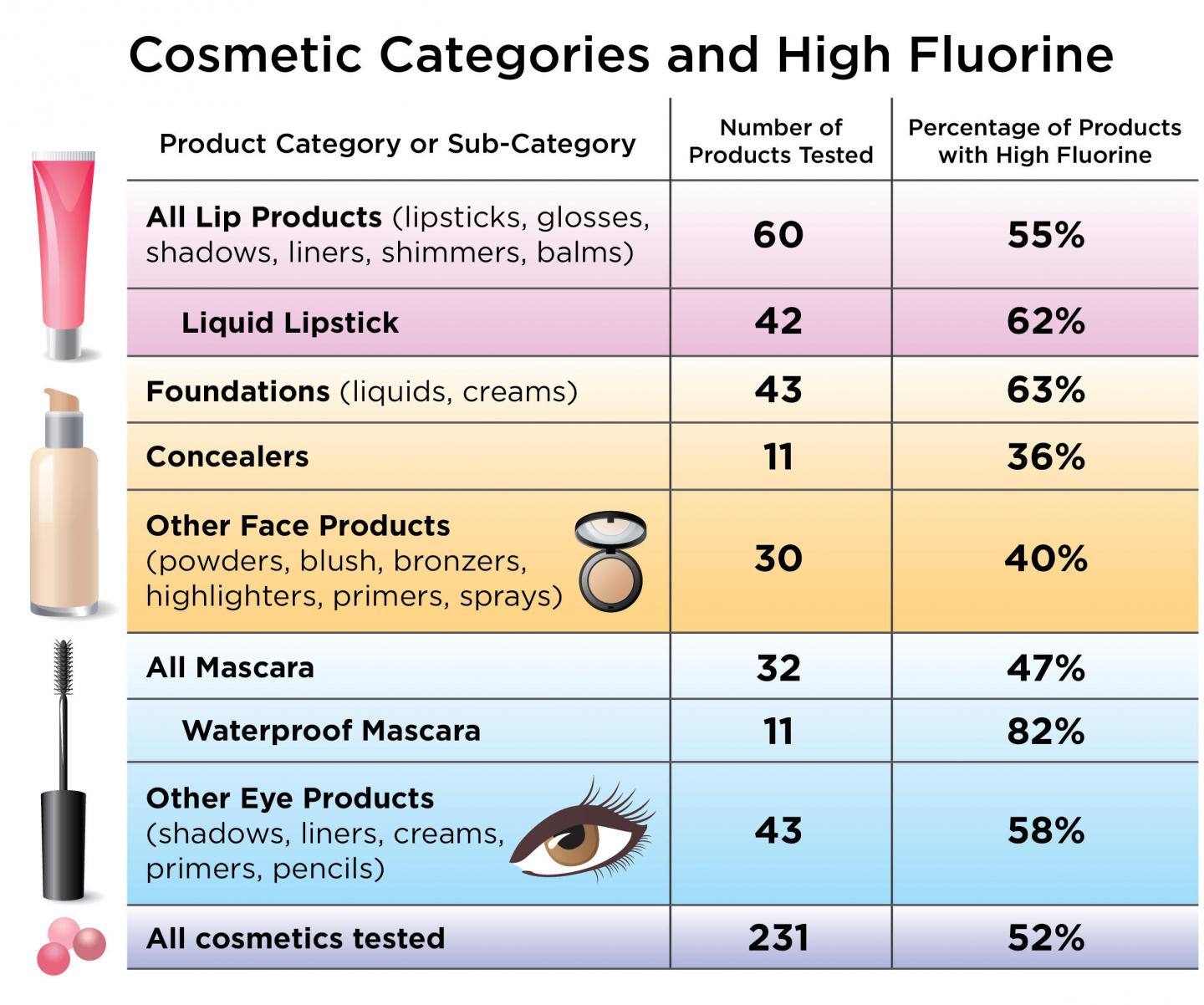
Makeup wearers may be absorbing and ingesting potentially toxic per- and polyfluoroalkyl substances (PFAS), according to a new study published today in Environmental Science & Technology Letters. The researchers found high fluorine levels–indicating the probable presence of PFAS–in most waterproof mascara, liquid lipsticks, and foundations tested. Some of the products with the highest fluorine levels underwent further analysis and were all confirmed to contain at least four PFAS of concern. The majority of products with high fluorine, including those confirmed to have PFAS, had no PFAS listed on the label.

“Lipstick wearers may inadvertently eat several pounds of lipstick in their lifetimes,” said Graham Peaslee, senior author of the study and professor of physics at the University of Notre Dame. “But unlike food, chemicals in lipstick and other makeup and personal care products are almost entirely unregulated in the U.S. and Canada. As a result, millions of people are unknowingly wearing PFAS and other harmful chemicals on their faces and bodies daily.”

Some PFAS have been associated with a wide range of serious health harms, from cancer to obesity to more severe COVID-19 outcomes, and they contaminate the drinking water of millions. Only a small fraction of the many thousands of PFAS have been tested for toxicity, but all PFAS are either extremely persistent in the environment or break down into extremely persistent PFAS.

In addition to PFAS being ingested from lip products, PFAS in cosmetics may be absorbed through the skin and tear ducts. On top of these direct exposure routes, PFAS can make their way into our drinking water, air, and food during the manufacture of makeup and after it’s washed down the drain.

The research team screened 231 cosmetic products purchased in the U.S. and Canada for fluorine. More than three-quarters of waterproof mascara, nearly two-thirds of foundations and liquid lipsticks, and more than half of eye and lip products had high fluorine concentrations.

All 29 products selected for targeted analysis contained detectable levels of at least four specific PFAS. This included PFAS that break down into other PFAS that are known to be highly toxic and environmentally harmful. Fluorotelomer methacrylates were also detected, indicating the breakdown of side-chain fluoropolymers which are marketed as a more “environmentally friendly” alternatives to individual PFAS.

Many of the products with PFAS were advertised as “wear-resistant” or “long-lasting.” Importantly, almost none of the products studied with targeted analysis had any PFAS listed on their ingredient labels. This makes it impossible for consumers to avoid PFAS-containing cosmetics by reading labels.

“PFAS are not necessary for makeup. Given their large potential for harm, I believe they should not be used in any personal care products,” said Arlene Blum, a co-author and executive director of the Green Science Policy Institute. “It’s past time to get the entire class of PFAS out of cosmetics and keep these harmful chemicals out of our bodies.”

###

Media Contact
Rebecca Fuoco, MPH
[email protected]

Related Journal Article

http://dx.doi.org/10.1021/acs.estlett.1c00240

Tags: Chemistry/Physics/Materials SciencesEcology/EnvironmentEnvironmental HealthMedicine/HealthPublic HealthToxicology
Share13Tweet8Share2ShareShareShare2

Related Posts

Miniature Sensor Uses Light to Detect Touch — Chemistry

Miniature Sensor Uses Light to Detect Touch

May 8, 2026
Iron Minerals Determine Whether Dissolved Organic Matter Fuels Microbes or Becomes Long-Term Carbon Storage — Chemistry

Iron Minerals Determine Whether Dissolved Organic Matter Fuels Microbes or Becomes Long-Term Carbon Storage

May 8, 2026

Kate Evans Appointed Associate Lab Director for Biological and Environmental Systems Science at ORNL

May 8, 2026

Advancing Multiscale Modeling and Overcoming Operational Challenges in Autothermal COâ‚‚-to-Methanol Reactors

May 8, 2026
Please login to join discussion

POPULAR NEWS

  • Research Indicates Potential Connection Between Prenatal Medication Exposure and Elevated Autism Risk

    840 shares
    Share 336 Tweet 210
  • New Study Reveals Plants Can Detect the Sound of Rain

    727 shares
    Share 290 Tweet 181
  • Scientists Investigate Possible Connection Between COVID-19 and Increased Lung Cancer Risk

    68 shares
    Share 27 Tweet 17
  • Salmonella Haem Blocks Macrophages, Boosts Infection

    61 shares
    Share 24 Tweet 15

About

We bring you the latest biotechnology news from best research centers and universities around the world. Check our website.

Follow us

Recent News

Evaluating Digoxin Use in Patients with Symptomatic Rheumatic Heart Disease

Evaluating the Effectiveness and Safety of Digitalis Glycosides in Treating Heart Failure

Urdu Fall Risk Questionnaire Adapted for Elderly

Subscribe to Blog via Email

Enter your email address to subscribe to this blog and receive notifications of new posts by email.

Join 82 other subscribers
  • Contact Us

Bioengineer.org © Copyright 2023 All Rights Reserved.

Welcome Back!

Login to your account below

Forgotten Password?

Retrieve your password

Please enter your username or email address to reset your password.

Log In
No Result
View All Result
  • Homepages
    • Home Page 1
    • Home Page 2
  • News
  • National
  • Business
  • Health
  • Lifestyle
  • Science

Bioengineer.org © Copyright 2023 All Rights Reserved.