• HOME
  • NEWS
  • EXPLORE
    • CAREER
      • Companies
      • Jobs
    • EVENTS
    • iGEM
      • News
      • Team
    • PHOTOS
    • VIDEO
    • WIKI
  • BLOG
  • COMMUNITY
    • FACEBOOK
    • INSTAGRAM
    • TWITTER
Friday, May 1, 2026
BIOENGINEER.ORG
No Result
View All Result
  • Login
  • HOME
  • NEWS
  • EXPLORE
    • CAREER
      • Companies
      • Jobs
        • Lecturer
        • PhD Studentship
        • Postdoc
        • Research Assistant
    • EVENTS
    • iGEM
      • News
      • Team
    • PHOTOS
    • VIDEO
    • WIKI
  • BLOG
  • COMMUNITY
    • FACEBOOK
    • INSTAGRAM
    • TWITTER
  • HOME
  • NEWS
  • EXPLORE
    • CAREER
      • Companies
      • Jobs
        • Lecturer
        • PhD Studentship
        • Postdoc
        • Research Assistant
    • EVENTS
    • iGEM
      • News
      • Team
    • PHOTOS
    • VIDEO
    • WIKI
  • BLOG
  • COMMUNITY
    • FACEBOOK
    • INSTAGRAM
    • TWITTER
No Result
View All Result
Bioengineer.org
No Result
View All Result
Home NEWS Science News Biology

University of Houston researcher pushes limit of when water will freeze

Bioengineer by Bioengineer
December 6, 2021
in Biology
Reading Time: 2 mins read
0
Hadi Ghasemi, Cullen Associate Professor of Mechanical Engineering at the University of Houston
Share on FacebookShare on TwitterShare on LinkedinShare on RedditShare on Telegram

Though it is one of the great mysteries of science, the transformation of water into ice often escapes people’s minds as it is just assumed that’s what happens. But how and why it happens is the subject of intense scrutiny by ice scientists like Hadi Ghasemi, Cullen Associate Professor of Mechanical Engineering at the University of Houston. In order to watch the process of crystallization of water into ice at the molecular level, Ghasemi is reporting the best look yet at the process: water-ice phase transformation down to 2 nm (nanometers) in diameter.  
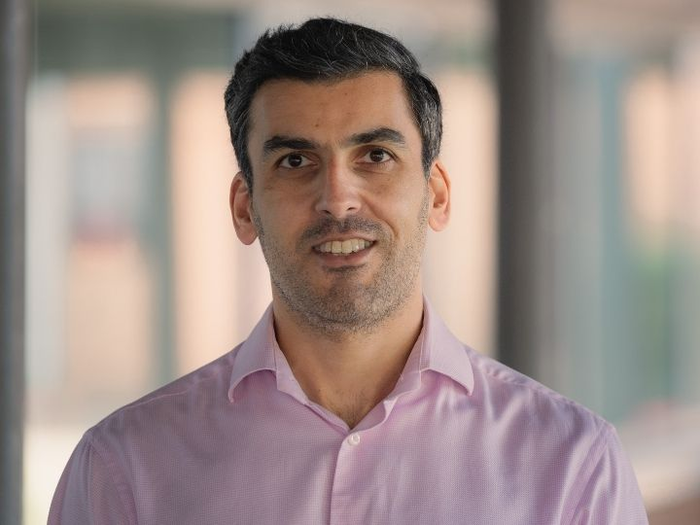
Hadi Ghasemi, Cullen Associate Professor of Mechanical Engineering at the University of Houston

Credit: University of Houston

Though it is one of the great mysteries of science, the transformation of water into ice often escapes people’s minds as it is just assumed that’s what happens. But how and why it happens is the subject of intense scrutiny by ice scientists like Hadi Ghasemi, Cullen Associate Professor of Mechanical Engineering at the University of Houston. In order to watch the process of crystallization of water into ice at the molecular level, Ghasemi is reporting the best look yet at the process: water-ice phase transformation down to 2 nm (nanometers) in diameter.  

Then when Ghasemi examined these tiny particles, he made another discovery. He could break the limit of when water freezes and maintain the tiny droplets as liquid by putting them in contact with soft interfaces, like gels or lipids.    

“We found that if a water droplet is in contact with a soft interface, freezing temperature could be significantly lower than hard surfaces. Also, a few-nanometer water droplet could avoid freezing down to -44 C if it is in contact with a soft interface,” Ghasemi reports in Nature. 

The limit of freezing temperature of a water droplet is -38 C. That is, any water droplet will freeze at some temperature between 0 C to -38 C. Below this temperature, freezing has been inevitable, until now. 

The process of freezing such a tiny water droplet plays a critical role in the survival of animals in cold environments as a frozen water droplet inside a cell leads to the rupture of the cell and death. The process also plays a key role in climate prediction, cloud conditions, cryopreservation of organs and technologies exposed to icing conditions such as aircraft and wind turbines. 

“Experimental probing of freezing temperature of few nanometer water droplets has been an unresolved challenge. Here, through newly developed metrologies, we have been able to probe freezing of water droplets from micron scale down to 2 nm scale,” said Ghasemi. 

Previously Ghasemi created an ice-repelling material for aerospace applications using a new concept called stress localization. His current findings contribute to a greater understanding of natural phenomena and provide guidelines for further design of anti-icing systems for aviation, wind energy and infrastructures and even cryopreservation systems. 


Journal

Nature

Article Publication Date

30-Nov-2021

Share12Tweet7Share2ShareShareShare1

Related Posts

Controllable Phage System Bridges Evolutionary Gaps — Biology

Controllable Phage System Bridges Evolutionary Gaps

May 1, 2026
Viruses Develop Virulence in Mice Based on Genetics and Sex — Biology

Viruses Develop Virulence in Mice Based on Genetics and Sex

April 30, 2026

New Report Warns: Nature Loss Poses Catastrophic Risks

April 30, 2026

Kangaroos Reveal ‘Upside-Down’ Evolution in Australia

April 30, 2026

POPULAR NEWS

  • Research Indicates Potential Connection Between Prenatal Medication Exposure and Elevated Autism Risk

    830 shares
    Share 332 Tweet 208
  • New Study Reveals Plants Can Detect the Sound of Rain

    712 shares
    Share 284 Tweet 178
  • Scientists Investigate Possible Connection Between COVID-19 and Increased Lung Cancer Risk

    67 shares
    Share 27 Tweet 17
  • Salmonella Haem Blocks Macrophages, Boosts Infection

    61 shares
    Share 24 Tweet 15

About

We bring you the latest biotechnology news from best research centers and universities around the world. Check our website.

Follow us

Recent News

Brain Subspace Links Prefrontal to Motor Actions

Controllable Phage System Bridges Evolutionary Gaps

Safer Synthesis: Azide-to-Diazo Conversion Unlocks Versatile Diazo Compounds

Subscribe to Blog via Email

Enter your email address to subscribe to this blog and receive notifications of new posts by email.

Join 82 other subscribers
  • Contact Us

Bioengineer.org © Copyright 2023 All Rights Reserved.

Welcome Back!

Login to your account below

Forgotten Password?

Retrieve your password

Please enter your username or email address to reset your password.

Log In
No Result
View All Result
  • Homepages
    • Home Page 1
    • Home Page 2
  • News
  • National
  • Business
  • Health
  • Lifestyle
  • Science

Bioengineer.org © Copyright 2023 All Rights Reserved.