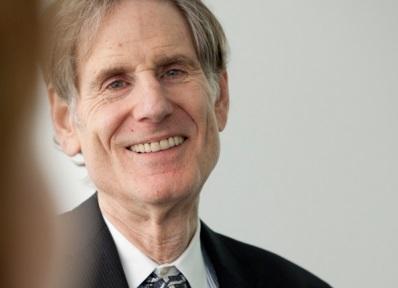
Credit: The University of Chicago Medicine
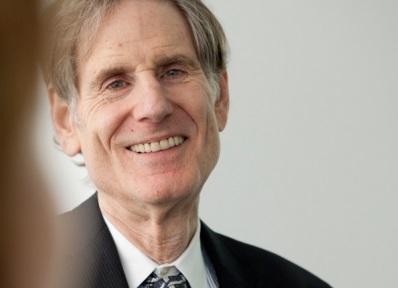
The American Society of Clinical Oncology (ASCO) has named Ralph R. Weichselbaum, MD, Professor and Chairman of the Department of Radiation and Cellular Oncology and Co-Director of the Ludwig Center for Metastasis Research at the University of Chicago, as the 2018 recipient of the David A. Karnofsky Memorial Award.
Each year, this honor is granted to a cancer specialist who has made outstanding contributions to research, diagnosis or treatment. Award winners also give the prestigious Karnofsky Lecture, one of the high points of the American Society of Clinical Oncology's annual meeting in Chicago.
Weichselbaum will speak from 11:25 a.m. to noon on Saturday, June 2. His talk, "Oligometastasis from Conception to Treatment," will be published in the Journal of Clinical Oncology in the fall.
The term "oligometastasis" was coined in 1995 by two University of Chicago cancer specialists. Weichselbaum and Samuel Hellman, dean of biological sciences at the University at the time, argued that there must be an intermediate state — somewhere between localized curable cancers and lethal widespread disease — that could be successfully treated and controlled.
They devised a classical name for this status, tacking oligo, meaning a few, onto metastasis, the process by which cancers spread to distant sites. Combined, it means: a few that spread.
They also made the controversial suggestion that many patients with oligometastatic disease could be cured, depending on the extent of disease burden, with either surgery or targeted radiation therapy. This notion, the spectrum theory of metastasis, has slowly been accepted, backed by a mounting series of reports of successful treatments.
Weichselbaum, Hellman, now the Pritzker Distinguished Service Professor Emeritus, and colleagues recently published a study demonstrating that tumors that had migrated from an initial cancer in the colon or rectum to one or a few separate sites could often be successfully cured by ablative therapies, either surgery or highly focused radiation.
This not only supported their original hypothesis but also pointed to molecular patterns that could help predict which future patients would be most likely to enjoy lasting benefits from treatment.
In his Karnofsky Lecture, Weichselbaum will describe the long series of investigations that gradually exposed the specific mechanisms of oligometastasis, enabling the development of more effective treatments. The mechanisms have been "relatively under-investigated," he notes, due to "poor initial acceptance of the concept."
Over time, however, teams of researchers gradually identified genes, as well as microRNAs, that could regulate tumor metastasis. These became treatment targets.
One recently completed study stratified patients with oligometastasic cancers into three groups, based on molecular classification. After ten years, 94 percent of the patients with the lowest risk were still alive, compared to 45 percent of those with moderate risk and 19 percent at high risk. The low-risk patients had fewer recurrences and less disease spread. Two thirds of the high-risk patients had four or more recurrences.
More recent studies have focused on adding immunotherapies — such as the checkpoint inhibitors anti-PD-1 (nivolumab and pembrolizumab) or anti-CTLA4 therapy (ipilimumab) — to radiation therapy as a way to control oligometastatic disease.
A phase 1 clinical trial at the University of Chicago combining stereotactic body radiation therapy (SBRT) with an anti-PD-1 drug was able to limit disease progression, with 90 percent control of the irradiated tumor volume. A welcome surprise was that 15 percent of the metastatic tumors that were not irradiated regressed nonetheless. One out of five patients were progression-free two years after treatment.
First presented in 1970, the David A. Karnofsky Memorial Award and Lecture honors a pioneering oncologist who has made outstanding contributions to cancer research, diagnosis or treatment. Karnofsky's meticulous attention to the clinical evaluation of drugs brought objectivity and discipline to cancer research. His work is often credited with helping establish the field of oncology as a specific medical discipline.
In 1945, Karnofsky and colleagues launched the first organized clinical chemotherapy program in the United States. After his death, friends donated money to ASCO to fund a yearly lecture at ASCO's annual meeting. In 1970, ASCO launched a permanent memorial to honor his work. The Karnofsky Award is the Society's highest scientific honor.
###
Media Contact
John Easton
[email protected]
773-795-5225
@UChicagoMed
http://www.uchospitals.edu