Every year, millions of newborns around the world carry a hidden enzymatic flaw in their red blood cells that can turn ordinary newborn jaundice into a life-threatening neurological emergency. Now, a comprehensive study from Hadassah Medical Center in Jerusalem has delivered some of the strongest evidence yet that screening every baby for this condition, rather than only those deemed at risk, catches a substantial proportion of infants that conventional targeted approaches simply miss. The research, published in the Journal of Perinatology, examined more than 5,400 neonates born at the tertiary referral center and found that nearly half of those with severe glucose-6-phosphate dehydrogenase deficiency would never have been flagged for testing under current risk-based protocols.
Glucose-6-phosphate dehydrogenase, commonly abbreviated G6PD, is an enzyme that protects red blood cells from oxidative damage. When the enzyme is deficient, the cells become vulnerable to destruction under oxidative stress, predisposing affected individuals to hemolytic crises. The condition is the most common enzymatic disorder of red blood cells worldwide, affecting more than 400 million people, with particularly high prevalence in the Mediterranean basin, the Middle East, sub-Saharan Africa, and parts of Asia. In newborns, G6PD deficiency is consistently recognized as one of the leading causes of severe hyperbilirubinemia and kernicterus, a devastating form of bilirubin-induced brain injury that can cause sensorineural hearing loss and long-term neurodevelopmental impairment.
What makes neonatal jaundice in G6PD-deficient infants particularly insidious is that it does not always arise from acute hemolysis. Although oxidative triggers can abruptly increase bilirubin production, many affected newborns develop jaundice through a more gradual imbalance between bilirubin production and conjugation, with low-grade hemolysis compounded by impaired bilirubin clearance. This means that clinicians cannot rely on classic laboratory signs of hemolysis to identify at-risk babies, and the jaundice may not appear until bilirubin levels have already climbed to dangerous territory.
Current clinical guidelines reflect a selective approach to testing. The 2022 American Academy of Pediatrics guideline recommends G6PD testing in cases of unexplained jaundice or hemolysis, particularly in high-risk populations. The World Health Organization similarly recommends screening only in at-risk populations where more than 3 to 5 percent of males are affected. But these targeted strategies, based on reported ethnicity, family history, or clinical suspicion, may have limited sensitivity. Prior studies from diverse populations have indicated that a substantial proportion of G6PD-deficient neonates are missed by targeted screening protocols, and there is particular concern that female heterozygotes with intermediate enzyme activity may be overlooked despite being at risk for hemolysis and severe jaundice.
Israel presents a uniquely challenging context for ethnicity-based screening. The population includes Ashkenazi and Sephardic Jews, Arab and Druze communities, and increasing rates of interethnic marriage. Earlier studies demonstrated a highly variable prevalence of G6PD deficiency across specific populations, ranging from less than 1 percent in Ashkenazi Jews up to 58 percent in Sephardic Jews of Kurdish descent. As ethnic admixture has increased, ancestry-based screening strategies have become progressively less reliable. Recognizing this, the Israeli Ministry of Health recommended in 2021 that universal G6PD deficiency screening be added to the newborn screening program, though this recommendation has not yet been fully implemented across all Israeli hospitals.
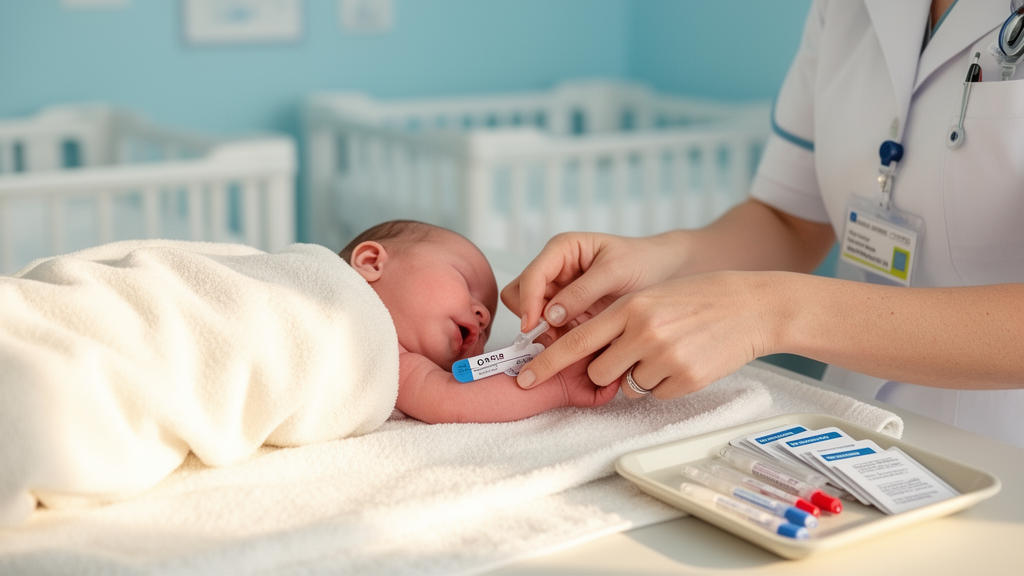
At Hadassah Medical Center, universal G6PD screening has been part of routine care for more than five years, but its clinical impact had never been formally evaluated. The research team, led by Aviad Schnapp and Ohad Neufeld, conducted a retrospective cohort study with a nested case-control analysis, reviewing the medical records of all neonates born between January 1 and June 30, 2024. The cohort included 5,413 newborns with gestational ages ranging from 32 to 42 weeks. Of these, 4,867 infants, or 89.9 percent, had a valid enzyme activity result. Screening was routinely performed on umbilical cord blood collected at birth, using a quantitative Motulsky enzymatic assay. Results were reported as international units per gram of hemoglobin within 24 hours of laboratory analysis.
The findings revealed that 81 neonates had severe G6PD deficiency, defined as enzyme activity below 2 IU/g Hb, representing 1.66 percent of all screened newborns and 2.9 percent of screened males. An additional 108 neonates had intermediate G6PD activity, between 2 and 10 IU/g Hb, corresponding to 2.2 percent of all screened newborns and 4.4 percent of screened females. Because the number of normal-screen infants substantially exceeded those with deficient or intermediate activity, the researchers used a nested case-control sampling strategy, randomly selecting 567 controls with normal enzyme activity in a 3:1 ratio to form a detailed comparison group of 756 newborns.
The clinical outcomes were striking. Phototherapy was required in 29.6 percent of neonates with severe deficiency, compared with 13.0 percent of those with intermediate activity and 10.1 percent with normal activity. After adjusting for known risk factors including prematurity, mode of delivery, presence of hematoma, ABO or Rh alloimmunization, and family history of conditions that increase hyperbilirubinemia risk, severe G6PD deficiency remained an independent predictor of phototherapy, with an adjusted odds ratio of 4.78. Notably, the time to reach the phototherapy threshold during the birth hospitalization did not differ between infants with and without G6PD deficiency, challenging the common clinical assumption that jaundice in G6PD deficiency evolves later than jaundice due to blood group alloimmunization.
Perhaps the most consequential finding relates to what targeted screening would have missed. Among neonates with G6PD deficiency, a substantial proportion of parents reported no family history of the condition, with 43.2 percent of those with complete deficiency and 53.7 percent of those with partial deficiency reporting no known family history. These infants would not have undergone enzyme testing under a targeted approach. Furthermore, many were not prescribed enhanced bilirubin surveillance during the first 24 hours of life. Six of 94 neonates who required phototherapy, or 6.4 percent, were identified through universal screening as having G6PD deficiency despite the absence of any reported family history. Identification enabled enhanced monitoring and earlier initiation of phototherapy in accordance with the lower treatment thresholds applied to G6PD-deficient neonates.
The biological basis of jaundice in G6PD-deficient newborns is complex. Prior work has shown that clinically important hyperbilirubinemia may occur with limited classic laboratory evidence of hemolysis, while reduced bilirubin conjugation, particularly when G6PD deficiency coexists with UGT1A1 variants associated with Gilbert syndrome, may increase risk. The findings are consistent with the current view that neonatal G6PD-associated jaundice reflects an imbalance between bilirubin production and conjugation rather than a single mechanism. The intermediate-activity group warrants careful interpretation: partial G6PD deficiency was not associated with the excess phototherapy use seen in infants with severe deficiency, though the study was not powered to establish equivalence between the intermediate and normal groups. Because genotyping was not performed, the phenotype-based activity bands cannot be directly aligned with the revised WHO classification, which combines former class II and III variants into a single category and recognizes that heterozygous females may still confer risk. The researchers emphasize that their findings should not be interpreted as excluding risk among infants with intermediate activity or heterozygosity, and that future genotype-informed studies are needed to refine risk stratification. Nationwide neonatal screening for G6PD deficiency is currently implemented in only a limited number of countries worldwide, and this study provides additional evidence from a distinct population and healthcare setting that universal screening identifies infants who would otherwise be missed by targeted approaches, potentially enabling earlier risk-informed management, follow-up planning, and parental education about avoiding oxidative triggers later in life.
Subject of Research: Universal newborn screening for G6PD deficiency and severe hyperbilirubinemia at a tertiary center in Jerusalem
Article Title: Universal newborn screening for G6PD deficiency and severe hyperbilirubinemia at a tertiary center in Jerusalem
Article References: Schnapp, A., Neufeld, O., Abu-Leil, S., Abu Omar, R., Azzam, H., Ofek Shlomai, N., & Eventov Friedman, S. (2026). Universal newborn screening for G6PD deficiency and severe hyperbilirubinemia at a tertiary center in Jerusalem. Journal of Perinatology. https://doi.org/10.1038/s41372-026-02901-9
Image Credits: AI Generated
DOI: 10.1038/s41372-026-02901-9
Keywords: Universal, newborn, screening, G6PD, deficiency, severe, hyperbilirubinemia, tertiary, center, Jerusalem, scientific research
News Source: Harold Sullivan. (October 15, 2026). Universal Newborn Screening for G6PD Deficiency Catches Infants That Targeted Testing Misses. Scienmag.