• HOME
  • NEWS
  • EXPLORE
    • CAREER
      • Companies
      • Jobs
    • EVENTS
    • iGEM
      • News
      • Team
    • PHOTOS
    • VIDEO
    • WIKI
  • BLOG
  • COMMUNITY
    • FACEBOOK
    • INSTAGRAM
    • TWITTER
Sunday, January 11, 2026
BIOENGINEER.ORG
No Result
View All Result
  • Login
  • HOME
  • NEWS
  • EXPLORE
    • CAREER
      • Companies
      • Jobs
        • Lecturer
        • PhD Studentship
        • Postdoc
        • Research Assistant
    • EVENTS
    • iGEM
      • News
      • Team
    • PHOTOS
    • VIDEO
    • WIKI
  • BLOG
  • COMMUNITY
    • FACEBOOK
    • INSTAGRAM
    • TWITTER
  • HOME
  • NEWS
  • EXPLORE
    • CAREER
      • Companies
      • Jobs
        • Lecturer
        • PhD Studentship
        • Postdoc
        • Research Assistant
    • EVENTS
    • iGEM
      • News
      • Team
    • PHOTOS
    • VIDEO
    • WIKI
  • BLOG
  • COMMUNITY
    • FACEBOOK
    • INSTAGRAM
    • TWITTER
No Result
View All Result
Bioengineer.org
No Result
View All Result
Home NEWS Science News Chemistry

Unique christmas-tree-shaped palladium nanostructures for ascorbic acid oxidation

Bioengineer by Bioengineer
September 6, 2025
in Chemistry
Reading Time: 2 mins read
0
IMAGE
Share on FacebookShare on TwitterShare on LinkedinShare on RedditShare on Telegram

Researchers designed the catalysis performance that could be enhanced by controlling the morphology of the catalyst

Ishikawa, Japan – Nanostructured metal surface has novel physical and chemical properties, which have sparked scientific interest for heterogeneous catalysis, biosensors, and electrocatalysis. The fabrication process can influence the shapes and sizes of metal nanostructures. Among various fabrication processes, the electrochemical deposition technique is widely used for clean metal nanostructures. Applying the technique, a team of researchers led by Dr. Yuki Nagao, Associate Professor at Japan Advanced Institute of Science and Technology (JAIST) and Md. Mahmudul Hasan, a PhD student at JAIST, succeeded to construct Pd-based catalysts having unique morphology.

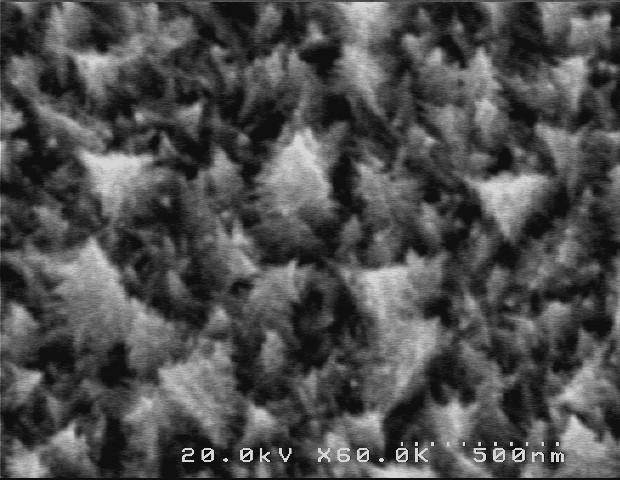
In this study, the team has successfully synthesized Christmas-tree-shaped palladium nanostructures on the GCE surface for the first time by one-pot electrodeposition without using any additives (Figure 1). The controlled electrodeposition method creates many sharp edges of Christmas-tree-shaped palladium nanostructures (Pd/GCE) that enhanced the catalytic activity for AA electro-oxidation.

The unique nanostructures on the GCE exhibit excellent electrocatalytic oxidation of AA than the unmodified GCE in 1 M KOH solution (Figure 2). Multiple sharp edges observed in the nanostructures improved the electrocatalytic performance. This brings one step closer to the construction of alkaline AA-based Direct liquid fuel cell (DLFC.) “Improving the electrocatalytic performance of AA electro-oxidation could provide cleaner energy by constructing alkaline AA-based DLFC.” explains Hasan.

To address the energy crises and climate change, clean energy sources need to be explored urgently. DLFC could be a potential candidate for the new energy source with its simple cell design. AA, known as vitamin C, is a feasible fuel source for DLFC. AA is environment-friendly and generates two electrons and two protons along with green dehydroascorbic acid during its electro-oxidation. AA is more affordable and, thus, can be used as a clean energy source widely.

This research could mark a firm step forward in achieving sustainable development goals.

###

Media Contact
Yuki Nagao
[email protected]

Original Source

https://www.jaist.ac.jp/english/

Related Journal Article

http://dx.doi.org/10.1002/slct.202100974

Tags: Chemistry/Physics/Materials SciencesEnergy/Fuel (non-petroleum)
Share12Tweet8Share2ShareShareShare2

Related Posts

blank

Advancing Alkene Chemistry: Homologative Difunctionalization Breakthrough

January 8, 2026
Biocompatible Ligand Enables Safe In-Cell Protein Arylation

Biocompatible Ligand Enables Safe In-Cell Protein Arylation

January 8, 2026

Monovalent Pseudo-Natural Products Boost IDO1 Degradation

January 7, 2026

Catalytic Enantioselective [1,2]-Wittig Rearrangement Breakthrough

January 7, 2026
Please login to join discussion

POPULAR NEWS

  • Enhancing Spiritual Care Education in Nursing Programs

    154 shares
    Share 62 Tweet 39
  • PTSD, Depression, Anxiety in Childhood Cancer Survivors, Parents

    146 shares
    Share 58 Tweet 37
  • Robotic Ureteral Reconstruction: A Novel Approach

    50 shares
    Share 20 Tweet 13
  • Impact of Vegan Diet and Resistance Exercise on Muscle Volume

    47 shares
    Share 19 Tweet 12
v>

About

We bring you the latest biotechnology news from best research centers and universities around the world. Check our website.

Follow us

Recent News

Developing Eye Care Guidelines for Prone Ventilation

Guillain-Barré Syndrome Linked to TNF Inhibitor in Blau

Dual Nanocarriers Target Smad3 and Runx2 in Aortic Valve Disease

Subscribe to Blog via Email

Success! An email was just sent to confirm your subscription. Please find the email now and click 'Confirm' to start subscribing.

Join 71 other subscribers
  • Contact Us

Bioengineer.org © Copyright 2023 All Rights Reserved.

Welcome Back!

Login to your account below

Forgotten Password?

Retrieve your password

Please enter your username or email address to reset your password.

Log In
No Result
View All Result
  • Homepages
    • Home Page 1
    • Home Page 2
  • News
  • National
  • Business
  • Health
  • Lifestyle
  • Science

Bioengineer.org © Copyright 2023 All Rights Reserved.