• HOME
  • NEWS
  • EXPLORE
    • CAREER
      • Companies
      • Jobs
    • EVENTS
    • iGEM
      • News
      • Team
    • PHOTOS
    • VIDEO
    • WIKI
  • BLOG
  • COMMUNITY
    • FACEBOOK
    • INSTAGRAM
    • TWITTER
Wednesday, April 22, 2026
BIOENGINEER.ORG
No Result
View All Result
  • Login
  • HOME
  • NEWS
  • EXPLORE
    • CAREER
      • Companies
      • Jobs
        • Lecturer
        • PhD Studentship
        • Postdoc
        • Research Assistant
    • EVENTS
    • iGEM
      • News
      • Team
    • PHOTOS
    • VIDEO
    • WIKI
  • BLOG
  • COMMUNITY
    • FACEBOOK
    • INSTAGRAM
    • TWITTER
  • HOME
  • NEWS
  • EXPLORE
    • CAREER
      • Companies
      • Jobs
        • Lecturer
        • PhD Studentship
        • Postdoc
        • Research Assistant
    • EVENTS
    • iGEM
      • News
      • Team
    • PHOTOS
    • VIDEO
    • WIKI
  • BLOG
  • COMMUNITY
    • FACEBOOK
    • INSTAGRAM
    • TWITTER
No Result
View All Result
Bioengineer.org
No Result
View All Result
Home NEWS Science News Chemistry

Unearthing gut secret paves way for targeted treatments

Bioengineer by Bioengineer
March 30, 2020
in Chemistry
Reading Time: 2 mins read
0
Share on FacebookShare on TwitterShare on LinkedinShare on RedditShare on Telegram

Scientists at Flinders University have, for the first time, identified a specific type of sensory nerve ending in the gut and how these may ‘talk’ to the spinal cord
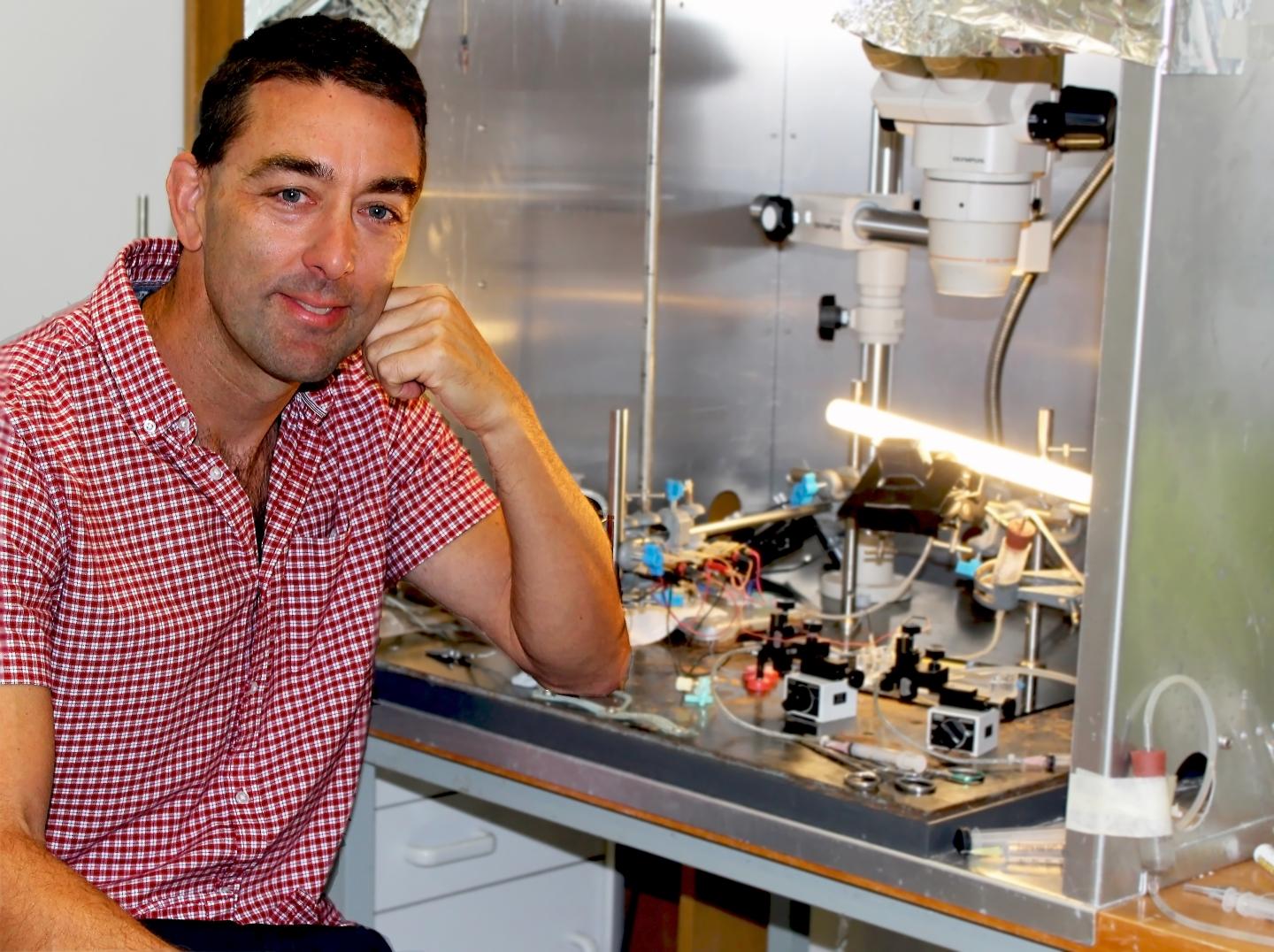
IMAGE

Credit: Flinders University

Scientists at Flinders University have, for the first time, identified a specific type of sensory nerve ending in the gut and how these may ‘talk’ to the spinal cord, communicating pain or discomfort to the brain.

This discovery is set to inform the development of new medications to treat problems associated with gut-to-brain communication, paving the way for targeted treatments to mitigate related dysfunction.

While our understanding of the gut’s neurosensory abilities has grown rapidly in recent years, two of the great mysteries have been where and how the different types of sensory nerve endings in the gut lie, and how they are activated.

An important step in answering these questions has been made possible through the development of new techniques by Professor Nick Spencer’s Visceral Neurophysiology laboratory at Flinders University in South Australia.

“We know that many disorders of the brain and gut are associated with each other, so unravelling their connection is critical to developing targeted, efficient treatments for what can be debilitating conditions like irritable bowel syndrome, chronic constipation or ulcerative colitis,” Professor Spencer says.

Professor Spencer’s research revealed an extraordinarily complex array of nerve endings that are located over multiple layers of tissues in the lower colon.

“Our study identified the two classes of neurons involved and their location in a range layers in the colon including muscle and mucus membranes, which are potentially capable of detecting sensory stimuli.”

His research forms one of many studies underway at Flinders University’s five ‘Neurogastroenterology’ laboratories, which are contributing to the growing bank of global knowledge on the gut’s interaction with the brain, including its impact on higher cognitive function.

###

This research was supported by grants from the Australian Research Council (ARC) and the National Health and Medical Research Council (NHMRC).

Link to paper: Identification of spinal afferent nerve endings in the colonic mucosa and submucosa that communicate directly with the spinal cord: The gut-brain axis.

Media contacts:

Name: Professor Nick Spencer, Flinders University

Tel: +61 8 8204 4241 Mob: +61 427 249 932

Email: [email protected]

Name: Megan Andrews, Office of Communication, Marketing and Engagement, Flinders University

Tel: +61 8 8201 2916 Mob: +61 487 499 004

Email: [email protected]

Media Contact
Megan Andrews
[email protected]

Related Journal Article

http://dx.doi.org/10.1002/cne.24854

Share12Tweet8Share2ShareShareShare2

Related Posts

How Solar Prominences Feed the Sun’s Corona: Exploring Supply Mechanisms

How Solar Prominences Feed the Sun’s Corona: Exploring Supply Mechanisms

April 22, 2026
Wiley Enhances IT and Raman Spectral Libraries to Accelerate Accurate Analytical Lab Decisions

Wiley Enhances IT and Raman Spectral Libraries to Accelerate Accurate Analytical Lab Decisions

April 22, 2026

Scientists Demonstrate How Simple Magnets Unlock Solutions to Complex Problems

April 21, 2026

Diet and Drinks of the Bronze Age South Caucasus Uncovered

April 21, 2026
Please login to join discussion

POPULAR NEWS

  • Research Indicates Potential Connection Between Prenatal Medication Exposure and Elevated Autism Risk

    797 shares
    Share 319 Tweet 199
  • Scientists Investigate Possible Connection Between COVID-19 and Increased Lung Cancer Risk

    65 shares
    Share 26 Tweet 16
  • Salmonella Haem Blocks Macrophages, Boosts Infection

    58 shares
    Share 23 Tweet 15
  • NSF funds machine-learning research at UNO and UNL to study energy requirements of walking in older adults

    101 shares
    Share 40 Tweet 25

About

We bring you the latest biotechnology news from best research centers and universities around the world. Check our website.

Follow us

Recent News

Epstein-Barr Virus Methylation Aids Nasopharyngeal Cancer Screening

Measuring Solid-State Battery Self-Discharge Rates

Neurodevelopment Adaptations in High-Altitude Environments

Subscribe to Blog via Email

Enter your email address to subscribe to this blog and receive notifications of new posts by email.

Join 79 other subscribers
  • Contact Us

Bioengineer.org © Copyright 2023 All Rights Reserved.

Welcome Back!

Login to your account below

Forgotten Password?

Retrieve your password

Please enter your username or email address to reset your password.

Log In
No Result
View All Result
  • Homepages
    • Home Page 1
    • Home Page 2
  • News
  • National
  • Business
  • Health
  • Lifestyle
  • Science

Bioengineer.org © Copyright 2023 All Rights Reserved.