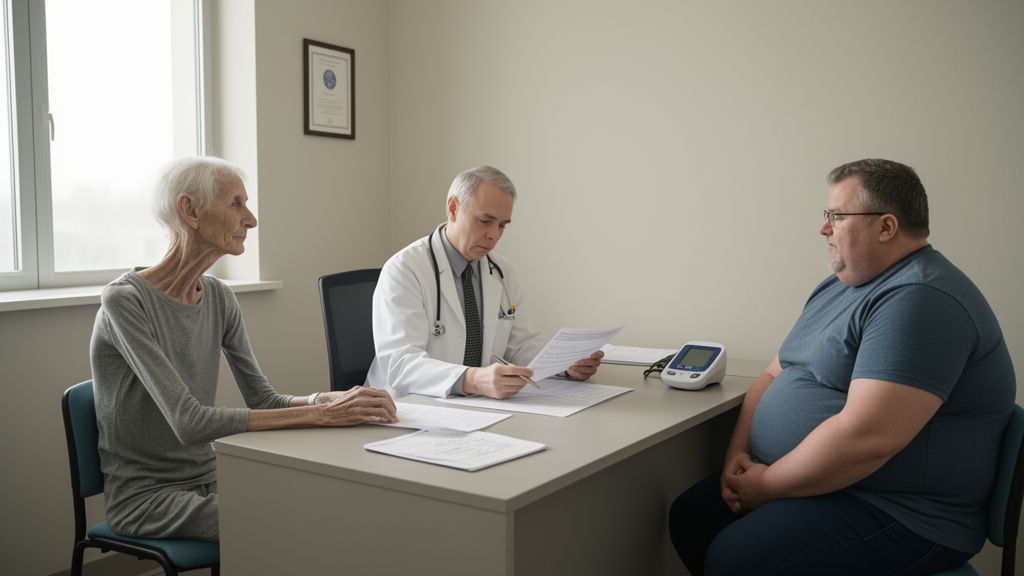
People with type 2 diabetes who are severely underweight face a higher risk of dying from gastrointestinal cancers than those with obesity, according to a nationwide cohort study conducted in South Korea. Drawing on the National Health Insurance Service database, the researchers followed 2,507,976 adults with type 2 diabetes for a mean of 5.75 years and recorded 10,978 deaths from cancers of the oesophagus, stomach, small intestine, colorectum and anus. Of these deaths, 5,317 were attributed to colorectal cancer, 4,391 to gastric cancer, 975 to oesophageal cancer and 295 to other gastrointestinal cancers, including 255 from small intestine cancer and 40 from anal cancer. The findings reveal a reverse J-shaped relationship between body mass index and gastrointestinal cancer mortality, with risk lowest in the 25.0 to 29.9 kg/m² range and climbing steeply at both ends of the weight spectrum.
The study used health examination data collected between January 2015 and December 2016 and tracked mortality through the end of 2022 using national death records coded with the International Classification of Diseases, Tenth Revision. Type 2 diabetes was defined as a fasting glucose of 126 mg/dL or higher, or diagnostic codes E11 to E14 combined with antidiabetic prescriptions. After excluding participants younger than 20 years, those with missing variables and those who died within one year to minimize reverse causality, the final cohort comprised 2,507,976 adults, of whom 65.5 percent were younger than 65 and 60.2 percent were men. Cancer has emerged as a leading cause of death among individuals with type 2 diabetes, who show higher cancer incidence and mortality than the general population, making the question of how body weight shapes cancer outcomes in this group increasingly pressing.
Participants were classified using World Health Organization Western Pacific Region criteria adapted for Asian populations. Underweight was defined as a body mass index below 18.5 kg/m², and the researchers went further by splitting this group into three severity levels: mild underweight (17.0 to 18.4 kg/m²), moderate underweight (16.0 to 16.9 kg/m²) and severe underweight (below 16.0 kg/m²). Only 34,159 participants, or 1.4 percent of the cohort, fell into the underweight category, but this small group accounted for a disproportionate share of gastrointestinal cancer deaths. The severe underweight group had the highest proportions of low-income individuals and nondrinkers, while chronic kidney disease was most frequent in this group, at 16.2 percent compared with 10.9 percent overall.
In the fully adjusted statistical model, which accounted for age, sex, income, smoking, alcohol consumption, physical activity, hypertension, dyslipidemia, chronic kidney disease, fasting glucose, diabetes duration, insulin use and multiple oral antidiabetic drugs, the reference group with a body mass index of 25.0 to 29.9 kg/m² had the lowest mortality risk. Severe underweight carried a hazard ratio of 2.96 (95 percent confidence interval 2.14 to 4.09) for death from all gastrointestinal cancers, nearly three times the reference risk and more than double the hazard ratio of 1.35 (95 percent confidence interval 1.05 to 1.73) observed in Class III obesity, defined as a body mass index of 35.0 kg/m² or higher. Both underweight and obesity showed severity-related gradients, producing the characteristic reverse J-shaped curve that was confirmed by penalized spline regression treating body mass index as a continuous variable. The reference range was chosen because prior general-population studies had identified 25.0 to 29.9 kg/m² as the nadir of cancer mortality risk.
The pattern varied considerably across individual cancer types. Oesophageal cancer showed the most extreme association with low body weight: the severe underweight group had a hazard ratio of 13.23 (95 percent confidence interval 6.77 to 25.85) compared with the reference group, and risk rose consistently with greater underweight severity. Meanwhile, the Class II obesity group showed only a non-significant trend toward lower oesophageal cancer mortality, and no deaths from this cancer occurred in the Class III obesity group. For gastric cancer, the mild underweight group had the highest hazard ratio at 2.99 (95 percent confidence interval 2.52 to 3.55), and no significant association emerged in any obesity category. Colorectal cancer stood apart as the only cancer type in which obesity was clearly linked to elevated mortality, with hazard ratios of 1.29 (95 percent confidence interval 1.14 to 1.45) in Class II obesity and 1.52 (95 percent confidence interval 1.10 to 2.08) in Class III obesity, alongside a hazard ratio of 2.15 (95 percent confidence interval 1.27 to 3.63) in severe underweight. For small intestine and anal cancers, mortality events were too few for most comparisons to reach significance, although mild underweight showed a significantly elevated hazard ratio of 5.20 (95 percent confidence interval 1.14 to 23.75) for anal cancer.
When the analysis was reframed to compare all underweight participants against everyone with a body mass index of 18.5 kg/m² or higher, the results reinforced the severity gradient. Severe underweight carried a hazard ratio of 2.46 (95 percent confidence interval 1.78 to 3.41) for all gastrointestinal cancer mortality, 8.47 (95 percent confidence interval 4.38 to 16.40) for oesophageal cancer and 1.87 (95 percent confidence interval 1.11 to 3.16) for colorectal cancer, while mild underweight showed the highest risk for gastric cancer at 2.49 (95 percent confidence interval 2.11 to 2.94). Kaplan-Meier curves confirmed significantly higher cumulative mortality probabilities across all underweight groups, with log-rank p-values below 0.001 for every cancer outcome examined.
A crucial question was whether underweight people die more often from gastrointestinal cancers simply because they develop them more often. The incidence analysis suggested otherwise. Crude incidence rates of all gastrointestinal cancers were numerically higher in the underweight groups, ranging from 4.25 to 4.60 per 1,000 person-years compared with 3.76 in the reference group, but after full adjustment no significant association remained between underweight and the incidence of all gastrointestinal cancers, gastric cancer or colorectal cancer. The lone exception was oesophageal cancer, where mild underweight remained significantly associated with increased incidence (hazard ratio 3.38, 95 percent confidence interval 2.60 to 4.39). Even there, the mortality association far exceeded the incidence association, pointing to factors operating after cancer diagnosis, such as reduced physiological reserve and poorer tolerance of intensive treatment, rather than a higher rate of cancer development. Classes II and III obesity were significantly associated with increased colorectal cancer incidence, at hazard ratios of 1.10 and 1.17 respectively.
The researchers deployed several sensitivity analyses to guard against reverse causation, the possibility that preclinical cancer itself causes weight loss rather than the reverse. When deaths within the first two, three or four years were sequentially excluded, the hazard ratios for severe underweight did not decline in the pattern expected if undiagnosed cancer were driving the association; for all gastrointestinal cancers, the severe underweight estimates were 2.46, 2.24, 2.64 and 2.92 across one-, two-, three- and four-year lag periods respectively. Colorectal cancer behaved differently, with mild and moderate underweight associations weakening as the lag lengthened, meaning residual reverse causation cannot be excluded for that cancer type, although the severe underweight estimate remained stable. A competing risk analysis using Fine-Gray subdistribution hazard models, which retains people who die of other causes in the risk set, attenuated the associations but left them significant for all gastrointestinal cancers and oesophageal cancer; the authors note that cause-specific and subdistribution hazard estimates should be regarded as complementary rather than contradictory.
Subgroup analyses showed that the excess mortality risk associated with underweight was most pronounced in people younger than 65, in men and in those without chronic kidney disease. Among participants under 65, severe underweight carried a hazard ratio of 4.34 (95 percent confidence interval 2.40 to 7.85) for all gastrointestinal cancer mortality, in men the corresponding figure was 3.78 (95 percent confidence interval 2.67 to 5.36), and in those without chronic kidney disease it was 2.71 (95 percent confidence interval 1.90 to 3.86). All underweight groups showed significantly elevated risk across smoking strata, with a tendency toward stronger associations among current and former smokers, though risk remained significantly increased even among never smokers. The proposed biological interpretation centers on distinct mechanisms at opposite ends of the weight spectrum. Low body mass index in type 2 diabetes may reflect sarcopenia and depleted metabolic reserves, which compromise the ability to withstand surgery, chemoradiation and other cancer treatments; type 2 diabetes is itself a known risk factor for sarcopenia, potentially compounding the vulnerability. Gastrointestinal cancers frequently cause digestive symptoms that accelerate weight loss, making preexisting underweight especially detrimental. At the other extreme, higher-grade obesity may promote tumour progression through chronic low-grade inflammation and adipokine imbalance, mechanisms that appear particularly relevant to colorectal cancer, which accounted for the largest share of mortality events in the cohort.
The study’s authors note that these results challenge a near-exclusive emphasis on weight loss in current clinical guidelines for diabetes and cancer care. Because the mortality nadir sat in the 25.0 to 29.9 kg/m² range and risk rose even more steeply below the underweight threshold, they argue that maintaining weight above the underweight range deserves attention as a preventive strategy, with weight management goals potentially tailored to cancer type and individual metabolic characteristics. The observational design cannot establish causation, and the database lacked information on tumour stage, histology, treatment intensity and body composition, leaving open the possibility that low body mass index partly marks poor general health rather than directly causing cancer death. Because body mass index does not distinguish muscle mass from fat distribution, the contributions of sarcopenia and visceral adiposity remain unquantified. Nevertheless, in a population where cancer has become a leading cause of death, the finding that the thinnest patients, not the heaviest, face the greatest gastrointestinal cancer mortality risk is one that clinicians managing type 2 diabetes may not be able to ignore.
Subject of Research: Body mass index and gastrointestinal cancer mortality in type 2 diabetes
Article Title: Underweight Versus Obesity and Gastrointestinal Cancer Mortality in Type 2 Diabetes: A Nationwide Cohort Study
Article References: Park, J.-H., Han, K., Choe, H. J., Park, S. E., Lee, W.-Y., Moon, S.-J., & Rhee, E.-J. (2026). Underweight Versus Obesity and Gastrointestinal Cancer Mortality in Type 2 Diabetes: A Nationwide Cohort Study. Journal of Cachexia, Sarcopenia and Muscle, 17(5), Article e70408. https://doi.org/10.1002/jcsm.70408
Image Credits: AI Generated
DOI: 10.1002/jcsm.70408
Keywords: type 2 diabetes, body mass index, underweight, obesity, gastrointestinal cancer, cancer mortality, cohort study, oesophageal cancer, gastric cancer, colorectal cancer, reverse causation, South Korea
News Source: Nathaniel Bowman. (October 25, 2026). Underweight Outweighs Obesity in Gastrointestinal Cancer Death Risk in Type 2 Diabetes. Scienmag.