• HOME
  • NEWS
  • EXPLORE
    • CAREER
      • Companies
      • Jobs
    • EVENTS
    • iGEM
      • News
      • Team
    • PHOTOS
    • VIDEO
    • WIKI
  • BLOG
  • COMMUNITY
    • FACEBOOK
    • INSTAGRAM
    • TWITTER
Saturday, January 3, 2026
BIOENGINEER.ORG
No Result
View All Result
  • Login
  • HOME
  • NEWS
  • EXPLORE
    • CAREER
      • Companies
      • Jobs
        • Lecturer
        • PhD Studentship
        • Postdoc
        • Research Assistant
    • EVENTS
    • iGEM
      • News
      • Team
    • PHOTOS
    • VIDEO
    • WIKI
  • BLOG
  • COMMUNITY
    • FACEBOOK
    • INSTAGRAM
    • TWITTER
  • HOME
  • NEWS
  • EXPLORE
    • CAREER
      • Companies
      • Jobs
        • Lecturer
        • PhD Studentship
        • Postdoc
        • Research Assistant
    • EVENTS
    • iGEM
      • News
      • Team
    • PHOTOS
    • VIDEO
    • WIKI
  • BLOG
  • COMMUNITY
    • FACEBOOK
    • INSTAGRAM
    • TWITTER
No Result
View All Result
Bioengineer.org
No Result
View All Result
Home NEWS Science News Cancer

Understanding the emergence of leukemia

Bioengineer by Bioengineer
January 25, 2019
in Cancer
Reading Time: 2 mins read
0
IMAGE
Share on FacebookShare on TwitterShare on LinkedinShare on RedditShare on Telegram

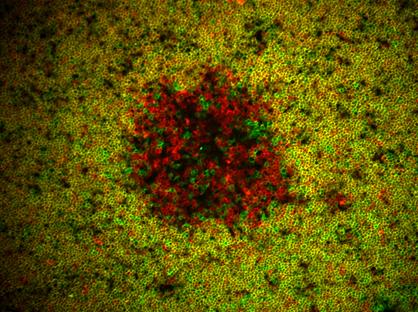
IMAGE

Credit: Mariana Ávila, IGC.


Acute T-cell lymphoblastic leukemia is a rare type of blood cancer that affects mostly children. This blood cancer appears from the precursor cells that produce T lymphocytes (a type of white blood cells). A new study from Instituto Gulbenkian de Ciencia (IGC), conducted in mice, shows that leukemia can emerge as a consequence of prolonging the presence of precursor cells in the thymus. This work was now published in the scientific journal The Journal of Immunology.

T lymphocytes are essential to fight infections and prevent cancer. They develop in the thymus, an organ located above the heart. Their development relies on the seeding by
precursor cells that come from the bone marrow and enter the thymus to differentiate and learn to protect the organism. This is a process secured by an “assembly line” in the thymus in which many of the precursor cells enter, but are discarded if they malfunction. The work led by Vera Martins at the IGC shows that if there is a problem with the precursor cells that come from the bone marrow, the thymus alone can maintain its “assembly line” for some time. However, this function is associated with a high risk of developing T-cell acute lymphoblastic leukemia.

The IGC team tested several genetic factors in mice known to be involved in the formation of T lymphocytes. The results showed that in all conditions tested there was an incidence of ca. 80% of this type of leukemia. “Our study shows the importance of investigating in detail the cellular, genetic and physiological mechanisms associated with the process of normal cell differentiation, and opens the door to understand how leukemia can appear in cells that should be learning to defend our body,” says Vera Martins.

###

This work was supported by Instituto Gulbenkian de Ciencia and by Fundacao para a Ciencia e a Tecnologia.

Media Contact
Ana Mena
[email protected]
351-214-407-959

Related Journal Article

http://dx.doi.org/10.4049/jimmunol.1801373

Tags: cancerMedicine/Health
Share12Tweet7Share2ShareShareShare1

Related Posts

Derazantinib Boosts Gemcitabine by Blocking MUC5AC

December 30, 2025

FOCUS Study Reveals Insights on Melphalan for Uveal Melanoma

December 29, 2025

Black Grape Anthocyanins Boost 5-FU Cancer Therapy

December 29, 2025

Girdin Silencing Boosts Mebendazole’s Ovarian Cancer Fight

December 29, 2025
Please login to join discussion

POPULAR NEWS

  • blank

    PTSD, Depression, Anxiety in Childhood Cancer Survivors, Parents

    120 shares
    Share 48 Tweet 30
  • NSF funds machine-learning research at UNO and UNL to study energy requirements of walking in older adults

    71 shares
    Share 28 Tweet 18
  • Exploring Audiology Accessibility in Johannesburg, South Africa

    52 shares
    Share 21 Tweet 13
  • SARS-CoV-2 Subvariants Affect Outcomes in Elderly Hip Fractures

    44 shares
    Share 18 Tweet 11

About

We bring you the latest biotechnology news from best research centers and universities around the world. Check our website.

Follow us

Recent News

Decoupling Point Spread Functions in Fluorescence Microscopy

Supporting LGBTQIA+ Communities in Viral Disease Prevention

Mapping Arginine Reactivity Across the Human Proteome

Subscribe to Blog via Email

Enter your email address to subscribe to this blog and receive notifications of new posts by email.

Join 71 other subscribers
  • Contact Us

Bioengineer.org © Copyright 2023 All Rights Reserved.

Welcome Back!

Login to your account below

Forgotten Password?

Retrieve your password

Please enter your username or email address to reset your password.

Log In
No Result
View All Result
  • Homepages
    • Home Page 1
    • Home Page 2
  • News
  • National
  • Business
  • Health
  • Lifestyle
  • Science

Bioengineer.org © Copyright 2023 All Rights Reserved.