• HOME
  • NEWS
  • EXPLORE
    • CAREER
      • Companies
      • Jobs
    • EVENTS
    • iGEM
      • News
      • Team
    • PHOTOS
    • VIDEO
    • WIKI
  • BLOG
  • COMMUNITY
    • FACEBOOK
    • INSTAGRAM
    • TWITTER
Wednesday, May 13, 2026
BIOENGINEER.ORG
No Result
View All Result
  • Login
  • HOME
  • NEWS
  • EXPLORE
    • CAREER
      • Companies
      • Jobs
        • Lecturer
        • PhD Studentship
        • Postdoc
        • Research Assistant
    • EVENTS
    • iGEM
      • News
      • Team
    • PHOTOS
    • VIDEO
    • WIKI
  • BLOG
  • COMMUNITY
    • FACEBOOK
    • INSTAGRAM
    • TWITTER
  • HOME
  • NEWS
  • EXPLORE
    • CAREER
      • Companies
      • Jobs
        • Lecturer
        • PhD Studentship
        • Postdoc
        • Research Assistant
    • EVENTS
    • iGEM
      • News
      • Team
    • PHOTOS
    • VIDEO
    • WIKI
  • BLOG
  • COMMUNITY
    • FACEBOOK
    • INSTAGRAM
    • TWITTER
No Result
View All Result
Bioengineer.org
No Result
View All Result
Home NEWS Science News Chemistry

Uncovering the science of Indigenous fermentation

Bioengineer by Bioengineer
September 11, 2020
in Chemistry
Reading Time: 2 mins read
0
IMAGE
Share on FacebookShare on TwitterShare on LinkedinShare on RedditShare on Telegram

IMAGE

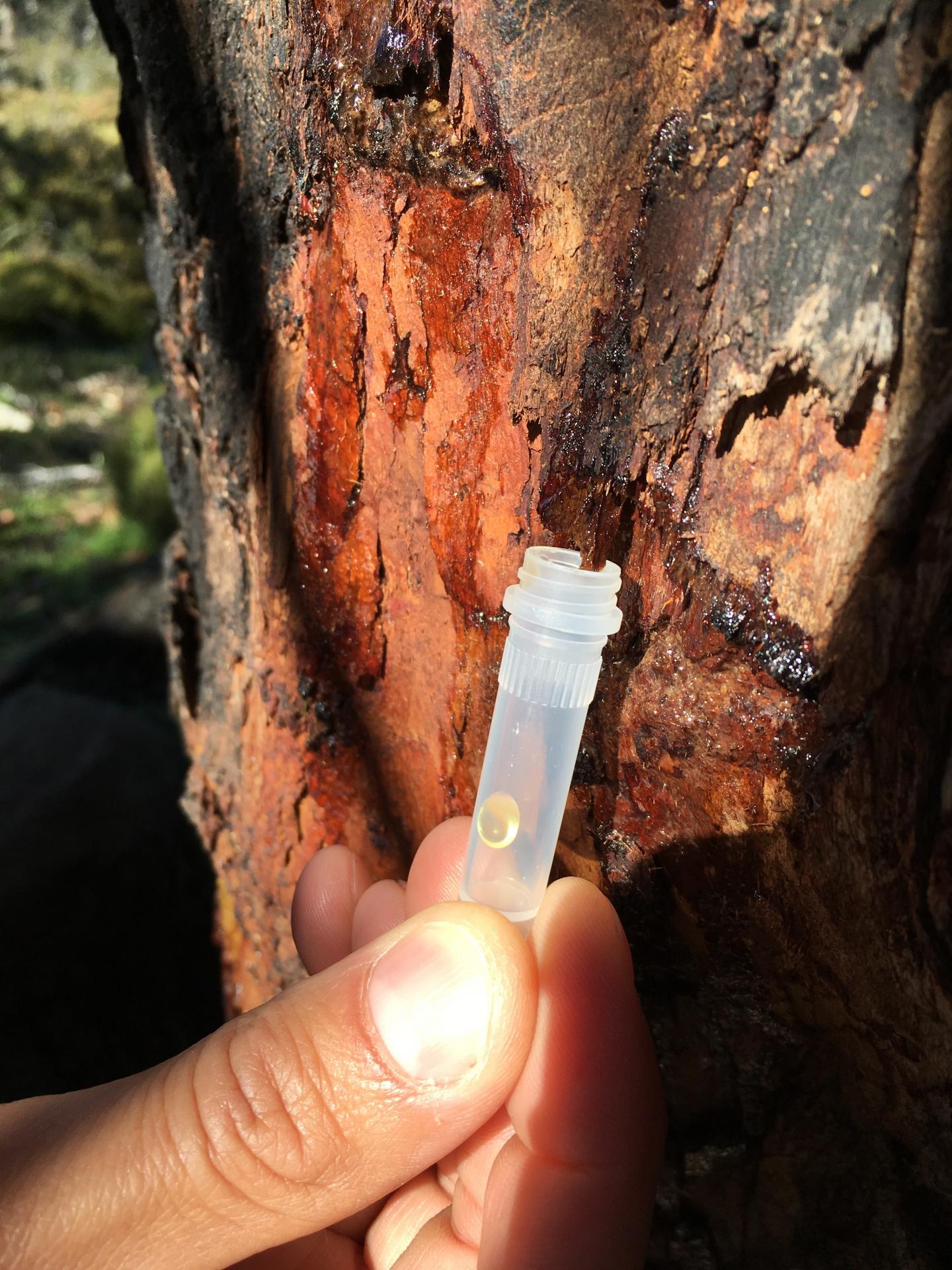
Credit: University of Adelaide AWRI

Australian wine scientists are shedding scientific light on the processes underlying traditional practices of Australian Aboriginal people to produce fermented beverages.

The scientists from the University of Adelaide and the Australian Wine Research Institute (AWRI) have discovered the complex microbial communities associated with the natural fermentation of sap from the iconic Tasmanian cider gum, Eucalyptus gunnii. The work has been published in the Nature journal Scientific Reports.

The much-loved, but locally endangered, cider gum is native to the remote Central Plateau of Tasmania and also commonly planted as an ornamental tree across the British Isles and some parts of Western Europe.

“Cider gums produce a sweet sap that was collected by Aboriginal people to produce a mildly alcoholic beverage,” says lead author Dr Cristian Varela, Principal Research Scientist with the AWRI.

“The drink known as way-a-linah was made by the Tasmanian Palawa people in a traditional practice where the sap was given time to spontaneously ferment.

“To the best of our knowledge, the microorganisms responsible for this traditional Australian fermentation have never been investigated or identified.”

The wine scientists, in collaboration with the Tasmanian Aboriginal Centre and the Tasmanian Land Conservancy, collected sap, bark and soil samples from around the cider gums in three locations in the Tasmanian Central Plateau.

They used DNA sequencing to identify the bacterial and fungal communities they found. Some could not be matched to existing databases, suggesting they represent completely new classifications of bacteria and fungi, not previously described.

Research leader Professor Vladimir Jiranek, Professor of Oenology with the University’s School of Agriculture, Food and Wine, says: “The wider community is not typically aware of these historic traditions. This work shines a light on these practices and the cultural significance of these unique fermentations.

“It also allows us to identify new strains, or species, of yeast and bacteria from the fermentations that are unique to Australia. Further work will characterise single microorganisms that have been isolated and grown from the cider gum.

“We are particularly interested in their fermentative abilities, their potential flavour impacts, how they’ve adapted to the cider gum environment and the possible symbiotic relationship they have with the trees.

“We look forward to continuing our work with relevant Aboriginal communities in order to understand these and other processes, and help revive lost practices or perhaps develop new ones from these.”

###

Media Contacts:

Professor Vladimir Jiranek, School of Agriculture, Food and Wine, The University of Adelaide. Mobile: +61 (0)414 775 418, Email: [email protected]

Ella Robinson, Communication Manager, The Australian Wine Research Institute. Mobile: +61 (0)402 402 121, Email: [email protected]

Robyn Mills, Senior Media and Communications Officer, The University of Adelaide. Mobile: +61 (0)410 689 084, Email: [email protected]

Media Contact
Vladimir Jiranek
[email protected]

Related Journal Article

http://dx.doi.org/10.1038/s41598-020-71663-x

Tags: AgricultureAnthropologyBacteriologyBiochemistryBiologyEcology/EnvironmentFood/Food ScienceForestryMicrobiologyMycology
Share12Tweet8Share2ShareShareShare2

Related Posts

Gravitational Wave Detectors Now Feature Automatic Signal Tuning — Chemistry

Gravitational Wave Detectors Now Feature Automatic Signal Tuning

May 13, 2026
Harnessing Neural Networks for Advances in Nonlinear Optics — Chemistry

Harnessing Neural Networks for Advances in Nonlinear Optics

May 12, 2026

Innovative Method Unveiled to Detect Signs of Dark Matter

May 12, 2026

Illuminating the Science Behind Historical Featherwork Art

May 12, 2026
Please login to join discussion

POPULAR NEWS

  • Research Indicates Potential Connection Between Prenatal Medication Exposure and Elevated Autism Risk

    842 shares
    Share 337 Tweet 211
  • New Study Reveals Plants Can Detect the Sound of Rain

    728 shares
    Share 290 Tweet 182
  • Salmonella Haem Blocks Macrophages, Boosts Infection

    62 shares
    Share 25 Tweet 16
  • Breastmilk Balances E. coli and Beneficial Bacteria in Infant Gut Microbiomes

    57 shares
    Share 23 Tweet 14

About

We bring you the latest biotechnology news from best research centers and universities around the world. Check our website.

Follow us

Recent News

Study Suggests Possible Link Between Mother’s Occupation and Autism Spectrum Disorder in Children

Combined Exercise and HIIT Significantly Reduce 24-Hour Blood Pressure, New Study Shows

FAMU-FSU College of Engineering Develops AI Tool to Predict E. coli Contamination in Waterways

Subscribe to Blog via Email

Enter your email address to subscribe to this blog and receive notifications of new posts by email.

Join 82 other subscribers
  • Contact Us

Bioengineer.org © Copyright 2023 All Rights Reserved.

Welcome Back!

Login to your account below

Forgotten Password?

Retrieve your password

Please enter your username or email address to reset your password.

Log In
No Result
View All Result
  • Homepages
    • Home Page 1
    • Home Page 2
  • News
  • National
  • Business
  • Health
  • Lifestyle
  • Science

Bioengineer.org © Copyright 2023 All Rights Reserved.