• HOME
  • NEWS
  • EXPLORE
    • CAREER
      • Companies
      • Jobs
    • EVENTS
    • iGEM
      • News
      • Team
    • PHOTOS
    • VIDEO
    • WIKI
  • BLOG
  • COMMUNITY
    • FACEBOOK
    • INSTAGRAM
    • TWITTER
Thursday, July 2, 2026
BIOENGINEER.ORG
No Result
View All Result
  • Login
  • HOME
  • NEWS
  • EXPLORE
    • CAREER
      • Companies
      • Jobs
        • Lecturer
        • PhD Studentship
        • Postdoc
        • Research Assistant
    • EVENTS
    • iGEM
      • News
      • Team
    • PHOTOS
    • VIDEO
    • WIKI
  • BLOG
  • COMMUNITY
    • FACEBOOK
    • INSTAGRAM
    • TWITTER
  • HOME
  • NEWS
  • EXPLORE
    • CAREER
      • Companies
      • Jobs
        • Lecturer
        • PhD Studentship
        • Postdoc
        • Research Assistant
    • EVENTS
    • iGEM
      • News
      • Team
    • PHOTOS
    • VIDEO
    • WIKI
  • BLOG
  • COMMUNITY
    • FACEBOOK
    • INSTAGRAM
    • TWITTER
No Result
View All Result
Bioengineer.org
No Result
View All Result
Home NEWS Science News Biology

Uncovering the origin of symbiosis

Bioengineer by Bioengineer
March 11, 2020
in Biology
Reading Time: 2 mins read
0
IMAGE
Share on FacebookShare on TwitterShare on LinkedinShare on RedditShare on Telegram

IMAGE

Credit: Research team Professor Lutz Becks


Lutz Becks is a professor of limnology at the University of Konstanz’s Department of Biology and director of the university’s Limnological Institute. He will receive approximately 1.8 million euros from the Gordon and Betty Moore Foundation to explore the genetic and cellular mechanisms of symbiosis. His five-year research project entitled “Will you kindly cooperate?” will be funded in the context of the investigator programme of the “Symbiosis in Aquatic Systems Initiative”, which was launched by the Gordon and Betty Moore Foundation in 2019. With a total budget of 140 million US dollars (approximately 130 million euros), the initiative’s aim is to learn how symbioses between microorganisms function and evolve in marine and freshwater environments.

Read more about Lutz Becks’s research project in the “Press releases” section of the University of Konstanz’s webpage: https://www.uni-konstanz.de/en/university/news-and-media/current-announcements/press-releases/press-releases-in-detail/dem-ursprung-der-symbiose-auf-der-spur/

###

Facts:

  • University of Konstanz limnologist Professor Lutz Becks awarded funding in the amount of approximately EUR 1.8 million by the Gordon and Betty Moore Foundation.
  • The five-year research project will explore the genetic and cellular mechanisms of symbiosis as well as the environmental conditions that favour or hinder the evolution of symbiotic life forms.
  • Funding amount: Approx. EUR 1.8 million.
  • Funding period: Five years.
  • More information about Professor Becks’s working group at the University of Konstanz: http://www.limnologie.uni-konstanz.de/en/ag-becks/
  • For more information about the Gordon and Betty Moore Foundation and the “Symbiosis in Aquatic Systems Initiative”, please visit http://www.moore.org/home. Please also consult the foundation’s general announcement on this topic: http://www.moore.org/article-detail?newsUrlName=advancing-the-frontier-of-aquatic-symbiosis-research
  • Professor Becks’s profile on the webpage of the Gordon and Betty Moore Foundation is available at: http://www.moore.org/investigator-detail?investigatorId=becks

Note to editors:

You can download a photo here: https://cms.uni-konstanz.de/fileadmin/pi/fileserver/2020/Bilder/dem_ursprung.jpg

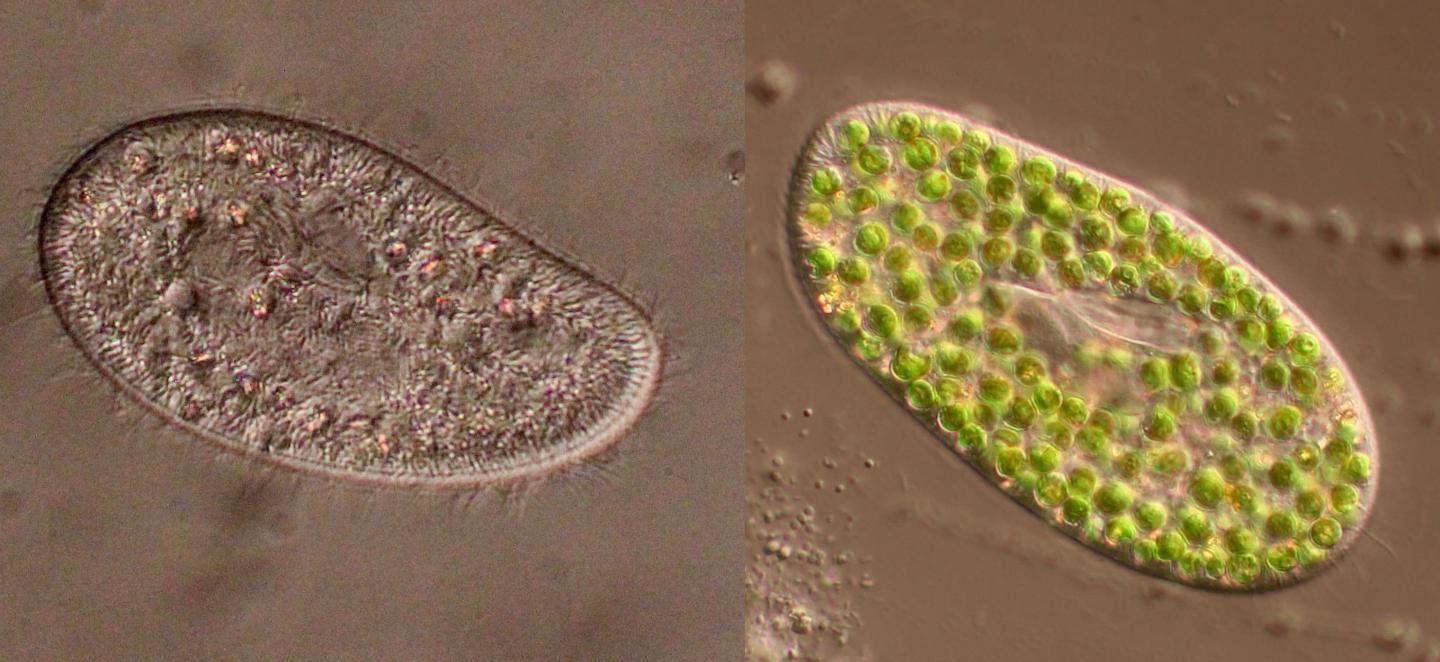
Caption: Paramecium without symbiont (left) and Paramecium after taking in a symbiont (right).

Image: Research team Professor Lutz Becks

Contact:

University of Konstanz

Communications and Marketing

Phone: +49 7531 88-3603

Email: [email protected]

uni.kn/en

Media Contact
Julia Wandt
[email protected]

Original Source

https://www.uni-konstanz.de/en/university/news-and-media/current-announcements/press-releases/press-releases-in-detail/dem-ursprung-der-symbiose-auf-der-spur/

Tags: BiologyCell BiologyEvolutionGeneticsMarine/Freshwater Biology
Share12Tweet8Share2ShareShareShare2

Related Posts

New Study Reveals How to Reduce Risk of Dangerous Wildlife Encounters This Summer — Biology

New Study Reveals How to Reduce Risk of Dangerous Wildlife Encounters This Summer

July 2, 2026
Hepatic IFRD1 Alleviates Metabolic Dysfunction-Linked Steatohepatitis Through the GLUD1/α-KG Pathway — Biology

Hepatic IFRD1 Alleviates Metabolic Dysfunction-Linked Steatohepatitis Through the GLUD1/α-KG Pathway

July 2, 2026

Intricate Food Webs Support Ecosystem Health and Stability

July 2, 2026

Fatty Liver Accelerates Aggressive Cancer Metastasis

July 2, 2026
Please login to join discussion

POPULAR NEWS

  • Detection of EDCs in Breast Milk and Infant Urine Up to Six Months Highlights Early Exposure Risks

    77 shares
    Share 31 Tweet 19
  • Saying Goodbye to PGY-6: Pediatric Fellowship Realities

    103 shares
    Share 41 Tweet 26
  • New Drug Candidate Developed at McMaster Shows Potential for Treating Brain Cancer

    58 shares
    Share 23 Tweet 15
  • KTU Researchers Explore Ultrasound’s Role in Enhancing Blood Flow Beyond Diagnostics

    53 shares
    Share 21 Tweet 13

About

We bring you the latest biotechnology news from best research centers and universities around the world. Check our website.

Follow us

Recent News

Linking Single-Cell Transcriptomes to Mouse Visual Circuits

Graz University of Technology Deciphers the Structural Secrets of MOF Thin Films

Apelin-APLNR Pathway: Endothelial Roles in Health

Subscribe to Blog via Email

Enter your email address to subscribe to this blog and receive notifications of new posts by email.

Join 82 other subscribers
  • Contact Us

Bioengineer.org © Copyright 2023 All Rights Reserved.

Welcome Back!

Login to your account below

Forgotten Password?

Retrieve your password

Please enter your username or email address to reset your password.

Log In
No Result
View All Result
  • Homepages
    • Home Page 1
    • Home Page 2
  • News
  • National
  • Business
  • Health
  • Lifestyle
  • Science

Bioengineer.org © Copyright 2023 All Rights Reserved.