Alfalfa (Medicago sativa), commonly called the “King of Grass,” is a legume grown in many parts of the world as a source of animal fodder. It is prized in the forage industry for its high protein content and biomass yield. Recently, alfalfa protein has found applications in aquaculture, pet food industry and human diet. Furthermore, it is seen as an environmentally beneficial crop, with positive impacts on biodiversity and soil nitrogen conservation.
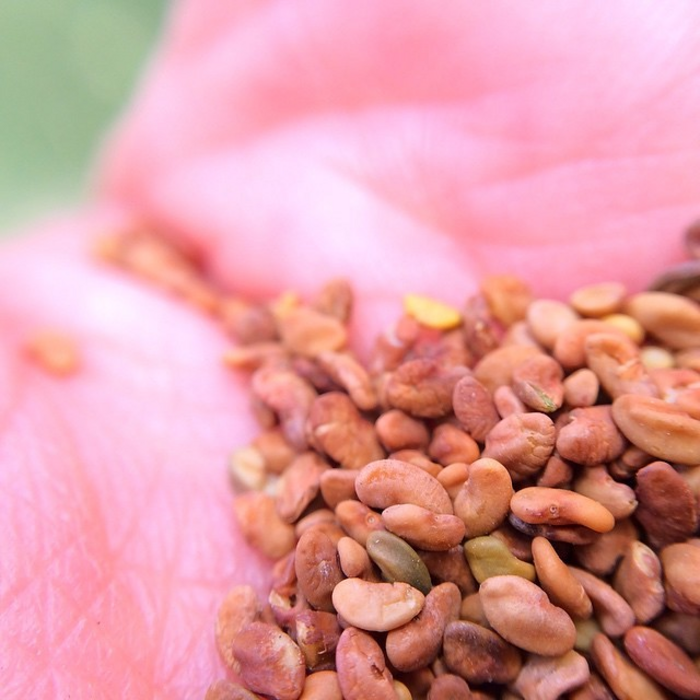
Credit: m7sanchez
Alfalfa (Medicago sativa), commonly called the “King of Grass,” is a legume grown in many parts of the world as a source of animal fodder. It is prized in the forage industry for its high protein content and biomass yield. Recently, alfalfa protein has found applications in aquaculture, pet food industry and human diet. Furthermore, it is seen as an environmentally beneficial crop, with positive impacts on biodiversity and soil nitrogen conservation.
Alfalfa produces two seed types—hard and non-hard—with no obvious visible differences. Unfortunately, the hard seeds cannot be avoided and pose a significant challenge from an economic standpoint. Hard seeds have low value as they exacerbate slow germination, nonuniform seedling establishment, increased weed competition, and germination failure. Seed dormancy—the delayed germination following embryogenesis—has multiple dormancy categories. Of these, hormone-mediated physiological dormancy (PD), hard seededness for physical dormancy (PD), and combinatorial dormancy (PY+PD) are suspected to have a role in alfalfa seed germination.
Notably, there is a dearth of hard seed research in legumes and until recently, dormancy in alfalfa was thought to only include the PY type. Now, scientists from the College of Grassland Science and Technology, China Agricultural University led by Associate Professor Shangang Jia have found the PY+PD pattern in this species of legume through multispectral imaging (MSI) technology combined with ‘multi-omics’ platforms.
Their study was made available online on 31 March 2023 and was published in The Crop Journal.
Explaining their motivation behind pursuing this research, Dr. Jia says, “Studying dormancy in hard and non-hard alfalfa seeds is problematic. Doing comparative research by soaking the seeds in water–a technique called imbibition–is time-consuming and causes the non-hard seeds to germinate. We needed an accurate, non-destructive, and high-throughput approach to gain deeper insights.”
By combining MSI with multi-omics (transcriptomics, metabolomics, and methylomics) platforms, the team developed a high-throughput technique for identifying seeds, comparing the dormancy pattern, and observing differences in physiology, metabolism, and gene expression in hard and non-hard seeds.
“The technique could successfully identify hard alfalfa seeds with high accuracy—of up to 100%. Furthermore, the transcriptomics, metabolomics, and methylomics analyses revealed that abscisic acid (ABA) responses played a key role in hard alfalfa seeds,” adds Jia.
ABA—a hormone that induces dormancy—acts like a sleeping pill that keeps seeds in a dormant state. Moreover, the balance of ABA and other hormones like indole acetic acid (IAA) and jasmonic acid (JA) also govern the degree of seed dormancy. Compared to non-hard seeds, hard seeds were enriched in antioxidants and flavonoids, lipids, and hormone biosynthetic pathways. Furthermore, the increased expression of ABA genes and the differential methylation of ABA-responsive genes in hard alfalfa seeds underscored the ABA responses.
The team also identified non-PY hard seeds that contained higher ABA/IAA and ABA/JA levels and did not germinate following treatment to break dormancy. This finding gave credence to the involvement of the PD pattern and indicated that PY+PD, rather than PY alone governed the germination failure of hard alfalfa seeds.
“We believe we’ve provided a theoretical and technical framework for exploring alfalfa hard seed dormancy, and our findings could certainly guide the optimal processing of these seeds in the alfalfa seed industry!” concludes Jia with an air of excitement.
The scientists are confident their findings will have a strong bearing on future research and could have immense economic implications.
###
Contact the corresponding author: Shangang Jia
The publisher KeAi was established by Elsevier and China Science Publishing & Media Ltd to unfold quality research globally. In 2013, our focus shifted to open access publishing. We now proudly publish more than 100 world-class, open access, English language journals, spanning all scientific disciplines. Many of these are titles we publish in partnership with prestigious societies and academic institutions, such as the National Natural Science Foundation of China (NSFC).
Journal
The Crop Journal
DOI
10.1016/j.cj.2023.03.003
Method of Research
Experimental study
Subject of Research
Not applicable
Article Title
Multiple omics datasets reveal significant physical and physiological dormancy in alfalfa hard seeds identified by multispectral imaging analysis
COI Statement
The authors declare that they have no known competing financial interests or personal relationships that could have appeared to influence the work reported in this paper.