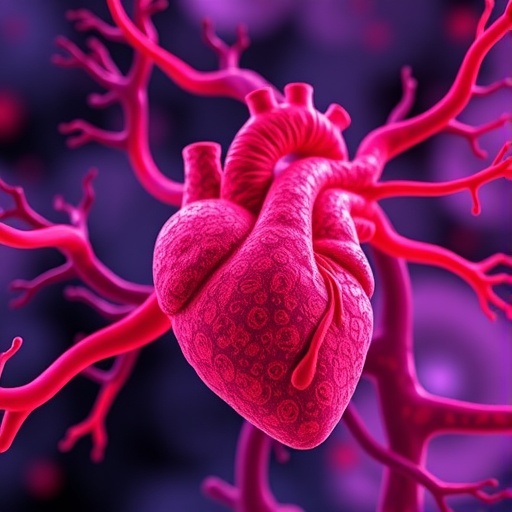
In groundbreaking research emerging from the Perelman School of Medicine at the University of Pennsylvania, scientists have unraveled critical molecular mechanisms that govern the architectural remodeling of heart muscle cells under stress. At the center of this discovery lie microtubules, integral components of the cytoskeleton within cardiac cells, and the ERK signaling pathway, which collectively orchestrate the directional growth and material distribution necessary for heart muscle adaptation. This revelation holds promise for novel therapeutic strategies aimed at mitigating deleterious cardiac remodeling associated with heart failure.
Heart muscle cells, or cardiomyocytes, possess an intricate internal scaffold composed largely of microtubules. These filamentous structures not only maintain cell shape but also serve as tracks for the transport of intracellular cargo essential for cell growth and functional adaptation. While it has long been observed that cardiomyocytes alter their size and geometry in response to physiological and pathological stimuli—such as exercise or hypertension—the molecular drivers dictating whether these cells elongate or widen have remained elusive until now.
Under the leadership of Dr. Benjamin Prosser, professor of Physiology, the research team employed advanced imaging and molecular biology techniques to elucidate how microtubule stability determines the morphological outcome of cardiomyocyte growth. Their findings, published in the journal Science, reveal that stabilized microtubules preferentially facilitate lateral or radial growth, increasing the width of heart muscle cells. Conversely, destabilization of microtubules tips the balance toward longitudinal elongation, thereby lengthening the cells. This mechanistic insight into microtubule dynamics provides a molecular explanation for the distinct growth patterns observed in common cardiomyopathies.
Dilated cardiomyopathy, characterized by excessive stretching and thinning of the heart muscle, and hypertrophic cardiomyopathy, typified by pathological thickening, represent two sides of maladaptive cardiac remodeling with significant clinical burdens. The ability to control microtubule stability, and thus direct cardiomyocyte growth in either dimension, emerges as a compelling therapeutic target to potentially hinder or reverse the progression of these disorders. By modulating microtubule dynamics, treatment strategies may one day finely tune heart structure at the cellular level.
Beyond influencing cell shape, the studies highlight microtubules’ role in maintaining the integrity of intercalated discs—the specialized junctions that electrically and mechanically couple adjacent cardiomyocytes. Stabilized microtubules reinforce these connections, promoting cohesive cardiac contraction, whereas destabilization compromises them, possibly contributing to arrhythmic susceptibilities in diseased hearts. This dual functionality underscores microtubules as critical regulators of both the physical and functional coherence of cardiac tissue.
In parallel investigations published in Science Signaling, Dr. Keita Uchida and colleagues defined the role of the extracellular signal-regulated kinase (ERK) pathway as a vital regulator of intracellular trafficking in cardiomyocytes. Traditionally recognized for its involvement in cellular proliferation and survival signaling networks, ERK activity in heart cells was found to influence the intracellular distribution of anabolic materials emanating from the nucleus, which functions as a central supply depot.
Remarkably, ERK signaling biases the delivery of growth materials toward regions proximal to the nucleus, favoring radial expansion and thickening of the cardiomyocyte rather than elongation toward the distal ends. This “inside-out” growth pattern aligns with clinical manifestations of hypertrophy, particularly in hypertensive heart disease, where myocardial thickening predominates. The spatial targeting of biosynthetic resources by ERK essentially sculpts the heart’s structural response to varied stressors.
Importantly, ERK pathway engagement appears selective for pathological hypertrophy and does not participate significantly in physiological growth processes, such as the beneficial cardiac remodeling seen in athletes. This specificity suggests that pathological and physiological hypertrophy are mediated by distinct molecular circuits, opening avenues for interventions that selectively mitigate harmful growth without impairing adaptive adaptations to exercise or development.
Despite the promising therapeutic implications suggested by these findings, the widespread roles of microtubules and ERK signaling in diverse tissues warrant cautious consideration in drug development. Microtubules are fundamental to numerous cellular functions across cell types, while ERK signaling orchestrates a broad spectrum of biological processes beyond cardiomyocytes. Consequently, systemically administered agents already approved by the FDA for modulating these pathways might require significant refinement to achieve cardiac-specific targeting, minimizing off-target effects and maximizing clinical benefit.
The identification of these tunable molecular drivers represents a transformative leap in understanding cardiomyocyte plasticity. It reframes cardiac remodeling not simply as a consequence of stress or injury but as a regulated cellular process with definable molecular targets. With further investigation, these insights may translate into precision therapies that arrest or even reverse heart muscle pathology by directing the structural adaptation of the heart from within the cell’s internal framework and signaling circuitry.
Looking forward, this body of work prompts critical questions about how microtubule stability and ERK-mediated trafficking interplay with other signaling networks and mechanical forces within the myocardium. It also accentuates the potential of leveraging advances in molecular biology, nanotechnology, and targeted drug delivery to devise interventions that manipulate cell shape and connectivity in situ, offering hope for patients suffering from heart failure due to maladaptive remodeling.
The convergence of cytoskeletal dynamics and signal transduction pathways embodies a nuanced regulatory system by which the heart adapts its structure and function. This interdisciplinary research at the interface of cell biology, physiology, and translational medicine exemplifies the innovative approaches needed to tackle complex diseases of the human heart, spotlighting new horizons in cardiovascular therapy research.
Subject of Research: Cells
Article Title: Not provided
News Publication Date: Not provided
Web References:
– https://www.science.org/doi/abs/10.1126/science.adz1970
– https://www.science.org/doi/abs/10.1126/scisignal.adu5769
References: Science (primary journal of publication)
Image Credits: Not provided
Keywords: Heart muscle, Cardiac remodeling, Microtubules, ERK signaling pathway, Cardiomyocyte growth, Hypertrophic cardiomyopathy, Dilated cardiomyopathy, Cytoskeleton, Intercalated discs, Cell biology
Tags: advanced imaging in cardiac researchcardiac muscle cell architecturecardiomyocyte structural adaptationERK signaling pathway in cardiac cellsheart muscle cell growth regulationintracellular transport in cardiomyocytesmicrotubule stability in heart cellsmicrotubules in cardiomyocytesmolecular drivers of cardiac remodelingmolecular mechanisms of heart cell remodelingphysiological vs pathological cardiac remodelingtherapeutic targets for heart failure