• HOME
  • NEWS
  • EXPLORE
    • CAREER
      • Companies
      • Jobs
    • EVENTS
    • iGEM
      • News
      • Team
    • PHOTOS
    • VIDEO
    • WIKI
  • BLOG
  • COMMUNITY
    • FACEBOOK
    • INSTAGRAM
    • TWITTER
Saturday, June 20, 2026
BIOENGINEER.ORG
No Result
View All Result
  • Login
  • HOME
  • NEWS
  • EXPLORE
    • CAREER
      • Companies
      • Jobs
        • Lecturer
        • PhD Studentship
        • Postdoc
        • Research Assistant
    • EVENTS
    • iGEM
      • News
      • Team
    • PHOTOS
    • VIDEO
    • WIKI
  • BLOG
  • COMMUNITY
    • FACEBOOK
    • INSTAGRAM
    • TWITTER
  • HOME
  • NEWS
  • EXPLORE
    • CAREER
      • Companies
      • Jobs
        • Lecturer
        • PhD Studentship
        • Postdoc
        • Research Assistant
    • EVENTS
    • iGEM
      • News
      • Team
    • PHOTOS
    • VIDEO
    • WIKI
  • BLOG
  • COMMUNITY
    • FACEBOOK
    • INSTAGRAM
    • TWITTER
No Result
View All Result
Bioengineer.org
No Result
View All Result
Home NEWS Science News Health

UNC to create next generation, ultra-long-acting antiretroviral formulations

Bioengineer by Bioengineer
October 10, 2018
in Health
Reading Time: 2 mins read
0
Share on FacebookShare on TwitterShare on LinkedinShare on RedditShare on Telegram
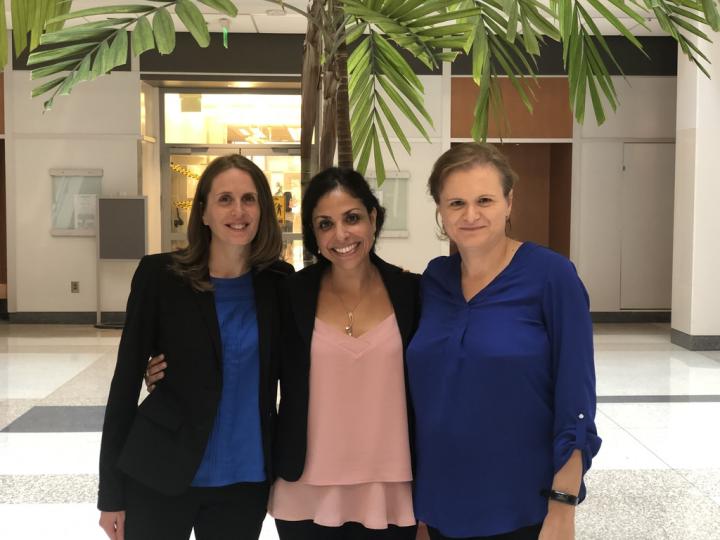
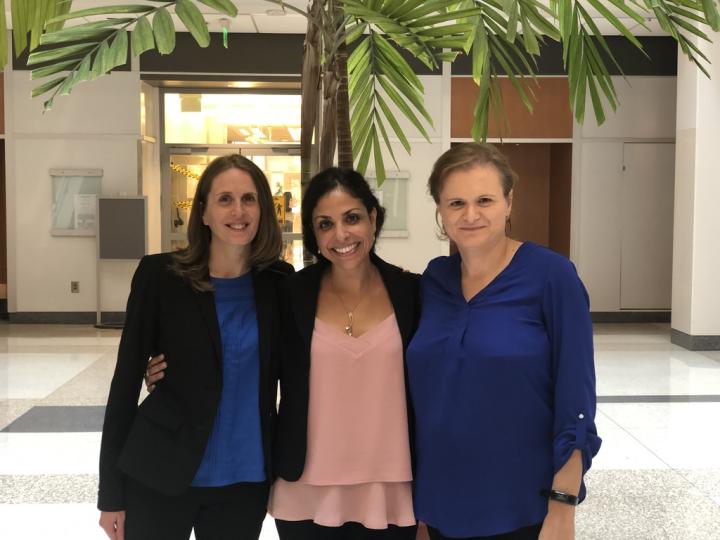
IMAGE

Credit: UNC School of Medicine

It has been well established that HIV transmission can be efficiently halted by effective treatment of those infected or by pre-exposure prophylaxis of individuals at risk of exposure. However, the effectiveness of these approaches to prevent HIV transmission require strict adherence to dosing regimens. Lack of adherence represents a major challenge to the implementation of HIV prevention efforts. Researchers at the UNC School of Medicine have been awarded a 5-year, $3.8 million grant from the National Institute of Allergy and Infectious Diseases to develop next generation, ultra-long-acting antiretroviral formulations for HIV treatment and prevention that have the potential to dramatically improve adherence.

This new grant will enable UNC investigators to continue and expand upon a line of work that began in 2017 with a separate, $1.8 million grant from the National Institutes of Health. In that project, Martina Kovarova, PhD, and Rahima Benhabbour, PhD, developed a new implantable drug delivery system for long-lasting HIV prevention that has shown promise in testing with animal models.

The injectable formulation includes an anti-HIV drug, a polymer, and a solvent. The three-compound liquid solidifies into an implant once injected under the skin. As the polymer slowly degrades, the drug is released. A preliminary study found that the implant delivered the drug effectively for five months. Also, this research demonstrated that the implant can be quickly and safely removed, if needed, in case of an adverse reaction or other medical emergency.

In addition to Kovarova, assistant professor of infectious diseases at the UNC School of Medicine, and Benhabbour, an assistant professor in the UNC-NCSU joint department of biomedical engineering, a key collaborator in the new project is Angela Wahl, PhD, an assistant professor of infectious diseases at the UNC School of Medicine.

"Our long-term goal for this collaborative is to develop a delivery system for long-acting therapy and PrEP that can offer durable and sustained viral suppression and protection from HIV transmission while providing flexibility in the choice of active ingredient, high efficacy of HIV inhibition, and increased user compliance," Wahl said.

"Using state of the art in vivo models of HIV transmission, we will evaluate the efficacy of these formulations for treatment. In addition, we will also test their efficacy for HIV prevention against all four major routes of HIV transmission: rectal, vaginal, oral, and intravenous," said co-investigator J. Victor Garcia, PhD, the Oliver Smithies Investigator, professor of Medicine, and a member of the UNC Institute for Global Health and Infectious Diseases, the UNC Center for AIDS Research, and the UNC Lineberger Comprehensive Cancer Center.

###

Media Contact

Tom Hughes
[email protected]
984-974-1151
@UNC_Health_Care

UNC School of Medicine

Share12Tweet8Share2ShareShareShare2

Related Posts

Animal Models Advance Neuro-Urology in Spinal Injury

June 20, 2026

Epigenetic Control in Atherosclerosis: New Therapies

June 19, 2026

Unilateral Epidural Anesthesia Benefits Older Hip Fracture Patients

June 19, 2026

Confined Migration Causes DNA Damage in Neurons

June 18, 2026
Please login to join discussion

POPULAR NEWS

  • Saying Goodbye to PGY-6: Pediatric Fellowship Realities

    103 shares
    Share 41 Tweet 26
  • Multi-Hospital Study Reveals Long Covid Burden Is Twice as High as Current Estimates

    92 shares
    Share 36 Tweet 23
  • Detection of EDCs in Breast Milk and Infant Urine Up to Six Months Highlights Early Exposure Risks

    77 shares
    Share 31 Tweet 19
  • New Drug Candidate Developed at McMaster Shows Potential for Treating Brain Cancer

    58 shares
    Share 23 Tweet 15

About

We bring you the latest biotechnology news from best research centers and universities around the world. Check our website.

Follow us

Recent News

Animal Models Advance Neuro-Urology in Spinal Injury

Tiny Genetic Fragments Crucial for Signaling Brain Rest Identified

How H5N1 Bird Flu Went Undetected for Weeks in Dairy Cattle

Subscribe to Blog via Email

Enter your email address to subscribe to this blog and receive notifications of new posts by email.

Join 82 other subscribers
  • Contact Us

Bioengineer.org © Copyright 2023 All Rights Reserved.

Welcome Back!

Login to your account below

Forgotten Password?

Retrieve your password

Please enter your username or email address to reset your password.

Log In
No Result
View All Result
  • Homepages
    • Home Page 1
    • Home Page 2
  • News
  • National
  • Business
  • Health
  • Lifestyle
  • Science

Bioengineer.org © Copyright 2023 All Rights Reserved.