• HOME
  • NEWS
  • EXPLORE
    • CAREER
      • Companies
      • Jobs
    • EVENTS
    • iGEM
      • News
      • Team
    • PHOTOS
    • VIDEO
    • WIKI
  • BLOG
  • COMMUNITY
    • FACEBOOK
    • INSTAGRAM
    • TWITTER
Wednesday, May 20, 2026
BIOENGINEER.ORG
No Result
View All Result
  • Login
  • HOME
  • NEWS
  • EXPLORE
    • CAREER
      • Companies
      • Jobs
        • Lecturer
        • PhD Studentship
        • Postdoc
        • Research Assistant
    • EVENTS
    • iGEM
      • News
      • Team
    • PHOTOS
    • VIDEO
    • WIKI
  • BLOG
  • COMMUNITY
    • FACEBOOK
    • INSTAGRAM
    • TWITTER
  • HOME
  • NEWS
  • EXPLORE
    • CAREER
      • Companies
      • Jobs
        • Lecturer
        • PhD Studentship
        • Postdoc
        • Research Assistant
    • EVENTS
    • iGEM
      • News
      • Team
    • PHOTOS
    • VIDEO
    • WIKI
  • BLOG
  • COMMUNITY
    • FACEBOOK
    • INSTAGRAM
    • TWITTER
No Result
View All Result
Bioengineer.org
No Result
View All Result
Home NEWS Science News Health

UM researchers receive $700,000 in NIH funding to study tick-borne lyme disease

Bioengineer by Bioengineer
July 11, 2018
in Health
Reading Time: 2 mins read
0
Share on FacebookShare on TwitterShare on LinkedinShare on RedditShare on Telegram
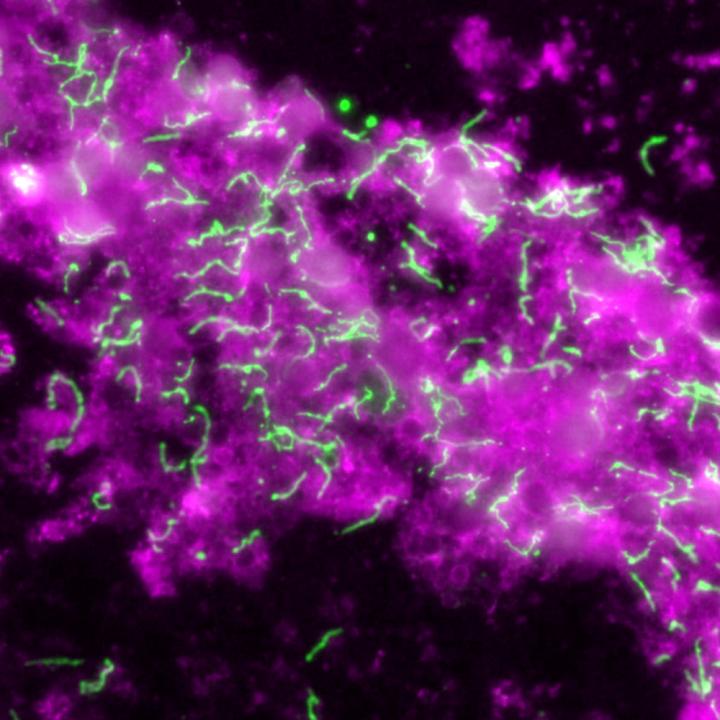
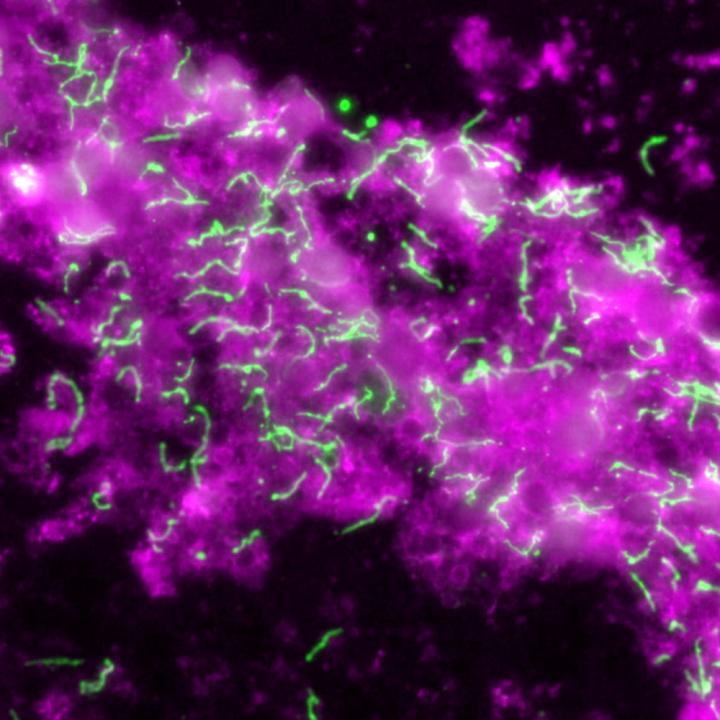
IMAGE

Credit: Micrograph by Dan Drecktrah.

MISSOULA – University of Montana researchers Dan Drecktrah and Scott Samuels were recently awarded $449,998 from the National Institutes of Health for the first year of a five-year project to study the bacterium that causes Lyme disease.

They will work in conjunction with Meghan Lybecker of the University of Colorado – Colorado Springs. Lybecker earned her Ph.D. from UM in 2007.

Together they will investigate the "Regulation of glycerol utilization in Borrelia burgdorferi." With an estimated 300,000 cases annually, Lyme disease is the most prevalent vector-borne illness in the United States. It results from infection with the spirochete Borrelia burgdorferi transmitted via the bite of a tick.

The objective of their work is to understand the regulatory mechanisms that allow B. burgdorferi to respond and adapt to varied carbon sources in tick-to-mammal transmission and in Lyme disease pathogenesis, which will lead to improved diagnostic, prevention and treatment strategies. The long-term objective is to alleviate the human disease.

Drecktrah also recently received nearly $260,000 in NIH funding for his project titled "Metabolic regulation during the two-host lifecycle of Borrelia." In this project, he will investigate a novel signaling pathway that regulates the interaction of B. burgdorferi with its tick vector. The long-term objective of this project is to understand the unique strategies and mechanisms B. burgdorferi uses to persist in the tick and transmit to mammals.

###

Media Contact

Sara Jestrab
[email protected]
406-243-6003

http://www.umt.edu

Original Source

http://news.umt.edu/2018/07/071018tick.php

Share12Tweet8Share2ShareShareShare2

Related Posts

Evaluating APR-246 Response in Ovarian Cancer Mutants

May 20, 2026

Enterococcus hirae Dopamine Reduces Inflammation, Parkinson’s Symptoms

May 20, 2026

Western Diet Spurs Metabolism, Heart Issues in Mice

May 20, 2026

Faecal Transplants Show Promise for Parkinson’s Safety, Efficacy

May 20, 2026
Please login to join discussion

POPULAR NEWS

  • blank

    New Study Reveals Plants Can Detect the Sound of Rain

    732 shares
    Share 292 Tweet 183
  • Research Indicates Potential Connection Between Prenatal Medication Exposure and Elevated Autism Risk

    846 shares
    Share 338 Tweet 212
  • ESMO 2025: mRNA COVID Vaccines Enhance Efficacy of Cancer Immunotherapy

    253 shares
    Share 101 Tweet 63
  • Breastmilk Balances E. coli and Beneficial Bacteria in Infant Gut Microbiomes

    58 shares
    Share 23 Tweet 15

About

We bring you the latest biotechnology news from best research centers and universities around the world. Check our website.

Follow us

Recent News

Risk Model Predicts Multiple Lung Lavages in Children

Cerebral NIRS: Key in Managing Post-Hemorrhagic Dilation?

Evaluating APR-246 Response in Ovarian Cancer Mutants

Subscribe to Blog via Email

Enter your email address to subscribe to this blog and receive notifications of new posts by email.

Join 82 other subscribers
  • Contact Us

Bioengineer.org © Copyright 2023 All Rights Reserved.

Welcome Back!

Login to your account below

Forgotten Password?

Retrieve your password

Please enter your username or email address to reset your password.

Log In
No Result
View All Result
  • Homepages
    • Home Page 1
    • Home Page 2
  • News
  • National
  • Business
  • Health
  • Lifestyle
  • Science

Bioengineer.org © Copyright 2023 All Rights Reserved.